Deye at a glance
Ningbo Deye is a Chinese manufacturer listed on the Shanghai Stock Exchange since April 2021, according to its about page. Its contact page lists a South Africa head office at Kyalami Office Park in Midrand and a South Africa service centre at Airport Industria in Cape Town. Deye does not list authorised South African distributors on its own site, so you will usually buy through an installer or a retailer.
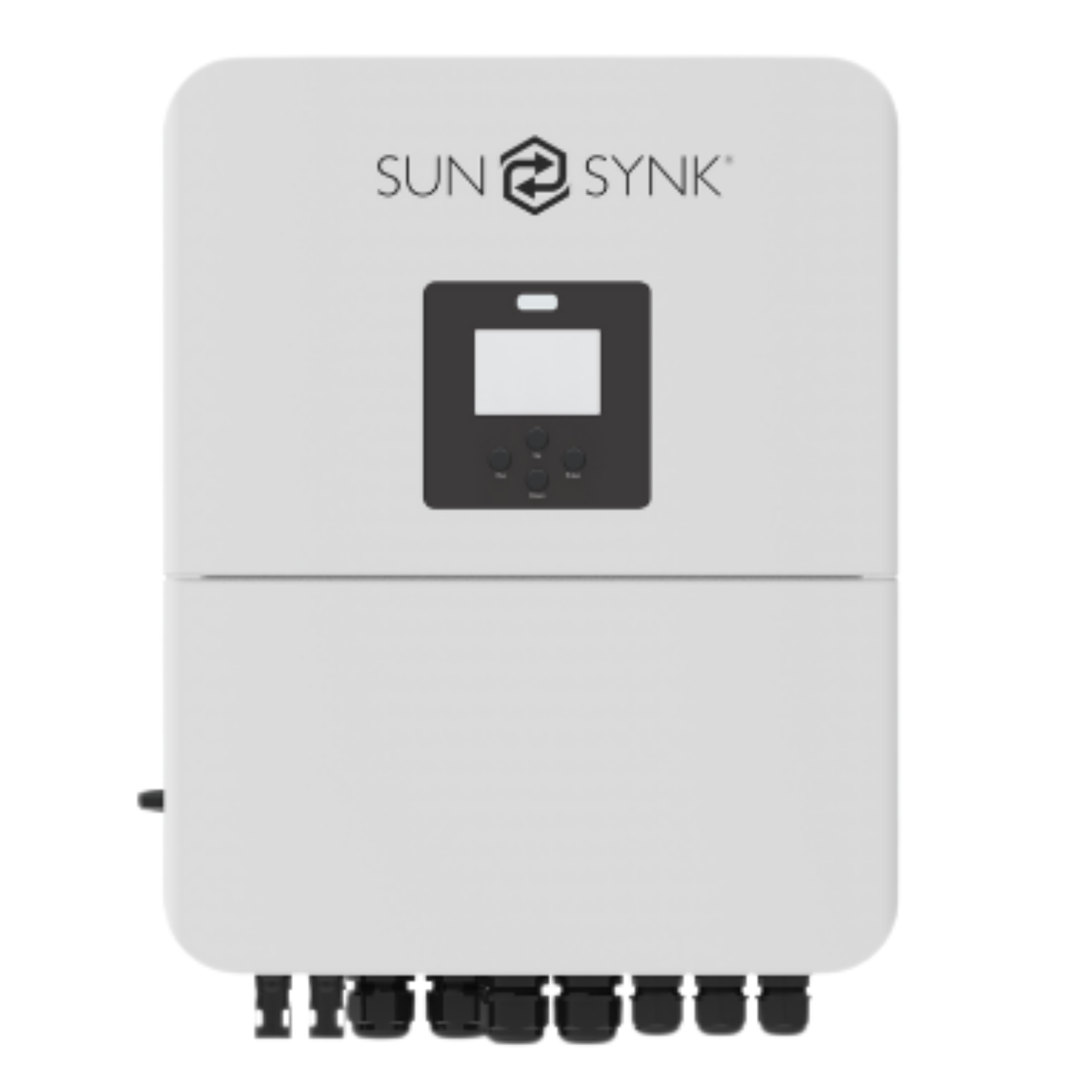
You may have read that Sunsynk inverters are made by Deye. We could not find that stated on either company's website, so we don't rely on it here. The practical point stands either way: judge a Deye by the exact model, the warranty terms you receive and who will support it.
The current Deye hybrid range
Deye's hybrid inverter catalogue splits into three families that matter for homes:
- Single-phase, low-voltage battery (48V). Several generations sit side by side: SG04LP1 (3kW to 6kW), SG05LP1 (3.6kW to 10kW), SG02LP1 (7.6kW to 12kW), SG01LP1-AM3-P (12kW to 18kW) and the newer SG06LP1 (3kW to 12kW).
- Three-phase, low-voltage battery. SG05LP3 (3kW to 20kW) and SG06LP3 (3kW to 8kW).
- Three-phase, high-voltage battery. SG01HP3 and SG02HP3 (5kW to 25kW), for battery stacks that run at several hundred volts.
The older SUN-xK-SG03LP1 models no longer appear in Deye's catalogue, though some are still in the market.
The common sizes compared
These figures come from Deye's product pages for the SUN-5K-SG04LP1-EU, the SUN-8K and SUN-12K-SG02LP1 and the three-phase SUN-12K-SG05LP3-EU-SM2, checked on 26 October 2026.
| SUN-5K-SG04LP1-EU | SUN-8K-SG02LP1-EU-AM2 | SUN-12K-SG02LP1-EU-AM3 | SUN-12K-SG05LP3-EU-SM2 (three-phase) |
|---|
| Rated AC output | 5,000W | 8,000W | 12,000W | 12,000W |
| Maximum PV input power | 8,000W | 12,800W | 19,200W | 19,200W |
| MPPTs | 2 | 2 | 3 | 2 |
| Maximum PV voltage | 500V | 500V | 500V | 800V |
| Current per MPPT | 18A | 26A | 26A | 26A |
| Battery voltage | 40V to 60V | 40V to 60V | 40V to 60V | 40V to 60V |
| Maximum battery charge/discharge | 120A | 190A | 250A | 240A |
| Units in parallel | Up to 16 | Up to 16 | Up to 16 | Up to 10 |
| Enclosure | IP65 | IP65 | IP65 | IP65 |
Three things in that table matter for a home:
- Battery current sets the real night-time output. At a 51.2V nominal lithium battery, 120A is about 6.1kW and 250A about 12.8kW before losses (our arithmetic). Your battery must also be able to supply that current. Our 12kW inverter guide shows why a 12kW Deye on one small battery delivers far less than 12kW after dark.
- MPPT current limits panel choice. The 5kW model's 18A per tracker is lower than the short-circuit current of some large modern panels. Ask the installer to show the string design against the limit.
- IP65 means it can be mounted outdoors, out of direct sun. That is a real advantage over budget IP20 units.
Deye's pages don't publish a backup switchover time. The SG04LP1 user manual describes a settable "backup delay", giving 3ms as an example. Treat that as a setting, not a guaranteed figure.
The three-phase SG05LP3 page states "100% unbalanced output, max. output up to 50% rated power for each phase". On a 12kW unit, that means about 6kW on any single phase. If most of your essential circuits sit on one phase, ask how they will be shared. Our three-phase solar guide explains when you need a three-phase inverter at all.
Is Deye NRS 097-2-1 approved?
NRS 097-2-1 is the South African standard for grid-connected inverters, and you need a certified model to register a system with your municipality or Eskom, even if you don't export. Deye's product pages list "NRS 097" among their grid standards, and the 5kW and three-phase pages link South African certificates.
We searched the City of Cape Town's type-tested inverter list, dated 11 September 2026, for the Deye models you are most likely to be quoted:
| Deye model | On Cape Town's list? (11 September 2026) |
|---|
| SUN-3/3.6/5/6K-SG04LP1-EU | Yes |
| SUN-3/3.6/5/6K-SG03LP1-EU (older) | Yes |
| SUN-5K-SG06LP1-EU-CM2 and SUN-6K (5kW and 6kW "V3") | Yes |
| SUN-8/10/12K-SG06LP1-EU-CM3 (8kW to 12kW "V3") | Yes |
| SUN-5/6/8K-SG02LP1-EU-AM2 and SUN-10/12K-SG02LP1-EU-AM3 | Yes |
| SUN-8K-SG05LP1-EU and SUN-8K-SG05LP1-EU-SM2 | Yes |
| SUN-12/14/16/18K-SG01LP1-EU-AM3-P | Yes |
| SUN-3 to 12K-SG05LP3-EU-SM2 (three-phase) | Yes |
| SUN-5 to 25K-SG01HP3-EU-AM2 (three-phase HV) | Yes |
| SUN-5K-SG05LP1-EU | Not found |
| SUN-5K-SG04LP3 (three-phase 5kW) | Not found |
The list holds about 189 Deye entries, so the gaps are narrow, but they include a model still on retail shelves. Inverter Warehouse lists the SUN-5K-SG05LP1-EU as its 5kW "V2". Not finding a model on Cape Town's list doesn't prove it lacks a certificate, but it is a reason to ask before you buy.
What to do:
- Ask for the full model string from the rating label, not "Deye 5kW".
- Ask the installer for that model's NRS 097-2-1 certificate and confirm your distributor accepts it.
- In Cape Town, find the exact model on the list. Elsewhere, ask your municipality or Eskom.
Our SSEG registration guide covers the documents and process.
Not sure what size inverter you need?
Share your appliances and your bill. The assessment matches the inverter to your peak load and backup needs, then quotes the full system.
Get an inverter quote →Free and no obligation. SolarGuide may earn a referral fee from Alumo; it never adds to your cost.
Warranty and support
Every Deye product page we checked gives the warranty as "5 Years / Up to 10 Years*", with the note: "Warranty period varies by installation country. Refer to the Warranty Policy for details." We found no South Africa-specific warranty document on Deye's site.
Deye's general warranty agreement (v2.3) gives 5 years on inverters, 2 years on mounting brackets, fans and meters, and 5 years on data loggers. It says Deye does not offer installation service, describes the service mode as the customer replacing the unit with faulty units returned to Deye or spare parts arranged, and states that "OEM products are not applicable with this warranty".
South African retailers advertise longer cover. Inverter Warehouse's 5kW V3 listing says "10-year product warranty T&C may apply". InvertSolar's 10kW listing shows "5 Years/10 Years" and says warranty claims need a Certificate of Compliance, a registered electrician and installation photos. These are seller statements, so ask for the warranty document that applies to your serial number and who registers it.
In practice, a Deye claim starts with your installer, who diagnoses the fault and deals with the supplier or Deye's South African service centre. Ask before you sign:
- Is this a 5-year or 10-year warranty, and what conditions apply to the extension?
- Who registers the inverter, and in whose name?
- Will the installer remove, ship and refit a faulty unit, and is labour covered?
- Is a loan or swap unit available while the inverter is repaired?
Our guide to what to look for in a solar warranty separates product, workmanship and performance cover.
Monitoring
Deye's monitoring runs through Deye Cloud, with a phone app and a web portal. The inverter connects through a plug-in stick logger, which Deye's logger page says supports Wi-Fi, 4G, GPRS and Ethernet, and also pairs with the SolarMan platform. Many installers still set Deye systems up on SolarMan. Ask which platform your system will use and have the account registered in your name at handover. Our monitoring apps guide explains what to watch.
Price: what retailers list
On 26 October 2026, Inverter Warehouse listed these Deye inverters, VAT included, for the inverter only:
On the same day, InvertSolar listed the SUN-10K-SG02LP1-EU-AM3 at R27,900. The V3 5kW cost R400 more than the V2 here, and it is the one we found on Cape Town's list. These are listed retail prices, not quotes. An installed system adds batteries, panels, protection, mounting, labour and compliance work. Our inverter prices guide puts these numbers in context.
Which Deye suits which home?
Start with your loads. Our guides to what a 5kW inverter can run and what an 8kW inverter can run show how quickly kettles, ovens and pumps add up.
A 5kW Deye (SG04LP1 or SG06LP1 V3) fits if:
- you want backup for lights, Wi-Fi, TV, fridge and plugs, with the geyser and oven on the grid or on timers
- you have a typical single-phase home and a 5kWh to 10kWh battery
An 8kW Deye fits if:
- cooking, laundry and a pool pump overlap in the evening
- your battery bank can supply about 160A to 190A
A 12kW or larger Deye fits if:
- you have genuinely large simultaneous loads and a battery bank sized to match
- your distributor accepts the size on your supply
Look at three-phase models if your home has a three-phase supply. NRS 097-2-3, which distributors use for small connections, says the imbalance between phases should not exceed 4.6kVA, so a large single-phase unit on one phase can be a problem.
Two Deye inverters in parallel can make sense if you already own one and want more power, or need more than one unit can give. Our parallel inverters guide explains when that beats one bigger unit.
Look elsewhere if your installer can't name the exact model and show its certificate, or offers no clear warranty route. Our best solar inverter guide sets out how we compare Sunsynk, Solis, AlphaESS and Sigenergy.
Before you accept a Deye quote
- The full model string, including SG04, SG05 or SG06 and the suffix
- Its NRS 097-2-1 certificate, and your distributor's acceptance
- Whether the warranty is 5 or 10 years, and who registers it
- The battery model and confirmation that it communicates with the inverter
- Battery current against the inverter's rated output
- String design within the MPPT voltage and current limits
- The monitoring platform and account owner
- A Certificate of Compliance on completion
Getting a quote through SolarGuide
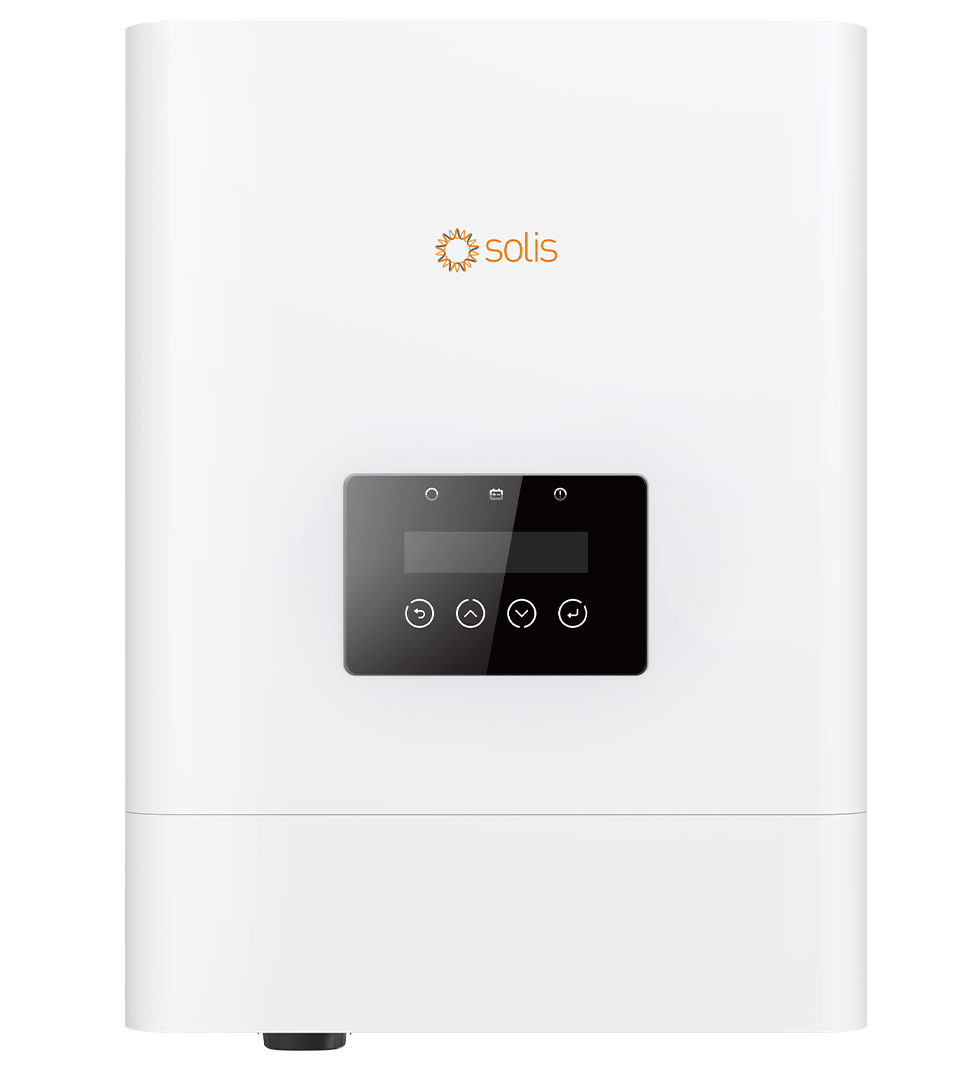
SolarGuide is an independent comparison and referral publisher, and eligible Alumo referrals may earn us a fee. Alumo's current home packages on its website are built around a Solis 5kW inverter (checked 26 October 2026), so a quote through us will normally compare that and other equipment Alumo supports with your needs, not a Deye specifically. If you already own a Deye and want to add panels, batteries or a second unit, include the full model and serial number so compatibility can be checked first. Alumo supplies, installs and warrants the work it agrees to do; the site assessment and written quote set the equipment and price.
Compare an itemised, compatible system for your home →
Frequently asked questions
Are Deye inverters any good?
Deye makes mainstream hybrid inverters with full published specifications, IP65 enclosures on its current single-phase hybrids, parallel capability and NRS 097-2-1 listings for many models. It has an office in Midrand and a service centre in Cape Town. As with any brand, the exact model, warranty terms and installer support matter more than the logo.
What warranty does a Deye inverter have in South Africa?
Deye's product pages say "5 Years / Up to 10 Years", with the period varying by installation country. Its general warranty agreement gives 5 years on inverters. Several South African retailers advertise 10 years with conditions, so ask for the warranty document that applies to your unit.
Is Deye NRS 097-2-1 approved?
Many models are. Cape Town's list dated 11 September 2026 includes the SG04LP1, SG02LP1, SG06LP1 and SG05LP3 ranges, among others. We did not find the SUN-5K-SG05LP1-EU or the SUN-5K-SG04LP3, so check the exact model on your quote.
Can I connect two Deye inverters together?
Deye lists up to 16 single-phase units or up to 10 of its SG05LP3 three-phase units in parallel. Parallel systems need matching models and settings and are an installer job. Our parallel inverters guide covers when it is worth doing.
Is SolarGuide the installer?
No. SolarGuide is an independent referral publisher. Alumo supplies, installs, finances and warrants the systems it agrees to install, and we help you compare options and request a free quote. Pricing is indicative and subject to a site assessment and credit approval.
Sources and review note
Checked on 26 October 2026. Range and specifications come from Deye's hybrid inverter catalogue and product pages for the SUN-3 to 6K-SG04LP1, SUN-7.6 to 12K-SG02LP1 and SUN-3 to 12K-SG05LP3, plus the SG04LP1 user manual. Warranty terms come from those pages and Deye's general warranty agreement v2.3. Company and South African office details come from Deye's about and contact pages, and monitoring details from its stick logger page. Model listings come from the City of Cape Town's NRS 097-2-1 type-tested inverter list, dated 11 September 2026. Prices come from Inverter Warehouse and InvertSolar listings on the same date; they are listed inverter-only prices, not quotes. Alumo's inverter brand comes from alumo.co.za. The battery-power figures are SolarGuide calculations. SolarGuide has not tested these inverters, and Deye is not a SolarGuide partner. If you spot a factual error, tell us and we'll correct it.
SolarGuide is an independent referral partner. We help you compare options and arrange a free quote — Alumo supplies, installs, finances and warrants the systems. Pricing is indicative, sourced from Alumo’s published catalogue, and subject to a site assessment and credit approval.