What "in parallel" means
In a parallel system, two or more inverters connect to the same household supply and the same battery bank. One unit is set as the master and the others follow it, linked by a communication cable so their output stays in step. To your house, they act as one bigger inverter. Two 8kW units give up to 16kW of AC output, provided the battery and supply can support it.
There are two common layouts:
- Single-phase parallel. Two or more units on the same phase, for more power on a single-phase supply.
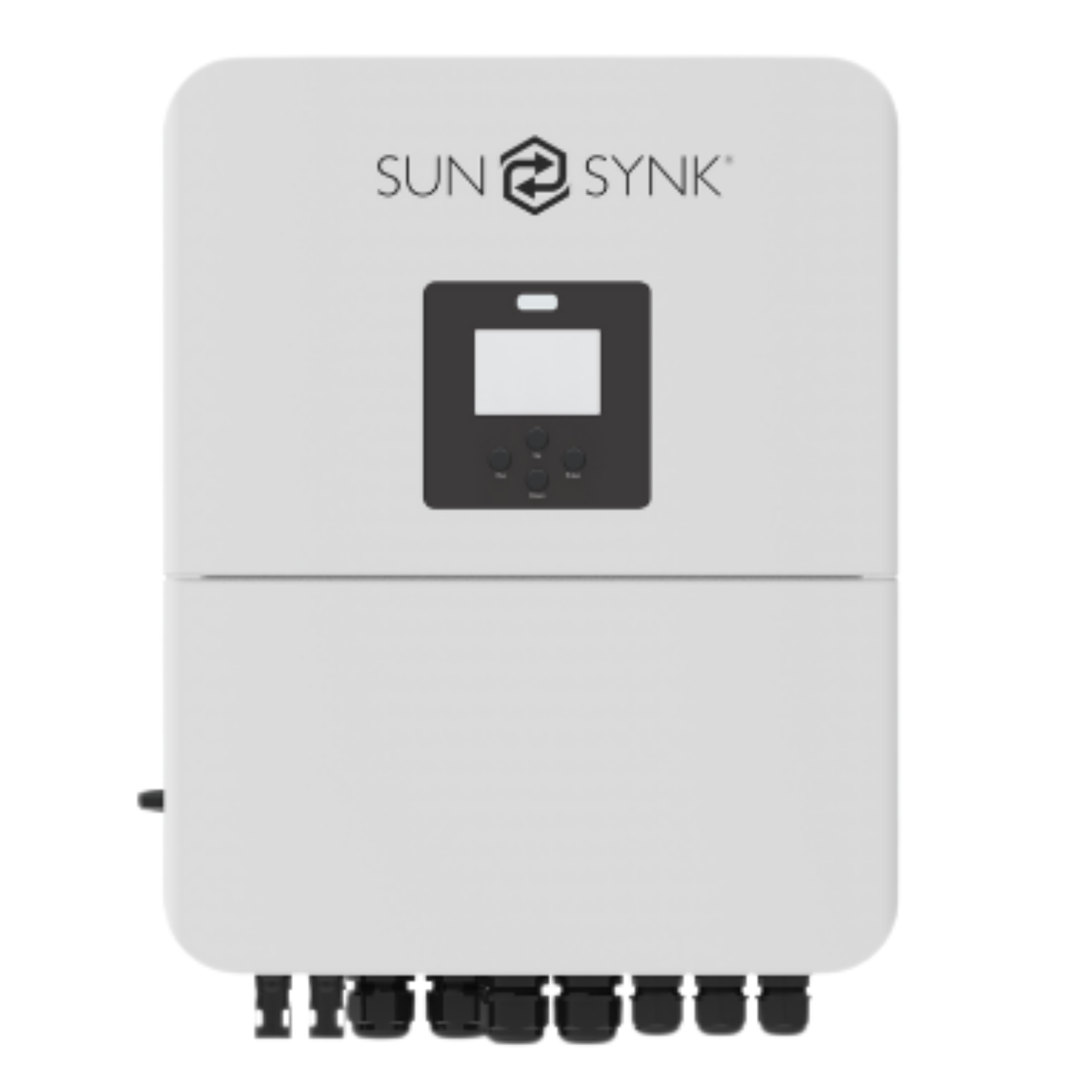
- Three-phase from single-phase units. One or more units per phase on a three-phase supply. Sunsynk's 8kW manual shows a layout of a master and up to four slaves on each of phases A, B and C.
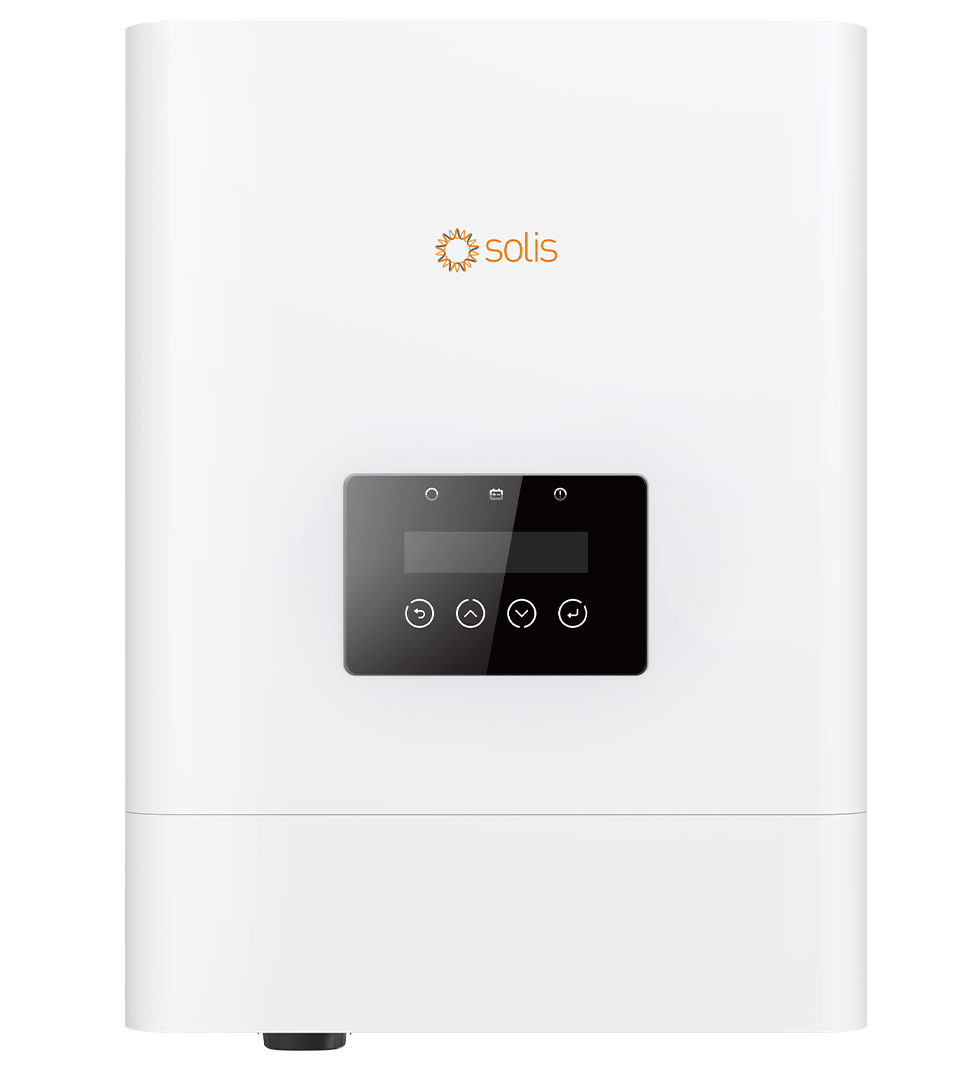
Many hybrid platforms support it. Deye lists up to 16 units in parallel for its single-phase low-voltage hybrids, the Sunsynk 8kW user manual gives 16 on a single-phase grid and 15 on a three-phase grid, Solis's South African page for the S6-EH1P(3-10)K-L-PLUS says up to 6 units, and Growatt lists up to 6 for its SPF 3000 to 5000 ES. Budget off-grid inverters often parallel too.
What the manufacturers require
These rules come from the manufacturers' own documents. They are the questions to put to your installer, not steps to follow yourself.
Same model and matched firmware
Victron's parallel and three-phase manual is the clearest: "All units in one system must be the same type and firmware version; this includes same size, system voltage, and feature set." Sunsynk's manual says "all inverters in parallel or three phase system must be the same" and recommends updating every unit "to the latest and the exact same firmware version". Deye's manual describes parallel operation for several hybrid inverters "of the same model".
This is the first thing to check if you want to add a unit to an existing system. If your inverter is an older generation that is no longer sold, a matching second unit may be hard to find. Write down the full model string from the rating label, including every suffix. Our Deye review shows how many generations one brand can have on sale at once.
One shared battery bank
On low-voltage (48V) systems, paralleled inverters share the battery. Sunsynk's support guide to paralleling low-voltage inverters says "All inverters must be connected to the same battery stack". Victron says every inverter and battery must connect to "a single DC bus" and warns against separate battery banks. Victron also requires the DC and AC wiring to each unit to use the same length, type and cross-section.
Two consequences for your budget:
- The battery must keep up. Two 8kW inverters drawing their full output pull roughly twice the current of one. If your battery bank can only supply enough for one, the second inverter adds daytime power but little at night. Our 12kW inverter guide works through the battery-current arithmetic.
- Batteries usually have to be added too. The new battery capacity must be compatible with what you already have, which can rule out mixing an old battery with a new model.
High-voltage systems can differ. Sunsynk's guide for its 50kW high-voltage inverters says each one "MUST have its own HV Battery pack", so don't assume the low-voltage rule applies to every product.
Three-phase layouts need balance
Victron says "the same number of units need to be installed on each phase". Sunsynk's manual stresses checking phase rotation when building a three-phase system from single-phase units. If you have a three-phase supply, compare this with a single three-phase hybrid inverter, which is often simpler. Our three-phase solar guide helps you decide whether you need all three phases backed up.
Does parallel give you redundancy?
Not automatically. It is a common assumption that if one inverter fails, the other carries on. We found no manufacturer document that promises this. Sunsynk's manual warns that resetting or updating one inverter in a parallel system "can damage the inverter" unless the units are first isolated from each other, and its fault list includes a parallel fault code. Deye's fault table includes a parallel system stop. On Victron's community forum, users report that if one unit fails the system shuts down and has to be reconfigured to run without it.
So the realistic position is this: with an installer's help, a parallel system can often be reconfigured to run on the remaining unit while the faulty one is repaired. That is useful, but it is not automatic backup. If continuity matters, ask the installer exactly what happens when one unit faults, and how quickly they can reconfigure the system.
When parallel makes sense, and when one bigger inverter is better
| Your situation | Often the better route | Why |
|---|
| You own a healthy, current inverter and need more power | Add a matching unit in parallel | You keep the working unit, and the battery bank grows with the system |
| Your inverter is an old generation that is no longer sold | Replace with one larger unit, or two new matched units | Parallel needs the same model and firmware |
| You need more than the largest single-phase unit | Parallel units | A single unit tops out; parallel units don't, within supply limits |
| You have a three-phase supply and want all phases backed up | A three-phase hybrid, or one matched unit per phase | Both work; a single three-phase unit has fewer parts to commission |
| You are buying new for a typical home | One correctly sized inverter | Less wall space, wiring and commissioning, and often a lower price |
| Your supply is a 60A single-phase connection | Check the limit before choosing either | The combined rating may exceed what NRS 097-2-3 allows |
The cost comparison
Two small inverters do not always cost less than one bigger one. On 26 October 2026, InvertSolar listed the Sunsynk 8kW hybrid at R20,900 and the Sunsynk 16kW single-phase hybrid at R35,800. Two 8kW units would cost R41,800 before the extra breakers, cabling and commissioning time. These are one retailer's listed equipment prices, not quotes.
The comparison changes if you already own the first unit. Then the real choice is the cost of one more unit plus installation, against the cost of a new larger inverter minus whatever the old one is worth. If the existing inverter has years of warranty left and suits the battery, adding to it is often the better value.
Your supply and approval limits
The total size of a parallel system counts, not each unit on its own. NRS 097-2-3, the specification South African distributors use for simplified connection of small generators, defines the nameplate rating as "the aggregated maximum nameplate AC apparent power rating" of the inverters. Two 8kVA inverters count as 16kVA.
For homes on a shared low-voltage feeder, which covers most suburban houses, the 2023 edition of NRS 097-2-3 limits the combined inverter rating to 100% of your supply capacity, export to 25%, and battery charging from the grid to 25%. Its Table 1 gives these limits:
| Supply | Maximum combined inverter rating | Maximum export |
|---|
| Single-phase 40A | 9.2kVA | 2.3kVA |
| Single-phase 60A | 13.8kVA | 3.45kVA |
| Single-phase 80A | 18.4kVA | 4.6kVA |
| Three-phase 60A | 41kVA | 10kVA |
On a 60A single-phase supply, a pair of 8kVA inverters (16kVA) would exceed the simplified limit. The standard also says that when export is above 4.6kVA the supply should be three-phase, and that the imbalance between phases should not exceed 4.6kVA. Your distributor applies these rules and may have its own requirements, so ask the installer to confirm the combined size with your municipality or Eskom before you buy.
Every inverter in the system must also hold an NRS 097-2-1 certificate. Cape Town's approved inverter list is by model, and Eskom's SSEG page lists an NRS 097-2-1 certificate, a CoC and a test report among the registration documents for systems under 100kVA, even if you don't export. Our SSEG registration guide covers the process.
Not sure what size inverter you need?
Share your appliances and your bill. The assessment matches the inverter to your peak load and backup needs, then quotes the full system.
Get an inverter quote →Free and no obligation. SolarGuide may earn a referral fee from Alumo; it never adds to your cost.
The CoC and paperwork
Adding an inverter is an alteration to your electrical installation. The Electrical Installation Regulations, 2009, regulation 7(4), say that after an addition or alteration the user or lessor "shall obtain a certificate of compliance for at least the addition or alteration". The City of Cape Town's SSEG application page also requires City-approved inverters, professional sign-off and authorisation before a system is switched on.
If your first inverter is already registered, the second unit changes the registered capacity, so expect to update the registration. Our electrical CoC guide explains who can issue the certificate.
Check warranty responsibility as well. Ask who warrants the existing inverter after another installer has worked on it, and whether the manufacturer needs the system set up a particular way for the warranty to hold.
What to gather before asking for a quote
You don't need to open anything. Use labels, invoices and your monitoring app:
- The full model string and serial number of your current inverter, and its firmware version if the app shows it.
- The battery model, number of modules and installed capacity.
- Your supply size: the main breaker rating and whether it is single-phase or three-phase.
- Your SSEG registration documents and existing CoC.
- Monitoring screenshots showing when the inverter hits its limit or trips, and which loads were running.
- What you want: more power at the same time, more phases backed up, or more solar input.
That last point matters. If the problem is too little solar, adding panels may be the answer rather than a second inverter. Our guide to adding panels to an existing inverter covers that route.
What a good parallel quote includes
- The second unit's exact model, matched to the first, and the firmware version both will run
- How the battery bank will be sized and connected, and any batteries added
- The combined system rating checked against your supply and the distributor's rules
- Protection and isolation for each inverter
- Commissioning of the parallel settings, and a test of what happens when one unit faults
- SSEG registration update and a Certificate of Compliance
- Who warrants the existing and new equipment, and the workmanship
The solar quote scorecard helps you compare a parallel quote against one for a single larger inverter.
Getting an assessment through SolarGuide
SolarGuide is an independent comparison and referral publisher, and eligible Alumo referrals may earn us a fee. Alumo's residential services page checked on 26 October 2026, says it can add inverter capacity, batteries or panels to an existing system "provided your current system is NRS-approved", within 180km of its branches. That is Alumo's own statement. Whether a parallel unit or a single larger inverter suits your home is set by the assessment and written quote. Alumo supplies, installs and warrants the work it agrees to do.
Request an upgrade assessment for your existing inverter →
Frequently asked questions
Can I connect two different inverters in parallel?
Generally no. Sunsynk, Victron and Deye documents require the same model, and Sunsynk and Victron also require the same firmware. Different brands or generations need a different design, such as AC coupling, which an installer has to assess.
Do parallel inverters need separate batteries?
On low-voltage systems, no. Sunsynk says all inverters must connect to the same battery stack, and Victron requires a single DC bus. Some high-voltage systems are different: Sunsynk's 50kW high-voltage inverters each need their own battery pack.
If one parallel inverter fails, will the other keep running?
Don't rely on it. We found no manufacturer document promising automatic failover, and fault codes in Sunsynk and Deye documents can stop the parallel system. An installer can often reconfigure the system to run on the remaining unit while the faulty one is repaired.
Is two 8kW inverters better than one 16kW inverter?
Not for a new installation, usually. One retailer listed two Sunsynk 8kW units at R41,800 combined and a 16kW unit at R35,800 on 26 October 2026, and one unit needs less wiring and commissioning. Two units make more sense when you already own the first one, or need more than one unit can provide.
Is SolarGuide the installer?
No. SolarGuide is an independent referral publisher. Alumo supplies, installs, finances and warrants the systems it agrees to install, and we help you compare options and request a free quote. Pricing is indicative and subject to a site assessment and credit approval.
Sources and review note
Checked on 26 October 2026. Parallel requirements come from the Sunsynk 8kW user manual (v34), Sunsynk's support guides to paralleling low-voltage inverters and high-voltage inverters, Victron's VE.Bus parallel and three-phase manual, Deye's SUN-7.6/8K-SG01LP1 datasheet and SG05LP1 manual, Solis's South African S6-EH1P page and Growatt's SPF 3000 to 5000 ES page. User reports on failover come from Victron's community forum and are not manufacturer statements. Supply limits come from NRS 097-2-3:2023. Registration and approval requirements come from Eskom's SSEG page, the City of Cape Town's SSEG application page and approved inverter list (dated 11 September 2026). The CoC requirement comes from the Electrical Installation Regulations, 2009. Prices are InvertSolar's listed equipment prices on the same date, not quotes. Alumo's service statement comes from its residential services page. This guide supports a buying decision; a qualified installer must design, wire and commission any parallel system. If you spot a factual error, tell us and we'll correct it.
SolarGuide is an independent referral partner. We help you compare options and arrange a free quote — Alumo supplies, installs, finances and warrants the systems. Pricing is indicative, sourced from Alumo’s published catalogue, and subject to a site assessment and credit approval.