The right inverter and battery pairing matters more than a headline kW or kWh figure. See the models currently listed by SolarGuide, then ask for a quote based on your home and usage.
An 8kW inverter is the step up South African households take when 5kW starts to feel tight. It is the size that lets a bigger home keep the geyser, the kettle and the evening lights going at the same time, or run a pool pump and two air conditioners without anyone tiptoeing around the kitchen. But 8kW is not automatically better. It costs more, it needs a bigger battery to be useful, and in some municipalities it runs into connection limits.
As with any inverter, 8kW is a rate, not a total. It can deliver up to 8,000 watts at any single moment. How long it can keep doing that depends on the battery behind it and the panels recharging it. This guide shows what 8,000W covers in practice, how to match the battery and panels, what the grid rules say, and how to tell whether you need 8kW at all.
Key takeaways
An 8kW inverter delivers up to 8,000W at once: enough for the evening essentials plus a geyser element, a kettle and an oven together, or a pool pump and two air conditioners.
It needs a battery that can supply the power as well as store the energy. A 10–15kWh lithium battery is the usual match for useful runtime.
Common 8kW hybrids accept roughly 10kW to 16kW of solar on their datasheets, but most designs use far less.
If your heavy appliances can be staggered, 5kW may be enough. 8kW earns its cost when several heavy loads genuinely overlap.
What "8kW" really means
Think of the inverter as a doorway that only so much power can pass through at once. An 8kW inverter's doorway is 60% wider than a 5kW unit's. Everything you switch on has to fit through it at the same time.
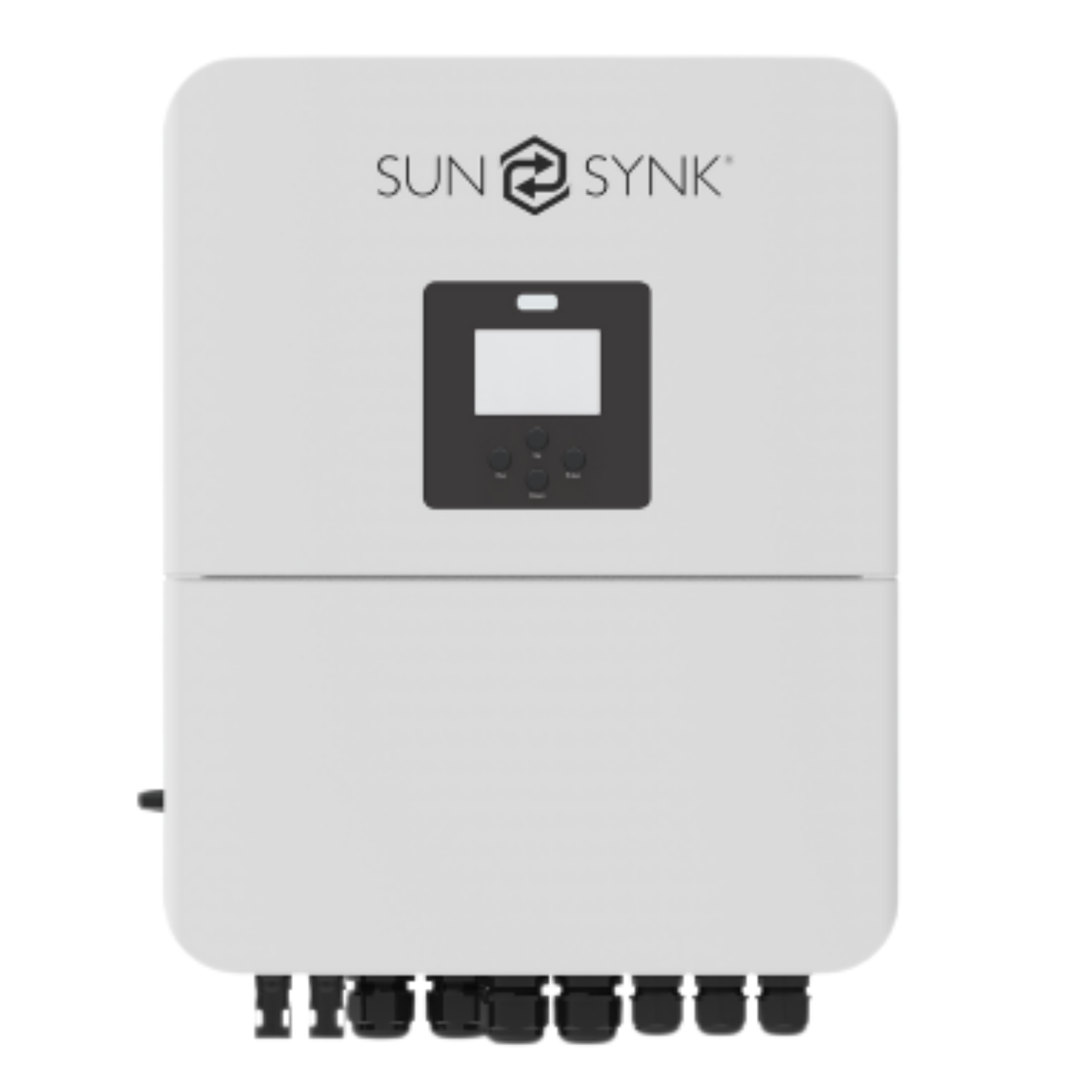
8,000W rated output and UPS (backup) power, with an 8,800W maximum
a surge of twice rated power for 10 seconds when running off-grid
a 48V battery with up to 190A charge and discharge current
10,400W maximum solar input across two MPPT trackers (the solar chargers)
NRS 097-2-1 among its grid certifications, and a 5-year warranty, or 10 years with a Sunsynk battery
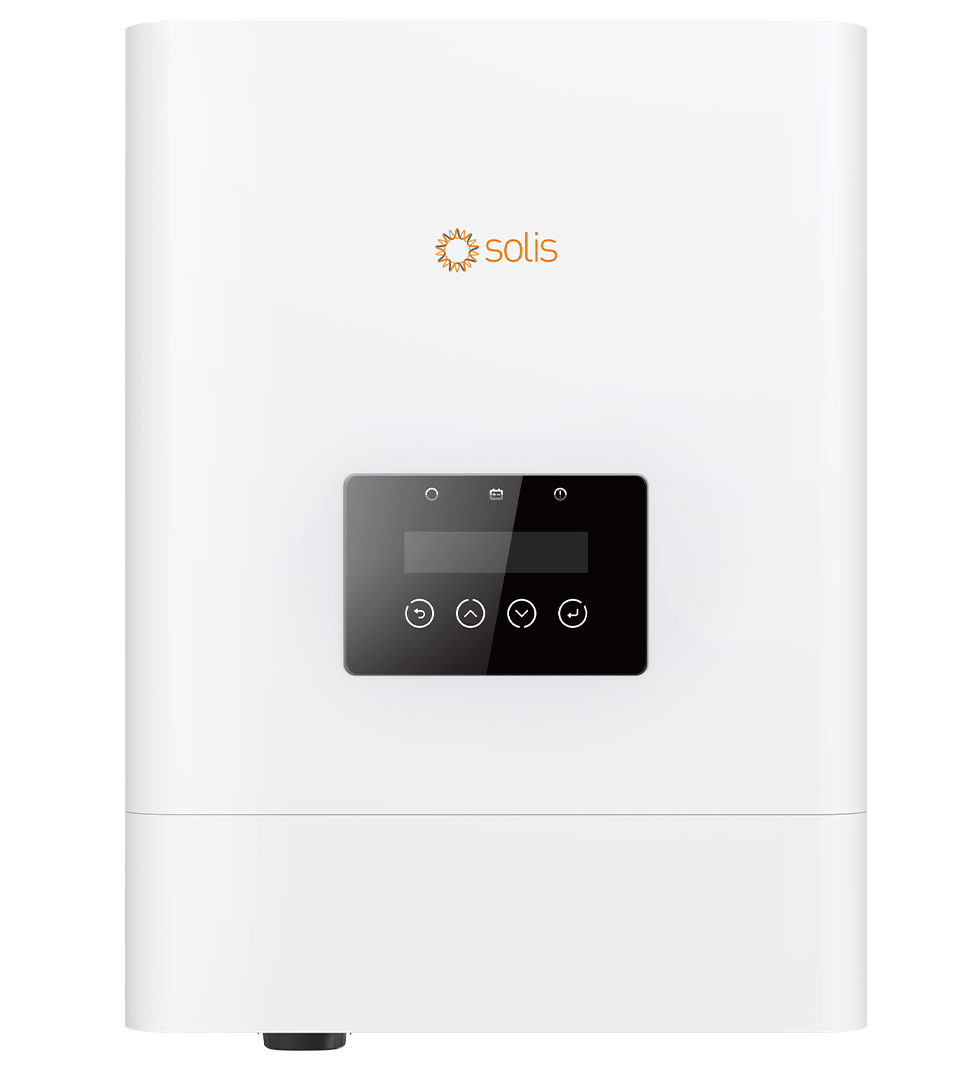
Solis's S6-EH1P8K-L-PLUS datasheet gives a similar picture: 8kW rated output, 8kVA maximum apparent power, twice rated power for 10 seconds on backup, under 4ms switchover and 190A battery current.
Size around the continuous 8,000W, not the surge. The surge headroom is there to start motors such as pool and borehole pumps, not to run extra appliances.
Who needs 8kW?
The case for 8kW is almost always about overlap: several heavy appliances running at the same time, routinely, not occasionally. That usually means one or more of these:
A larger family home where cooking, laundry and hot water overlap in the evening.
A geyser on the backed-up circuit. A geyser element draws 2,000W to 4,000W. On 5kW, it leaves little room for the kettle and oven.
A pool pump or borehole pump that has to run during outages. A 0.75kW pool pump draws roughly 750W to 1,100W and needs surge headroom to start.
Air conditioning. A 9,000 to 12,000 BTU split unit draws roughly 800W to 1,200W while its compressor runs, so two or three units add up fast.
A home office or business at home with equipment that cannot be switched off for the kettle.
Wattages here come from our appliance power table; your own appliances' rating plates override them. Our guide to solar for borehole and pool pumps covers pump sizing in more detail.
What an 8kW inverter can run at once
Start with the evening essentials: LED lights, Wi-Fi, TV, a fridge-freezer, security and a couple of laptops charging. Together, about 700W. That leaves 7,300W of headroom for heavier loads.
Evening essentials700 W
Geyser element3000 W
Essentials + geyser + kettle5900 W
Essentials + geyser + kettle + oven7900 W
Worked example loads against an 8,000W ceiling
Some combinations that fit within 8,000W, using typical ratings:
Combination
Total
Fits 5kW?
Fits 8kW?
Essentials (700W) + 3,000W geyser element
3,700W
Yes
Yes
Essentials + geyser + 2,200W kettle
5,900W
No
Yes
Essentials + geyser + kettle + 2,000W oven
7,900W
No
Yes, just
Essentials + two 1,000W aircons + 1,100W pool pump + kettle
The totals are SolarGuide calculations from the stated wattages.
The pattern is clear. A 5kW inverter handles one or two heavy appliances at a time. An 8kW inverter handles three, or a geyser plus normal cooking, without you having to think about it. It still has a ceiling: switch on everything that makes heat at once and it will overload, full battery or not. The 5kW inverter guide shows the same arithmetic one size down.
A realistic evening on 8kW
The lights, TV, Wi-Fi, fridge and laptops sit at around 700W. The geyser element switches on by thermostat at 3,000W. Someone boils the kettle (5,900W for a few minutes) while the oven heats for dinner. That last overlap reaches about 7,900W, right at the limit, so a fridge compressor starting at the same moment could trip it. Most households on 8kW still learn one habit: don't start the tumble dryer while the oven and geyser are both on.
How the battery changes the answer
An 8kW inverter on a small battery is like a wide pipe on a small tank. It can run a lot at once, but not for long. And there is a second issue that catches people out: the battery has to supply the power as well as store the energy.
The battery must keep up with the inverter
At 8,000W on a 51.2V lithium battery, the inverter draws about 156A from the battery (8,000W ÷ 51.2V, before losses). Sunsynk's 8kW datasheet allows up to 190A. But a single small battery may not deliver that. Sunsynk's 5.32kWh battery datasheet, for example, lists a maximum of 100A, or 5,000W.
So an 8kW inverter on one 5kWh-class battery behaves more like a 5kW system at night, when there is no solar to help. To use the full 8kW from the battery, the battery bank's combined maximum discharge current has to cover it. Ask your installer to confirm the battery's continuous discharge rating, not only its kWh.
How much storage for useful runtime?
Runtime is energy divided by power. As a working assumption, plan on about 85–90% of a lithium battery's rated capacity being usable after depth-of-discharge limits and inverter losses. Check the exact figure on your battery's datasheet.
Battery
Usable (editorial assumption)
Runtime at 1,500W evening load
Runtime at 8,000W flat out
10.65kWh
about 9kWh
about 6 hours
just over 1 hour
15.97kWh
about 14kWh
about 9 hours
under 2 hours
The 1,500W evening load is essentials plus a share of cooking and a pump. Nobody runs 8kW for hours, but the table shows why a 5kWh battery behind an 8kW inverter empties fast if you lean on it. For most homes that choose 8kW, 10kWh to 15kWh is where the battery starts to match the inverter. Shifting heavy loads such as the geyser and pool pump to daytime solar stretches it much further.
Not sure which system you need?
Get a free, no-obligation quote sized to your home, usage and budget. It only takes a minute.
The inverter's datasheet sets the ceiling for solar input. Your roof, budget and daytime use usually set the real number, well below it.
8kW hybrid
Maximum solar input (datasheet or listing)
Maximum 655W panels within it
Sunsynk SUNSYNK-8K-SG01LP1
10,400W
15 (9,825W)
Deye SUN-8K-SG05LP1-EU-SM2
12,800W (retailer listing)
19 (12,445W)
Solis S6-EH1P8K-L-PLUS
12.8kW usable, 16kW recommended maximum array
19 usable (12,445W)
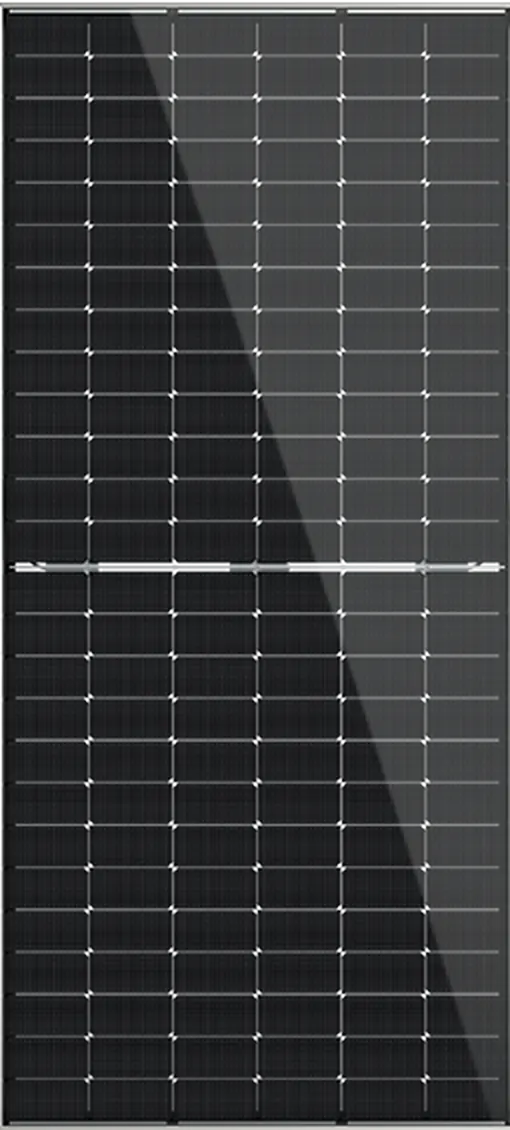
The panel counts are SolarGuide calculations that divide the maximum input by 655W. They ignore string design. In practice the installer also has to keep each string inside the tracker's voltage and current limits: Sunsynk lists 26A per tracker and a 150V to 425V MPPT range, while Solis lists 16A per tracker and 90V to 435V. Check the panel datasheet's current rating against the tracker limit, and ask how the strings will be configured.
For comparison, Alumo's current Standard subscription pairs an 8kW inverter with 12 × 655W panels (7.86kWp) and a 10.65kWh battery (alumo.co.za, checked 20 October 2026). That is well inside every ceiling above and leaves room to add panels later if your roof allows.
Single-phase limits and SSEG rules
Most South African homes have a single-phase supply, and 8kW single-phase hybrids exist precisely for them. A 60A single-phase connection is rated 13.8kVA (60A × 230V), so an 8kW inverter fits within the supply itself. The limits that bite come from your distributor's embedded-generation rules.
On those rules, an 8kW inverter is allowed on a 40A, 60A or 80A single-phase supply. But it may export only a quarter of the supply's capacity, so any surplus above that has to be limited by the inverter's settings. And the City limits battery charging current to 25% of the main breaker size, which on a 60A supply is about 3.45kW of charging from the grid.
If you have a three-phase supply, read the fine print. Cape Town's document says a single-phase inverter can be used on a three-phase connection if the system is 4.6kVA or less, and that the difference in installed capacity between phases may not exceed 4.6kVA per phase. On our reading, a single 8kW single-phase inverter on a three-phase supply would exceed that, so ask your installer whether a three-phase inverter or a split design is needed. Our guide to three-phase solar explains the options.
Eskom and other municipalities
Other distributors set their own limits, often based on the same NRS 097-2-3 criteria, so ask yours before you sign. Eskom says all households and small businesses with systems below 100kVA must register, even if they do not export, and asks for an NRS 097-2-1 type-test certificate for the inverter. Our SSEG registration guide covers the documents and process.
When 8kW is overkill
An 8kW inverter is the wrong buy if:
You only need essentials during outages. Lights, Wi-Fi, TV and a fridge use well under 1kW. A 5kW system, or smaller, covers them easily.
You can stagger heavy appliances. If boiling, cooking and laundry can happen one after the other, 5kW handles a normal family home.
Your geyser stays off the backup. A geyser timer, a solar geyser or a heat pump often solves the hot-water problem more cheaply than a bigger inverter.
Your battery budget is small. An 8kW inverter on 5kWh of storage gives you the cost of 8kW and, at night, roughly the performance of 5kW.
You live in a flat or small home with modest daytime use and limited roof space for panels.
The opposite signals point to 8kW: the inverter trips more than occasionally on your current system, a pump or aircon must run through outages, or you want the geyser backed up without rationing the kitchen.
What an 8kW inverter costs
Equipment-only prices vary widely by brand and retailer. Two listings from Solar Shop, checked on 20 October 2026, both including VAT:
Across several retailers, our quarterly Solar Price Index recorded 8kW hybrid inverter listings from R15,590 to R38,891 on 26 September 2026. These are inverter-only prices. A 10kWh-class battery, panels, mounting, protection, cabling, installation and the Certificate of Compliance usually cost more than the inverter itself, so compare installed quotes, not box prices.
Which package lands on 8kW?
If you'd rather pay monthly than buy outright, Alumo's current subscriptions step up in inverter size (alumo.co.za, checked 20 October 2026):
The Standard package is the 8kW route, and it pairs the inverter with the 10kWh-class battery this guide recommends. A subscription is not ownership, so check the term, escalation, maintenance and cancellation conditions before you sign. Alumo confirms the final system after a site assessment, and pricing is subject to credit approval. If you are unsure whether you need 5kW or 8kW, ask for a quote sized around the loads you actually run together.
Frequently asked questions
Can an 8kW inverter run a geyser?
Yes. A geyser element draws 2,000W to 4,000W, and an 8kW inverter can run a 3,000W element alongside the evening essentials and a kettle, with room left over. Running a geyser off the battery uses a lot of stored energy, though, so many homes heat water during the day on solar or with a timer.
How many panels can I connect to an 8kW inverter?
It depends on the model's maximum solar input. Sunsynk's 8kW datasheet lists 10,400W, which is up to 15 panels of 655W. Solis's S6-EH1P8K-L-PLUS lists 12.8kW usable, about 19 of those panels. String voltage and current limits, and your roof, usually bring the real number lower.
What battery size suits an 8kW inverter?
For useful runtime, 10kWh to 15kWh of lithium storage is the usual match. The battery also has to deliver enough current: running 8,000W from a 51.2V battery draws about 156A, more than a single 5kWh-class battery rated at 100A can supply.
Is 8kW too big for a single-phase home?
Not necessarily. 8kW single-phase hybrids are designed for single-phase homes, and Cape Town's rules allow an inverter of that size on a 40A, 60A or 80A single-phase supply, with export and battery-charging limits. Other distributors have their own rules, so check before installation.
Is SolarGuide the installer?
No. SolarGuide is an independent referral partner. Alumo supplies, installs, finances and warrants the systems we refer. We help you compare options and get a free quote. All pricing is indicative and subject to a site assessment and credit approval.
Sources and review note
Checked on 20 October 2026. Inverter specifications come from Sunsynk's 8kW single-phase hybrid datasheet (v22) and Solis's S6-EH1P8K-L-PLUS datasheet; the Deye solar input figure and both inverter prices come from Solar Shop's listings for the Solis and Deye models. Battery current comes from Sunsynk's 5.32kWh battery datasheet (v3). Connection limits come from the City of Cape Town's Requirements for Small-Scale Embedded Generation (version 51, September 2023), and registration requirements from Eskom's SSEG page. The price range comes from SolarGuide's Solar Price Index, Q3 2026, checked on 26 September 2026. Alumo's subscription configurations and starting prices come from alumo.co.za. Appliance wattages are typical rating-plate ranges from our appliance power table. Load totals, battery current, runtime, usable capacity and panel counts are SolarGuide calculations and assumptions. SolarGuide has not tested these products; the inverter and battery brands and retailers named here are described editorially and are not SolarGuide partners. If you spot a factual error, tell us and we'll correct it.
SolarGuide is an independent referral partner. We help you compare options and arrange a free quote — Alumo supplies, installs, finances and warrants the systems. Pricing is indicative, sourced from Alumo’s published catalogue, and subject to a site assessment and credit approval.