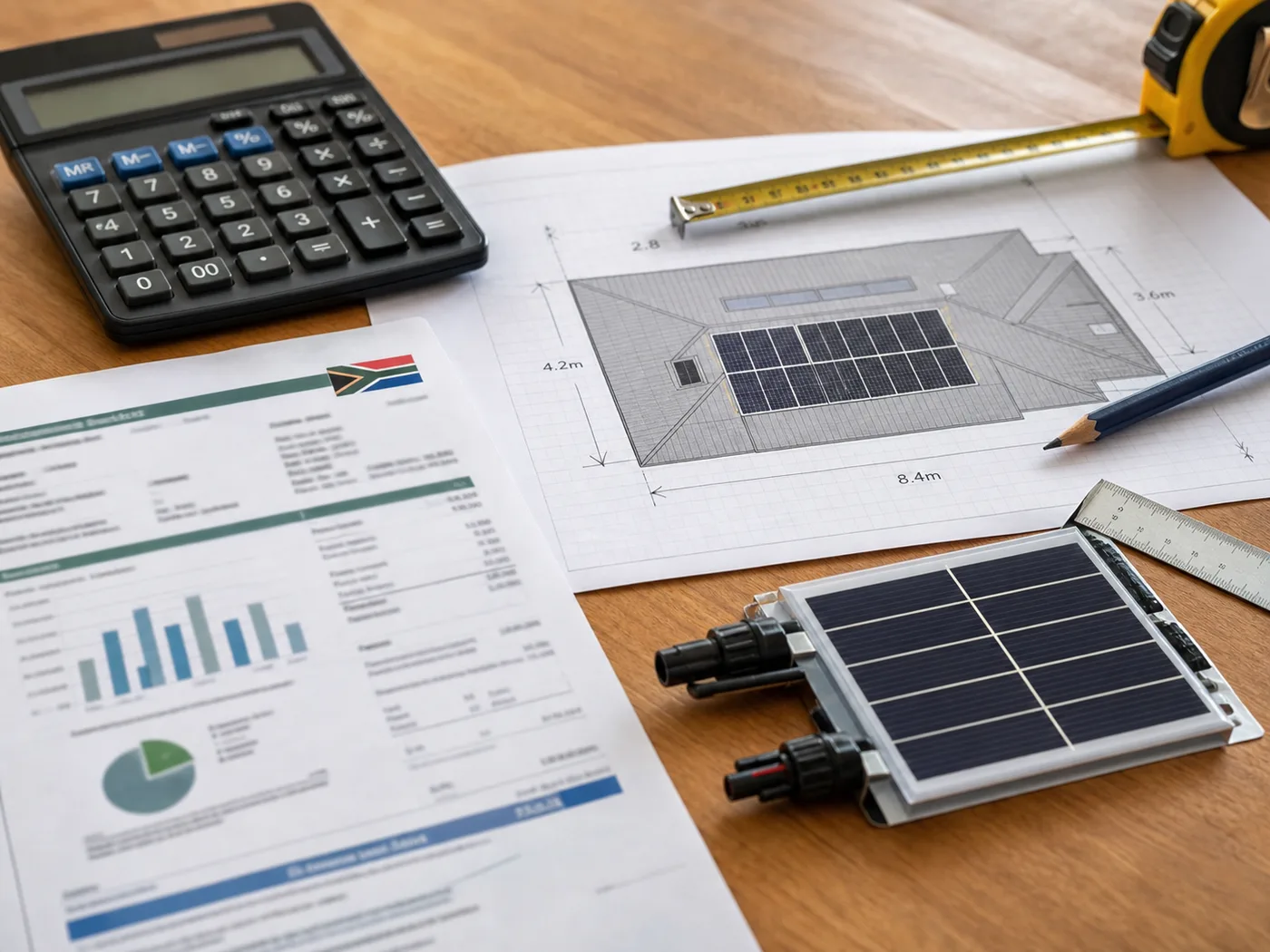
Use the calculator for an indicative starting point, then confirm the system against your roof, phase type, appliance loads and preferred backup level.
The single biggest mistake South Africans make with backup power is buying by gut feel. You picture "keeping the house on" and end up either overspending on a system twice the size you need, or underspending on a little inverter that trips the moment someone flicks on the kettle. The fix is simple: understand which of your appliances sip power and which of them gulp it.
This guide walks through the appliances in a typical SA home, sorts them into what your backup power should carry and what it shouldn't, and shows you how to turn that into a right-sized system. No engineering degree required. You just need a clear head about what actually matters when the grid drops.
Key takeaways
Lights, Wi-Fi, TVs, laptops, phone chargers and a fridge are low-draw essentials any decent backup system should run.
Heating appliances (kettles, geysers, ovens, heaters, hair dryers) are power gluttons that drain batteries in minutes.
Watts alone don't tell the story. Appliances that make heat or run big motors are the ones that punish an undersized system.
Match the system to your genuine essentials and you'll pay far less than trying to power the whole house at once.
First, understand watts vs watt-hours
Two numbers decide everything. Watts (W) is how much power an appliance draws at any instant — it tells you whether your inverter can even switch the thing on. Watt-hours (Wh) is watts multiplied by time — it tells you how much of your battery the appliance eats over an evening.
A phone charger draws maybe 10W. Leave it on for two hours and it's used 20Wh — nothing. A 2,000W kettle draws two hundred times as much and is often on when other things are too. Even though it only runs for a few minutes, it hammers your inverter's instant capacity. This is why "how many appliances" is the wrong question. It's about which appliances, and whether they make heat.
The green list: run these without a second thought
These are low-draw, and together they cover most of what makes a home livable during an outage.
LED lights — a few watts each. A whole home lit costs less than a single kettle.
Wi-Fi router and fibre ONT — around 10-20W combined. Keeping these on means you stay connected, can work, and can keep the kids occupied.
TV and decoder — a modern LED TV is roughly 50-150W. An evening of viewing is comfortably within reach.
Laptops and phone chargers — laptops sip 40-90W; phones almost nothing.
Fridge and freezer — this surprises people, but a modern fridge only draws around 100-200W and cycles on and off, so its average draw is modest. Keeping it cold protects hundreds of rands of food.
Wi-Fi, alarm, electric gate and CCTV — these low-draw security and connectivity loads are exactly what you want backed up. We cover them in depth in our security guide.
Add all of that up and a typical family's genuine essentials often sit well under 1kW of continuous draw — squarely in the range a well-chosen home system handles with ease.
Not sure which system you need?
Get a free, no-obligation quote sized to your home, usage and budget. It only takes a minute.
These appliances share a trait — they turn electricity into heat, or they run big motors. Both are brutal on batteries.
Kettle — around 2,000W. It'll run on a bigger inverter, but boiling a full kettle repeatedly drains a small battery fast.
Geyser — 2,000-3,000W and often on for long stretches. Backing up a standard geyser is one of the fastest ways to flatten a battery. A timer, a geyser blanket, or a heat-pump upgrade is usually smarter than backing it up.
Oven and stove plates — 2,000W and up per element. Cook with gas during load-shedding and save your battery for the essentials.
Electric heaters — 1,000-2,000W of pure heat. In winter these can single-handedly undo a whole system's runtime. A gas heater or an electric blanket (which sips power) is far kinder.
Tumble dryer, dishwasher, washing machine — high draw and long cycles. Easy to simply run when the grid is up.
Hair dryer, iron, air fryer, microwave — short bursts, but very high instantaneous draw. Manageable on a larger system, but each one eats into your reserve.
The rule of thumb: if it makes heat, be careful. A single geyser or heater can demand more power than every light, screen and fridge in your house combined.
10LED lights (whole home)
20Wi-Fi + fibre ONT
100TV + decoder
150Fridge (average draw)
2000Kettle
3000 | unit=W | caption=Typical power draw — heat-makers dwarf the essentialsGeyser
Appliance power table: watts and kWh per day
Keep this table open while you plan. The rated power column gives the range you will usually see on the rating plate for that kind of appliance. The energy column is plain arithmetic for the use shown: watts × hours ÷ 1,000. It is a worked example, not a national average, so put in your own watts and hours.
Appliance
Typical rated power
Example use
Energy for that use
LED bulb
5–10W
8 bulbs, 5 hours at 8W
0.32kWh
Wi-Fi router and fibre ONT
10–20W
24 hours at 15W
0.36kWh
Phone charger
5–20W
2 phones, 2 hours at 10W
0.04kWh
Laptop
40–90W
6 hours at 60W
0.36kWh
LED TV and decoder
50–150W
4 hours at 100W
0.40kWh
Fridge-freezer
100–200W while the compressor runs
Energy label of 300kWh a year ÷ 365
0.82kWh
Electric blanket
60–100W
2 hours at 60W
0.12kWh
Microwave
1,000–1,500W drawn (the cooking power on the door is lower)
15 minutes at 1,200W
0.30kWh
Kettle
1,800–2,400W
4 boils of 1.5 litres
0.56kWh
Air fryer
1,400–2,000W
20 minutes at 1,500W
0.50kWh
Stove plate
1,000–2,000W per plate
40 minutes at 1,500W
1.00kWh
Oven
2,000–3,000W
1 hour at 2,000W
up to 2.00kWh
Hair dryer
1,200–2,200W
10 minutes at 2,000W
0.33kWh
Iron
1,000–2,400W
30 minutes at 2,000W
up to 1.00kWh
Pool pump (0.75kW)
750–1,100W
6 hours at 750W
4.50kWh
Split aircon (9,000–12,000 BTU)
800–1,200W while the compressor runs
4 hours at 1,000W
up to 4.00kWh
Electric heater
1,000–2,000W
3 hours at 2,000W
6.00kWh
Tumble dryer
2,000–2,500W
1 hour at 2,000W
up to 2.00kWh
Washing machine, dishwasher
About 2,000W while heating water
Energy label (kWh per cycle)
Label figure
Geyser (150 litres)
2,000–4,000W element
Hot water for 2 adults at 60°C, plus standing loss
8.84kWh
"Up to" marks appliances with a thermostat or compressor that switches off once they reach temperature, so the real figure is usually lower. Three rows use numbers you can check instead of a guess:
Kettle. Heating 1.5 litres from 20°C to boiling takes 1.5 × 80 × 0.001163 = 0.14kWh per boil. A 2,200W kettle does that in about four minutes.
Fridge-freezer. The energy label gives kWh per year; divide by 365 for your daily figure. A fridge's watts mislead on their own because the compressor cycles on and off.
Geyser. This uses the same assumptions as our geyser cost calculator: Eskom's 80 litres of hot water per adult a day and 20°C inlet water, plus the 1.40kWh-a-day maximum standing loss for a 150-litre geyser made since 2016. Put your own household into the calculator to get your number.
How many watts does a kettle use?
Most kettles are rated between 1,800W and 2,400W, and that is why a kettle trips small inverters: it draws a lot of power the moment it switches on. The energy per boil is small, though. A full 1.5-litre boil uses about 0.14kWh, so a kettle is a problem for the inverter more than for the battery.
How many watts does a microwave use?
A microwave draws roughly 1,000–1,500W from the socket. The figure on the door, often 700–900W, is the cooking power delivered to the food. It is not what the inverter has to supply, so size the inverter for the rating-plate figure on the back.
How much electricity does a house use in South Africa?
There is no reliable national figure. Published averages disagree widely, and your own number depends mostly on whether you heat water and cook with electricity. The number that matters for sizing is on your bill or in your prepaid history: take the monthly kWh and divide it by 30 for your daily use.
To see where the energy goes, add up an example day from the table: lights, Wi-Fi, chargers, a laptop, the TV, the fridge, four kettle boils, the microwave, one stove plate and the geyser.
Example household day
kWh
Lights, Wi-Fi, chargers, laptop, TV
1.48
Fridge-freezer
0.82
Kettle, microwave, one stove plate
1.86
Geyser (2 adults)
8.84
Total
13.00
That comes to about 395kWh a month, and the geyser accounts for 68% of it. Everything else in the house uses 4.16kWh a day. That split is why geyser timers, geyser blankets and solar water heating save so much, and why backup systems leave the geyser off the backed-up circuit. To turn kWh into rand at your municipality's rate, use our electricity tariff tracker.
For backup sizing, only the evening essentials count. Over a four-hour evening, lights, Wi-Fi, chargers, the TV and the fridge's share come to about 0.9kWh together. That is why a 5kWh battery comfortably covers most households' outages. If you only need a few of these on, compare a UPS, inverter or portable power station.
How this translates into a system size
Once you know your essentials, sizing becomes common sense. You're answering two questions: can the inverter handle my peak draw? and does the battery hold enough to cover the longest outage?
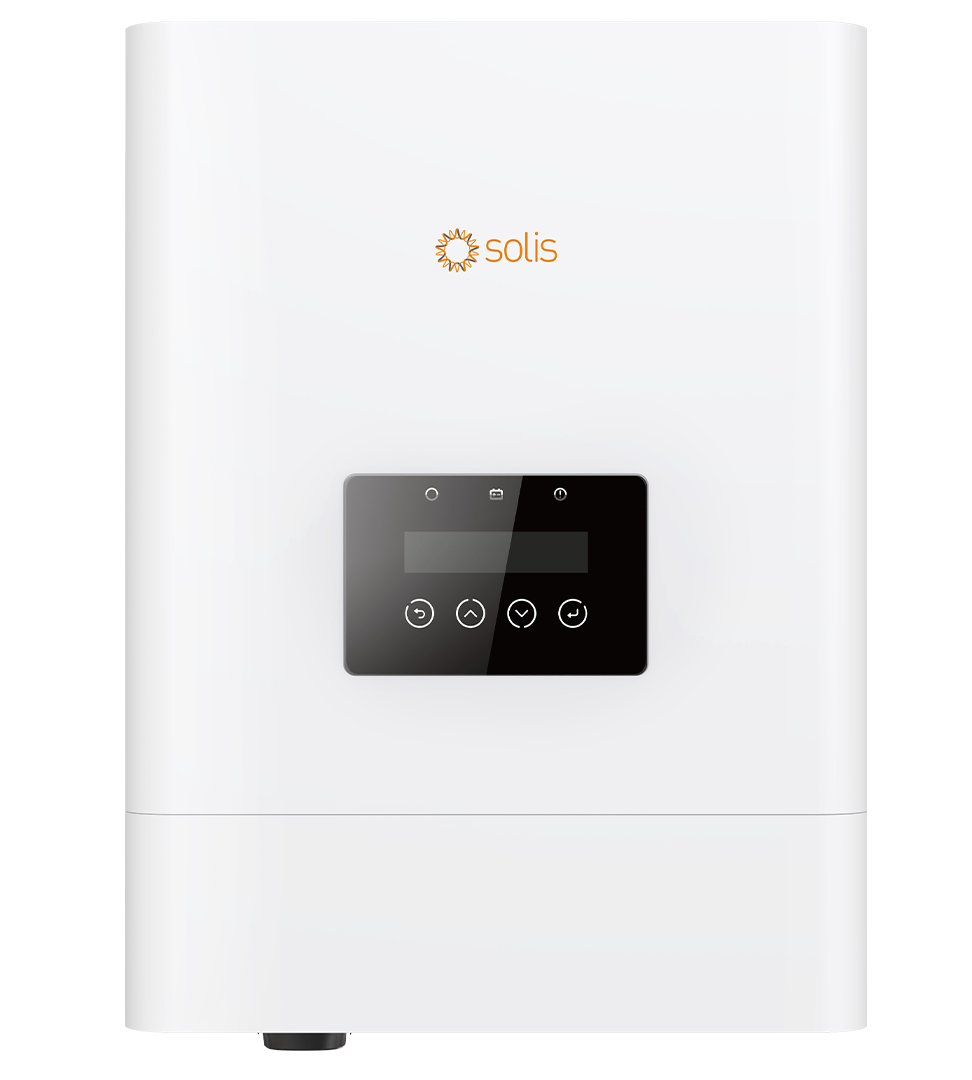
Alumo's current solar-plus-battery rent-to-own range uses a Solis 5kW inverter and Eenovance 5.32kWh battery: Watt-a-Deal has three 615W panels from R1,418/month, The Big Watt has four from R1,487/month, and The Power Bae has six from R1,626/month on a seven-year term. Three- and five-year prices, solar-only configurations and battery-only pricing are available on our current package comparison.
The point is that you don't pay for a whole-house system when your real need is a well-run essentials list — and you don't cripple yourself with something too small either.
A five-minute exercise for your own home
Walk through your house and jot down what you genuinely can't do without during an outage: the lights in the rooms you use, the router, the TV, the fridge, chargers, and your security kit. Ignore anything that makes heat unless you're specifically choosing to back it up. Add up the watts. That number — not the size of your house or your neighbour's system — is what should drive your decision.
When you're ready, the fastest way to get it right is a professional load assessment. Get a free quote → and a specialist will size a system around your actual essentials, so you're not paying for power you'll never use.
Free tool
How long will your battery last?
Pick a battery size and what you want to keep running.
5.0 kWh
Estimated backup time
12.9 hours
Running about 350 W
Rough estimate at ~90% usable depth. Real runtime depends on the exact appliances and battery. A quote sizes it properly.
Checked on 26 September 2026. The rated-power ranges are typical rating-plate values for each type of appliance, and your own appliance's rating plate or energy label overrides them. Daily energy is watts × hours ÷ 1,000. The kettle figure uses the energy needed to heat water (0.001163kWh per litre per °C) and the 1.5-litre fill assumed by Eskom's residential calculator. The geyser uses Eskom's calculator assumptions (80 litres per adult a day, 20°C inlet) and the 150-litre standing-loss limit from the LBNL/Eskom South Africa water heating study, both cited on our geyser cost calculator. The example household is a SolarGuide calculation, not a survey average.
Frequently asked questions
Can I run my kettle or geyser on backup power?
You can, on a larger system, but you probably shouldn't want to. Kettles and geysers are heat-producing appliances that draw enormous power and flatten batteries quickly. Most households find it far cheaper to boil water on gas and use a geyser timer or blanket, keeping the battery for lights, Wi-Fi and the fridge.
Will a small inverter run my fridge?
Usually yes. A modern fridge only draws around 100-200W on average and cycles on and off, so it's a low-draw essential. The thing to check is the start-up surge when the compressor kicks in — a quality inverter is designed to handle it, which is another reason a proper system beats a bargain-bin unit.
How do I work out what size system I need?
List the appliances you truly need during an outage, add up their watts to check your inverter can handle the peak, then multiply by the hours you want to run them to estimate battery size. It's easier to have a specialist do a proper load assessment, which is included when you request a free quote.
Why does my inverter trip when I switch on certain appliances?
It's hitting the inverter's instantaneous power limit. Heat-making appliances like kettles, irons and heaters, plus motor-driven ones, demand a big burst of watts the moment they switch on. If that burst exceeds the inverter's rating, it trips to protect itself — a sign the system is undersized for that appliance.
How much electricity does a kettle use per boil?
About 0.14kWh to boil 1.5 litres from 20°C. The kettle's high wattage matters for the inverter, which has to supply around 2,000W at once, but the energy per boil is small.
How much electricity does a fridge use per day?
Check the energy label. It gives kWh per year, so divide by 365: a label of 300kWh a year works out to about 0.82kWh a day. A fridge draws 100–200W while the compressor runs, but the compressor cycles on and off.
Is SolarGuide the installer?
No. SolarGuide is an independent referral partner. Alumo supplies, installs, finances and warrants the systems. We help you compare options and get a free quote. All pricing is indicative and subject to a site assessment and credit approval.
SolarGuide is an independent referral partner. We help you compare options and arrange a free quote — Alumo supplies, installs, finances and warrants the systems. Pricing is indicative, sourced from Alumo’s published catalogue, and subject to a site assessment and credit approval.