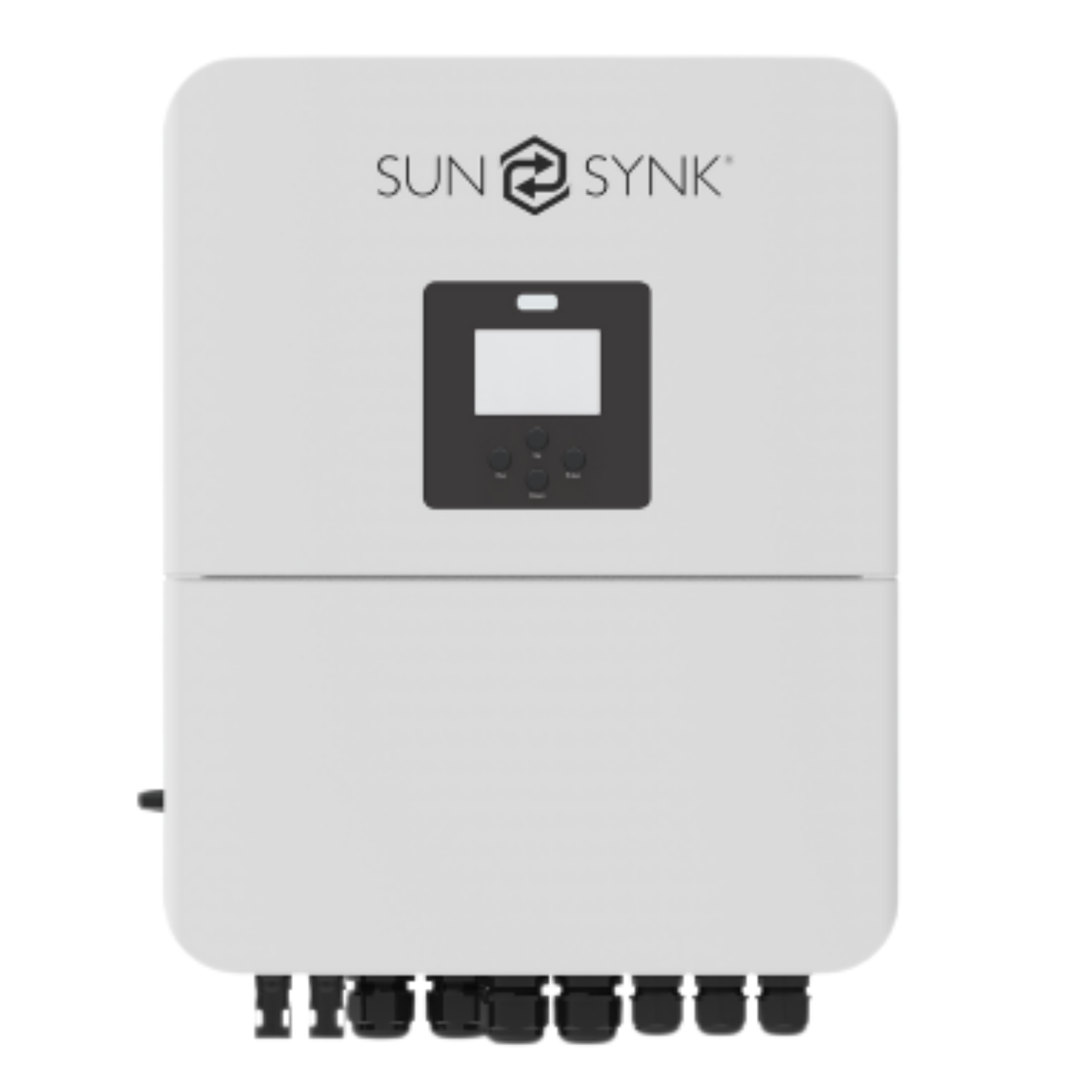
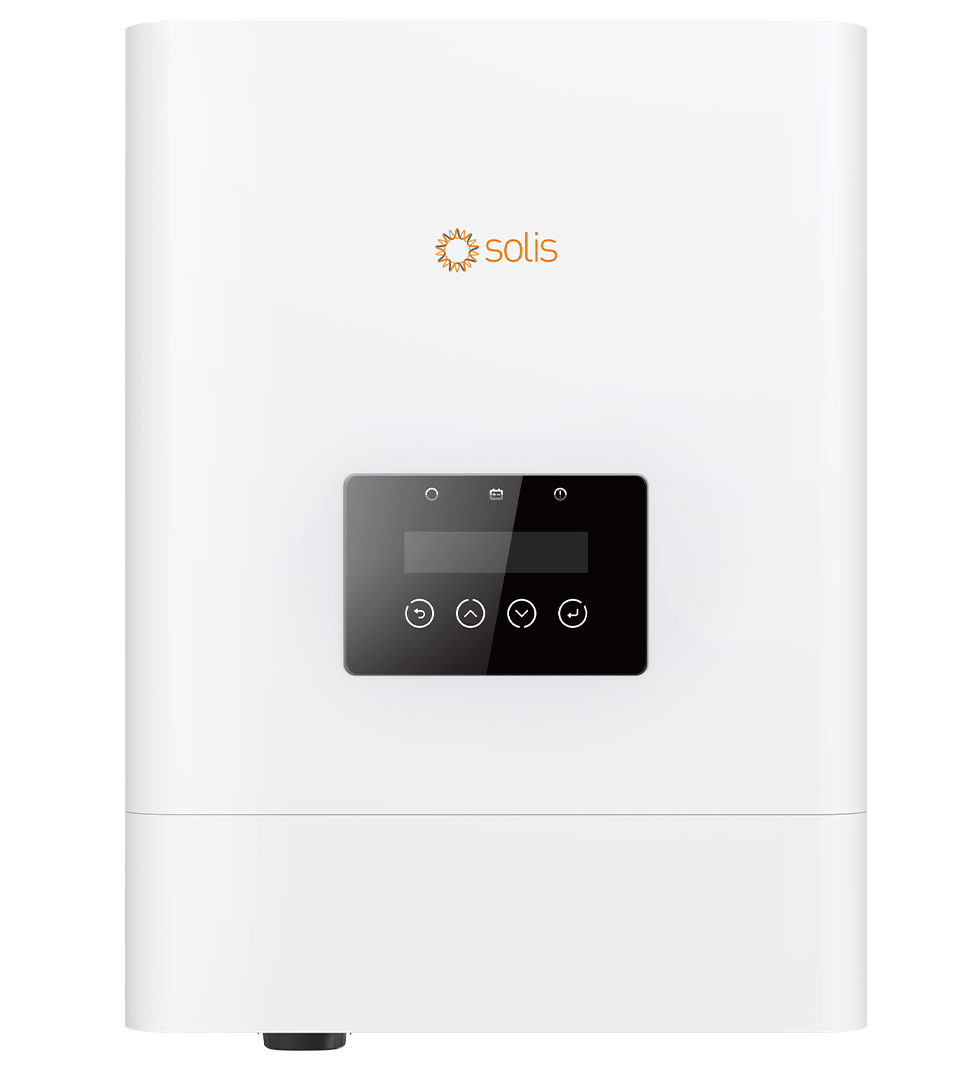
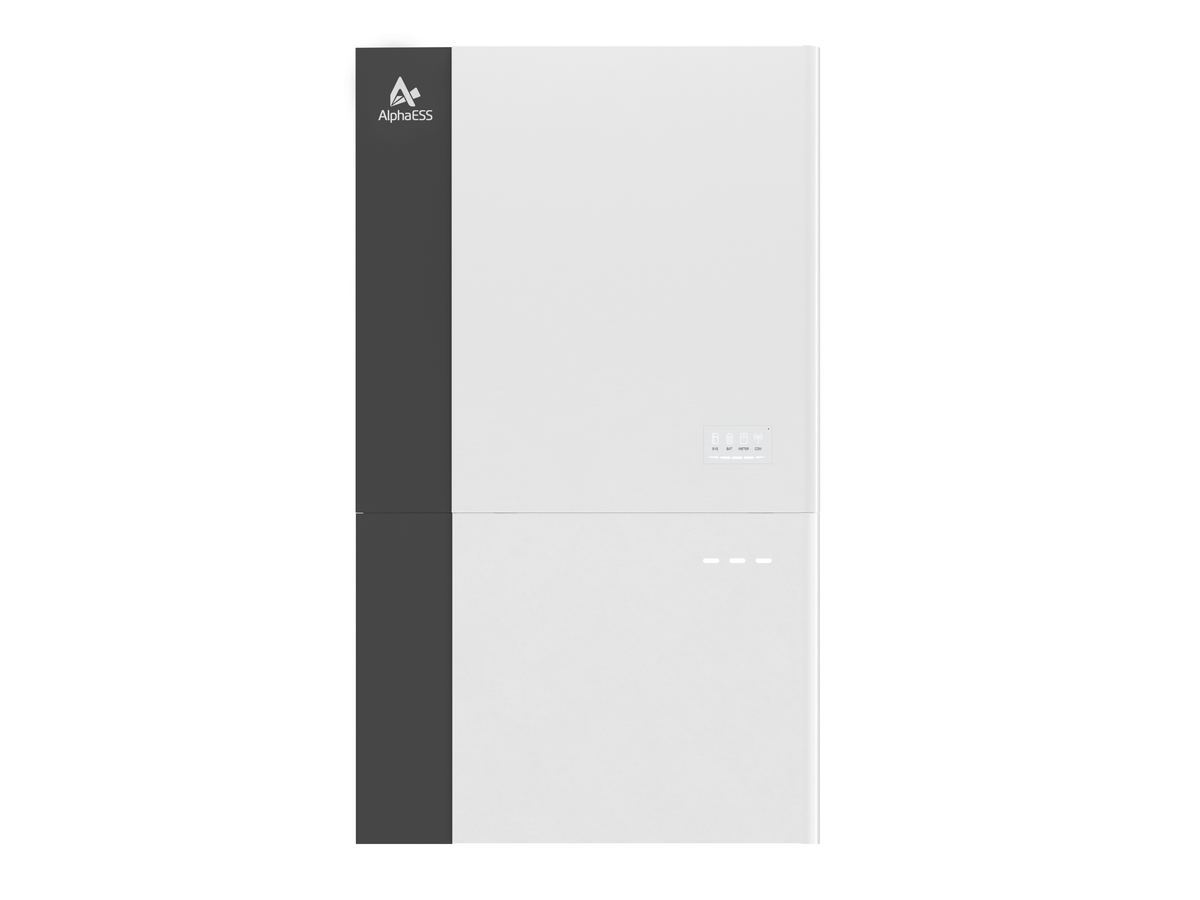
The right inverter and battery pairing matters more than a headline kW or kWh figure. See the models currently listed by SolarGuide, then ask for a quote based on your home and usage.
Huawei and GoodWe are two of the big Chinese inverter makers whose names turn up on South African quotes when the installer isn't offering Sunsynk, Deye or Solis. They look similar on paper: both sell single-phase and three-phase hybrids, both have their own batteries and apps, and both have models on the City of Cape Town's approved inverter list. Underneath, they are built on quite different ideas.
Huawei's SUN2000 hybrids work only with Huawei's own high-voltage LUNA2000 batteries, and they need a separate box to give you backup during an outage. GoodWe's range is more open: its ES G2 takes ordinary 48V batteries from several brands, while its EHB and ET models take high-voltage batteries, and backup is built into the inverter. This guide compares the two on the things that decide the choice in a South African home, using the manufacturers' own datasheets, warranty documents and Cape Town's list dated 11 September 2026.
Key takeaways
Huawei SUN2000 hybrids only accept Huawei LUNA2000 high-voltage batteries. GoodWe's ES G2 works with 48V batteries, including Pylontech and BYD models on GoodWe's list, and its EHB and ET work with high-voltage batteries.
Huawei backup needs an extra device. The SmartGuard switches in 20ms or less, but an older three-phase SUN2000-M1 with a Backup Box-B1 delivers only 3,300VA of single-phase backup. GoodWe's hybrids switch to backup internally in under 10ms at full rated output.
A single 5kWh LUNA2000-S0 module supplies at most 2.5kW, so a one-module Huawei system can't use a 5kW inverter's full output from the battery.
Huawei's published warranty is 10 years on its residential inverters. GoodWe's African warranty is 5 years, rising to 10 years when an ES G2 or ET is paired with a GoodWe battery bought by 31 December 2026 and registered on its portal.
Cape Town's list includes Huawei's SUN2000-L1, LC0 and M1 models and GoodWe's ES G2, EHB and ET Plus+ models. We did not find Huawei's newer LB0 or MAP0, or GoodWe's ET G2.
The two ranges in South Africa
Huawei SUN2000 and LUNA2000
Huawei calls its residential inverters "smart energy controllers". The models you are most likely to meet are on Huawei's global residential products pages:
SUN2000-2KTL to 6KTL-L1: the long-running single-phase hybrid, 2kW to 6kW, two MPPTs at 12.5A each, IP65 (specifications)
SUN2000-3K to 6K-LB0: a newer single-phase hybrid with 16A per MPPT and an IP66 case (specifications)
SUN2000-8K and 10K-LC0: single-phase 8kW and 10kW, three MPPTs, IP66 (specifications)
SUN2000-3KTL to 10KTL-M1: the established three-phase hybrid, 13.5A per MPPT, IP65 (specifications)
SUN2000-5K to 12K-MAP0: the newer three-phase hybrid, 16A per MPPT, IP66, with 100% unbalanced load support (specifications)
Huawei's South African FusionSolar site lists commercial, utility and storage products and a distributor and installer finder, but when we checked on 22 October 2026 it did not carry residential product pages of its own. Ask your installer which South African distributor supplies the unit, because that is who stands behind the warranty locally.
GoodWe ES G2, EHB and ET
GoodWe sells three hybrid families that matter for South African homes:
ES G2: single-phase, 3kW to 6kW, for 48V low-voltage batteries (datasheet)
EHB: single-phase, 5kW to 10kW, for high-voltage batteries, which GoodWe's datasheet labels "South Africa only"
ET Plus+: three-phase, 5kW to 10kW, for high-voltage batteries (datasheet), with the newer ET G2 covering 6kW to 15kW (datasheet)
People still search for the GoodWe "EH series". The EH is GoodWe's earlier single-phase high-voltage hybrid, and for South Africa the EHB is the model GoodWe now positions in that slot.
Huawei vs GoodWe at a glance
Criterion
Huawei
GoodWe
Single-phase hybrids
SUN2000-L1 (2kW to 6kW), LB0 (3kW to 6kW), LC0 (8kW and 10kW)
ES G2 (3kW to 6kW, 48V battery), EHB (5kW to 10kW, high-voltage battery)
Three-phase hybrids
SUN2000-M1 (3kW to 10kW), MAP0 (5kW to 12kW)
ET Plus+ (5kW to 10kW), ET G2 (6kW to 15kW)
Battery type
High-voltage only: LUNA2000-S0 or S1
ES G2: 48V lithium, or lead-acid on the non-M models. EHB and ET: high-voltage
Third-party batteries
No. Huawei lists only LUNA2000 models
Yes, from GoodWe's approved list
Backup
Needs SmartGuard (20ms or less) or a Backup Box
Built in, under 10ms
Monitoring
FusionSolar app and SmartPVMS
SEMS platform (SEMS+ in the warranty)
Standard warranty
10 years on the inverters listed here
5 years in Africa, 10 years with a qualifying GoodWe battery
Source: Huawei and GoodWe specifications and warranty documents, checked on 22 October 2026.
Battery ecosystem: closed vs open
This is the biggest difference between the two brands, and it decides what happens when you want to add storage later.
Huawei: LUNA2000 only
Every Huawei hybrid specification page lists the same compatible batteries: LUNA2000-5/10/15-S0 and LUNA2000-7/14/21-S1. They are high-voltage batteries (350V to 560V on single-phase systems), so a 48V rack battery cannot be connected.
The LUNA2000-S0 stacks one to three 5kWh modules on a power module, for 5kWh, 10kWh or 15kWh usable. Its maximum output is 2.5kW with one module and 5kW with two or three.
The LUNA2000-S1 uses 6.9kWh modules (6.9kWh, 13.8kWh or 20.7kWh usable) and delivers 3.5kW, 7kW or 10.5kW depending on the number of modules.
Both are IP66, and Huawei recommends outdoor installation. The usable figures are measured at 100% depth of discharge, but Huawei's footnote adds that if the system detects no sunlight for 24 hours, the minimum end-of-discharge level is 15%.
The 2.5kW limit is the trap. A SUN2000-5KTL-L1 can discharge at 5,000W, but paired with a single LUNA2000-5-S0 module, the battery can only supply 2.5kW. At night that is the ceiling for your backed-up circuits. Two modules lift it to 5kW. Our guide to what a 5kW inverter can run shows how quickly a kettle and a microwave add up.
GoodWe: low-voltage or high-voltage, several brands
The ES G2 is a 48V inverter. The GW5000-ES-20 and GW6000-ES-20 handle up to 120A of battery current (the "M" versions 60A), and GoodWe's battery compatibility overview (dated 10 September 2026) approves its own Lynx Home U and Lynx Home A batteries plus BYD, LG RESU and Pylontech low-voltage models for it, including the Pylontech US2000C, US3000C, US5000 and Force L1 and L2. Our Pylontech battery review covers those modules.
The EHB and ET are high-voltage inverters. They pair with GoodWe's Lynx Home F batteries and approved BYD, LG and Pylontech high-voltage models. The EHB datasheet names BYD HVM and HVS, Pylon H1 and H2, LG RESU10H Type-R and GoodWe's own high-voltage batteries.
Two cautions apply. GoodWe's warranty treats damage caused by an incompatible battery as out of warranty, so check the current approved list, not an old forum post. And the list carries minimum firmware versions for many pairings.
Backup and switchover
Both brands can keep the lights on during an outage, but they get there differently.
GoodWe builds backup into the inverter. The ES G2 datasheet gives switching to backup "in less than 10ms", and the GW5000-ES-20 supplies 5,000VA of backup, with 10,000VA for 10 seconds for motor starts. The EHB lists backup equal to its rated output, with 20% extra for 60 seconds, and the ET Plus+ supports 100% unbalanced output across three phases.
Huawei needs a separate device. On single-phase L1 and LC0 systems that is the SmartGuard-63A-S0, which Huawei rates at 20ms or less "in Seamless Mode", or the older Backup Box-B0 on the L1. On the three-phase MAP0 it is the SmartGuard-63A-T0, again 20ms or less, at the inverter's full rated output. The older three-phase SUN2000-M1 uses a Backup Box-B1, and its specification gives a maximum of 3,300VA of backup output at single-phase 230V, whatever the inverter's size.
Huawei SUN2000-5KTL-M1 with Backup Box-B13.3 kVA or kW
Huawei SUN2000-5K-MAP0 with SmartGuard5 kVA or kW
GoodWe GW5000-ES-205 kVA or kW
GoodWe GW5000-EHB5 kVA or kW
Rated backup output of 5kW-class models as published by Huawei and GoodWe, checked on 22 October 2026
The practical points:
On a Huawei quote, check that the backup device is itemised and priced. Without it, the system will not supply your home during an outage.
On an older M1 three-phase system, plan the backed-up circuits around 3,300VA on one phase.
Huawei's warranty table gives the SmartGuard 10 years but the older Backup Box only 2 years.
Is it on Cape Town's approved list?
NRS 097-2-1 is the South African specification for inverters connected to the grid. Eskom's small-scale embedded generation page lists an NRS 097-2-1 type-test certificate for the inverter as one of the registration documents, and says households with systems below 100kVA must register even if they do not export. The City of Cape Town states that all new solar PV and battery systems are treated as grid-tied and must use a City-approved inverter.
Huawei SUN2000-2KTL, 3KTL, 3.68KTL, 4KTL, 4.6KTL, 5KTL and 6KTL-L1
Yes
Huawei SUN2000-8K-LC0 and 10K-LC0
Yes
Huawei SUN2000-3KTL to 10KTL-M1 (and older M0)
Yes
Huawei SUN2000-LB0 and MAP0
Not found
GoodWe GW3000, GW3600, GW5000 and GW6000-ES-20 (including the M versions)
Yes
GoodWe GW5000, GW6500 and GW8600-EHB, plus a 10kW EHB entry
Yes
GoodWe GW5K, GW8K and GW10K-ET
Yes
GoodWe ET G2 (GW6000 to GW15K-ET-20) and GW6.5K-ET
Not found
The list also includes GoodWe's EM series and many of both brands' larger commercial inverters. Huawei's own MAP0 specification names NRS 097-2-1 among its grid standards, so a certificate may exist even though we did not find the model on Cape Town's list. Not finding a model does not prove it is uncertified, but it does mean you should ask for the certificate rather than assume.
One more detail from GoodWe's datasheets: under NRS 097-2-1 settings, grid feed-in on the 5kW and 6kW ES G2 models and on the EHB is limited to 4,600VA. That affects how much you can export on a single phase, not your backup.
What to do with this:
Ask for the exact model string from the rating label, including suffixes such as KTL-L1, K-LC0, ES-20 or EHB.
Ask for that model's NRS 097-2-1 certificate and check it with your distributor.
In Cape Town, find the model on the City's list. Elsewhere, ask your municipality or Eskom what they accept.
Huawei's systems use the FusionSolar app, with built-in WLAN on the L1 and LB0 and optional dongles for Ethernet or 4G. The SmartGuard also acts as an energy manager for EV chargers, heat pumps and Shelly smart plugs, according to its specification.
GoodWe's inverters report to its SEMS cloud platform over WLAN, LAN or 4G. GoodWe's African warranty calls it SEMS+ and makes registration and connection a condition of the 10-year offer.
Both brands also push firmware remotely. Huawei voids the LUNA2000-S1's advanced warranty if the battery is not connected to FusionSolar after power-on or stays disconnected for more than six months. GoodWe's warranty says its standard cover "may not apply" if it cannot perform remote upgrades. In both cases, keep the system online and make sure the account is in your name, not only the installer's.
Inverters: 10 years for the SUN2000-L1, LB0, LC0, M1 and MAP0 outside China, India and Latin America
SmartGuard: 10 years. Backup Box: 2 years
LUNA2000-S0 in South Africa: 10 years on the power module, and 10 years or 16.45MWh at 60% end-of-life capacity, whichever comes first, on each 5kWh battery module
LUNA2000-S1 in Africa: 10 years (5 basic plus 5 advanced) on the control unit, and 10 years or 19.23MWh at 60% end-of-life capacity on each 6.9kWh module
The warranty starts 180 days after Huawei ships the product to a distributor, and the policy asks you to report a battery fault within one month. Divide the throughput by the module size and the S0 covers about 3,290 full cycles, or roughly nine years at one full cycle a day. The S1 covers about 2,790 cycles, or about 7.6 years. That is our arithmetic from Huawei's figures, not a Huawei statement.
Standard: 5 years on hybrid inverters including the ES G2, EHB, ET Plus+ and ET G2, from installation or six months after production, whichever is earlier
10-year offer in Africa: an extra 5 years on major components (excluding labour and the LCD) when the inverter is bought with a qualifying GoodWe battery between 1 April 2023 and 31 December 2026, and the system is registered and connected on SEMS+. Qualifying pairs include the ES G2 with Lynx A or Lynx U, and the ET 5-10kW with Lynx F. The EHB is not named in that list.
GoodWe batteries under the offer: 5 years on the battery management system and 10 years or 6,000 cycles on the cells
Claims: through the distributor or installer first, within one month of the failure
GoodWe's standard cover is for hardware. It covers outbound and inbound transport up to a set amount in some areas and may offer a labour rebate at its discretion. Damage from exposure to sea air or salt water is excluded unless GoodWe approved the site in writing before installation, which matters at the coast.
Who each brand suits
Huawei suits you if:
you want one matched ecosystem (inverter, battery, backup device and app) from one manufacturer, and are happy to buy only LUNA2000 batteries
you have three-phase supply and want full three-phase backup from a MAP0 with SmartGuard, accepting that you must confirm its certificate with your distributor
a 10-year published inverter warranty matters to you, and your installer has a clear route to a South African distributor
GoodWe suits you if:
you want a 48V system (ES G2) that can use batteries from several brands, including ones you may already own
you want backup built into the inverter, with fast switchover and no extra box
you need a single-phase inverter bigger than 6kW for high-voltage batteries (EHB), or three-phase backup on an ET Plus+ that is on Cape Town's list
you will pair it with a GoodWe battery before the end of 2026 to qualify for the 10-year offer
Look at alternatives if:
you want the widest pool of local installers who already know the system. Our best solar inverter guide sets out how we compare the main hybrid platforms, and our Sunsynk vs Solis guide covers the two names most South African installers work with every day.
Alumo's current home rent-to-own packages on alumo.co.za are built around a Solis 5kW inverter and an Eenovance 5.32kWh battery. Alumo does not advertise Huawei or GoodWe for its home packages. A quote through SolarGuide will compare a system from Alumo's range against your needs, and the final design is confirmed after a site assessment.
Neither wins on every point. Huawei offers a matched system and a 10-year published inverter warranty, but only works with its own LUNA2000 batteries and needs a separate device for backup. GoodWe works with more battery brands and builds backup into the inverter, with a 5-year standard warranty in Africa that can rise to 10 years with a GoodWe battery.
Can I use a Pylontech or other 48V battery with a Huawei inverter?
No. Huawei's specifications list only the high-voltage LUNA2000-S0 and S1 as compatible batteries. If you want to use a 48V battery such as a Pylontech US5000, GoodWe's approved list includes it for the ES G2, and Pylontech's own compatibility list names many other 48V hybrids.
Is the GoodWe ES G2 approved in Cape Town?
Yes. The GW3000, GW3600, GW5000 and GW6000-ES-20, including the M versions, are on the City of Cape Town's NRS 097-2-1 list dated 11 September 2026. Check the exact model string on your quote against your own distributor's requirements.
Does a Huawei inverter work during load-shedding?
Only with a backup device. Huawei's single-phase hybrids need a SmartGuard or Backup Box, and the three-phase MAP0 needs a SmartGuard-63A-T0. Without one, the system will not supply your home when the grid is down. The older three-phase M1 with a Backup Box-B1 gives a maximum of 3,300VA of single-phase backup.
Is SolarGuide the installer?
No. SolarGuide is an independent referral partner. Alumo supplies, installs, finances and warrants the systems we refer. We help you compare options and get a free quote. All pricing is indicative and subject to a site assessment and credit approval.
SolarGuide is an independent referral partner. We help you compare options and arrange a free quote — Alumo supplies, installs, finances and warrants the systems. Pricing is indicative, sourced from Alumo’s published catalogue, and subject to a site assessment and credit approval.