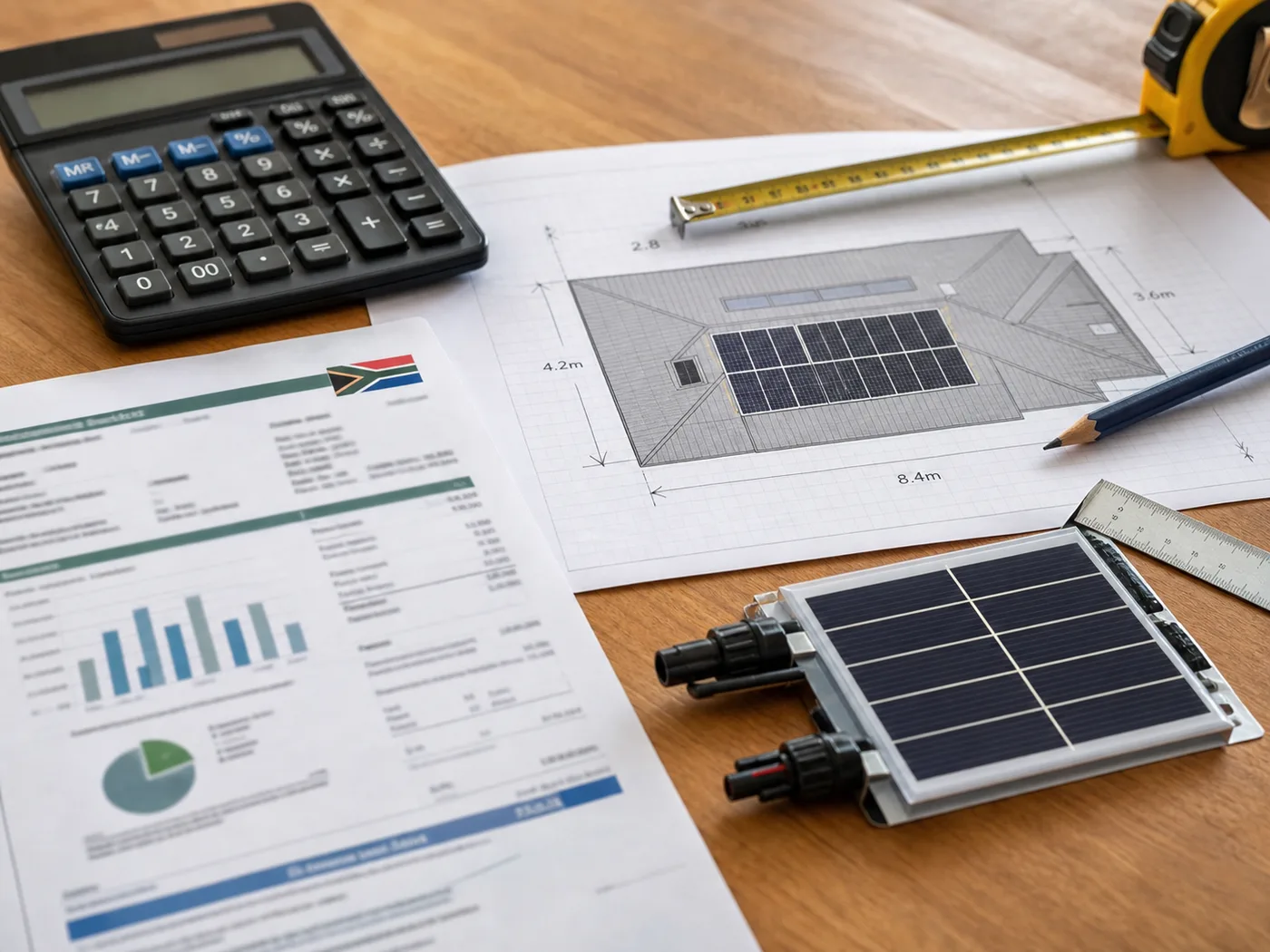
The same system can look very different as an outright purchase, rent-to-own plan or subscription. Compare the published package structures before you request a tailored quote.
Financing solar through a home loan can reduce the interest rate compared with unsecured credit, but the repayment term decides whether it is genuinely cheap. A R120,000 solar draw spread over 20 years can accumulate more interest than the original R120,000, even at a rate that looks attractive.
South African banks use several routes: withdrawing prepaid funds through an access facility, applying for a re-advance, taking a further advance against property value, or adding renewable-energy funding to a new home loan. These are not the same process and do not carry the same fees.
The practical rule
Use the bond rate only if you also set a repayment period that fits the equipment, usually much shorter than the remaining mortgage.
Confirm whether you are accessing your own prepaid funds, borrowing back to the original loan amount, or increasing the registered debt.
Price valuation, registration, initiation, service and insurance costs.
Tell the building insurer about permanently installed panels, inverter and battery.
Access bond, re-advance and further advance explained
Access facility
An access facility lets you withdraw eligible extra amounts already paid into the home loan, subject to the bank's rules. It does not mean every increase in property value is automatically available as cash.
The advantage is speed and potentially low administrative cost. The drawback is that withdrawing those funds reverses part of the interest saving achieved by paying ahead.
Re-advance
A re-advance lets an existing borrower apply to borrow again up to a limit connected to the existing loan or registered amount. Banks still assess affordability and property or account conditions. Absa's current solar page says its re-advance route can avoid new bond registration fees, while the precise conditions remain subject to approval.
Further advance
A further advance increases borrowing beyond the available existing facility, usually using property equity. This can require a new valuation, credit assessment and bond registration work. Absa states that its further-advance route may have bond registration fees.
New home loan with renewable-energy funding
Some banks let buyers add solar funding when purchasing a property. Nedbank advertises a new home loan of up to 110%, with the extra 10% available for a renewable-energy solution. Its renewable-energy finance page says payment goes to an accredited provider once registration and invoice conditions are complete.
What South African banks currently offer
Checked against official bank pages on 20 September 2026:
Bank
Home-loan solar routes
Published details
Absa
Re-advance or further advance on a secondary Multiplan account
R50,000 to R300,000; up to 7 years; qualifying variable-rate concession up to 0.20 percentage points; registration fees on further advance, not on the published re-advance route
Nedbank
New-loan renewable-energy funding, NedRevolve, re-advance or further loan
New loan up to 110% with the extra 10% for renewable energy; approved or qualifying provider and invoice requirements apply
FNB
Available home-loan funds, re-advance, further loan or Solar Energy Loan
Credit and property assessment; qualifying supplier, electrical certificate and accreditation documentation required
Standard Bank
Home-loan routes through LookSee, plus a separate unsecured Energy Loan
LookSee offers a home energy platform and purchase or rental routes; compare a home-loan draw with its separate 12 to 72-month Energy Loan
Product limits and rates can change. A bank's public page is not a credit offer, and not every route is available to every existing borrower.
Why the term can matter more than the rate
The monthly instalment on a 20-year draw looks low because repayment is slow. The total can be much higher.
For a hypothetical R120,000 draw at 11%, with a constant rate and no fees:
Term
Approximate monthly payment
Approximate total paid
Approximate interest
5 years
R2,609
R156,545
R36,545
7 years
R2,055
R172,594
R52,594
20 years
R1,239
R297,270
R177,270
The 20-year option saves about R1,370 a month compared with five years, but adds roughly R140,725 in interest. Real home-loan rates can change and banks calculate daily interest, so request an amortisation schedule for your account.
If you use a bond, create a separate repayment target for the solar portion and verify that additional payments reduce principal without penalty. Absa's secondary Multiplan structure is designed to keep the solar amount and shorter term visible, which can make discipline easier.
Fees to include
The interest rate is only one line. Ask about:
property valuation fees;
bond registration and attorney costs;
initiation and monthly service fees;
early-settlement or notice rules;
credit-life cover, if any;
building-insurance changes;
installer deposits before bank disbursement; and
the cost of using a bank-approved supplier rather than your preferred quote.
A re-advance using existing registration may have fewer legal costs than a further advance. A separate energy loan can have a higher rate but lower property-related fees. Compare the total for the same repayment period.
The electricity saving does not repay the loan automatically
Solar lowers variable grid purchases when the home uses its generation. It does not normally remove fixed charges, and an undersized or badly used system may save less than forecast.
Build the affordability check from two separate numbers:
the bank repayment and all finance fees; and
a conservative electricity saving based on expected annual generation, self-consumption and the applicable tariff.
Do not rely on "the bill saving covers the bond" unless the quote shows the usage data and assumptions. Run a case where savings are 20% lower and the interest rate is two percentage points higher.
Our solar payback guide explains how to model generation, tariff increases and component replacement.
Ownership, installer choice and compliance
Buying with home-loan funds generally means you purchase the equipment rather than subscribing to provider-owned hardware. The lender still has security over the property, and its rules may restrict suppliers or require documents before disbursement.
FNB's public material recommends a qualifying accredited provider and an electrical Certificate of Compliance. Nedbank refers to accredited or approved providers. Regardless of bank, ask for:
A home-loan draw can give immediate ownership and a transparent interest calculation. Rent-to-own may include maintenance and insurance and require no property equity.
Current Alumo rent-to-own terms advertise annual escalation, an initiation fee and a final buyout on the entry example. A bond uses interest and bank fees instead. Compare both over the same term and with the same equipment.
The solar equipment can stay with the property, but the home-loan debt is settled through the property transaction. The sale price may not recover the installation cost, especially early in the repayment period.
Keep the installation compliant and preserve invoices, warranties and monitoring access for a buyer. Do not assume solar adds its full purchase price to the home. Read solar and home resale value and moving house with solar for the transfer checklist.
Tax treatment
The residential section 6C rebate was temporary. SARS states that qualifying panels had to be brought into use between 1 March 2023 and 29 February 2024. A new household installation in 2026 does not qualify for that rebate.
A home office, rental property or business use does not automatically make the whole residential system deductible. Ownership, trade use, apportionment and the applicable section matter. Use our Section 12B guide as background and ask a tax professional to review the actual asset and funding agreement.
Not sure which system you need?
Get a free, no-obligation quote sized to your home, usage and budget. It only takes a minute.
Identify the route: access funds, re-advance, further advance or new-loan top-up.
Obtain the personalised rate, all fees and repayment schedule.
Set a target term for the solar portion rather than accepting the remaining bond term by default.
Stress-test a higher rate and lower electricity saving.
Confirm installer and disbursement rules.
Update building insurance and complete electrical and municipal compliance.
Keep an emergency reserve after any deposit or extra repayment.
Free planning tool
Solar finance and payback calculator
Compare cash payback with a financed system, using your own bill, tariff and assumptions.
R 2 500
R 110 000
70%
Payment route
Cash payback
5.2 years
20-year net saving
R 851 001
Year-one saving
R 1 750/mo
Estimated array
4.4 kW
About 8 × 550 W panels
Roughly 23.3 m² of usable roof
Indicative scenario only. It excludes finance fees, tax effects, maintenance, export credits and site-specific generation. The assumptions are visible below so the result can be challenged instead of treated as a quote.
Yes, subject to the bank and your approval. Absa, Nedbank and FNB publish re-advance, further-advance or related home-loan routes for renewable energy. New buyers may also have options to include solar funding at registration.
Is an access bond the cheapest solar finance?
It may have a lower rate and fewer fees if eligible prepaid funds are available. It is not automatically cheapest. Total cost depends on the repayment period, rate changes and what those withdrawn funds would otherwise save in bond interest.
Should I repay solar over 20 years?
A 20-year term reduces the monthly payment but can create very high total interest. Compare a five or seven-year repayment schedule and make sure it remains affordable under a higher-rate scenario.
Does solar increase the home-loan valuation?
The bank decides its valuation and lending amount. Some renewable-energy products consider the improvement or allow extra borrowing, but a solar invoice does not guarantee a matching increase in property value.
Is the installer paid directly?
It depends on the product. Nedbank describes paying an accredited supplier once registration and invoice conditions are met. Other routes may release funds to the borrower. Confirm deposits, milestones and final payment before work begins.
How does SolarGuide make money?
SolarGuide currently earns referral fees from eligible Alumo quote requests. We do not arrange the bank products listed here. Details were checked against official bank pages on 20 September 2026 and may change. Request an Alumo quote.
SolarGuide is an independent referral partner. We help you compare options and arrange a free quote — Alumo supplies, installs, finances and warrants the systems. Pricing is indicative, sourced from Alumo’s published catalogue, and subject to a site assessment and credit approval.