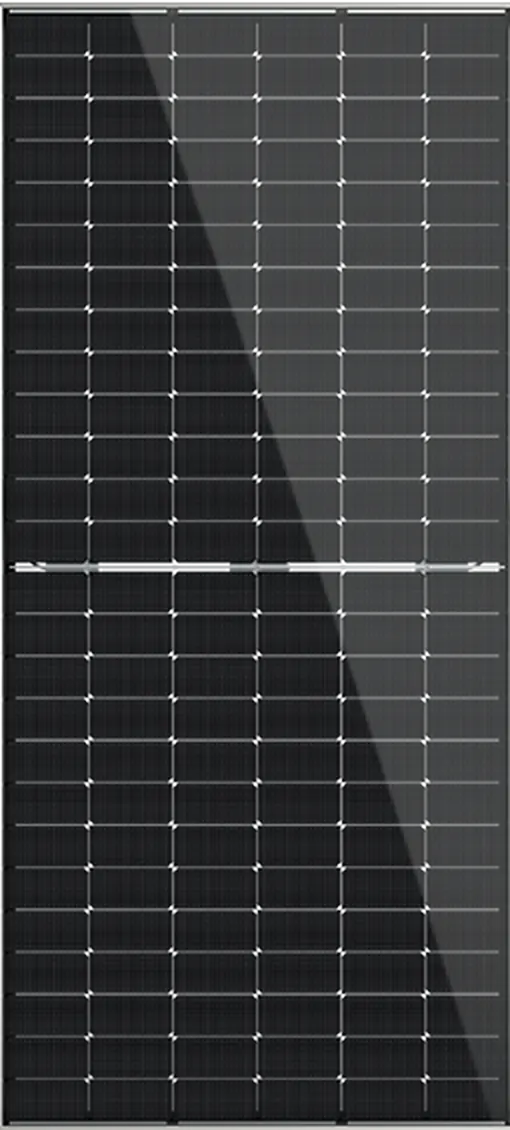
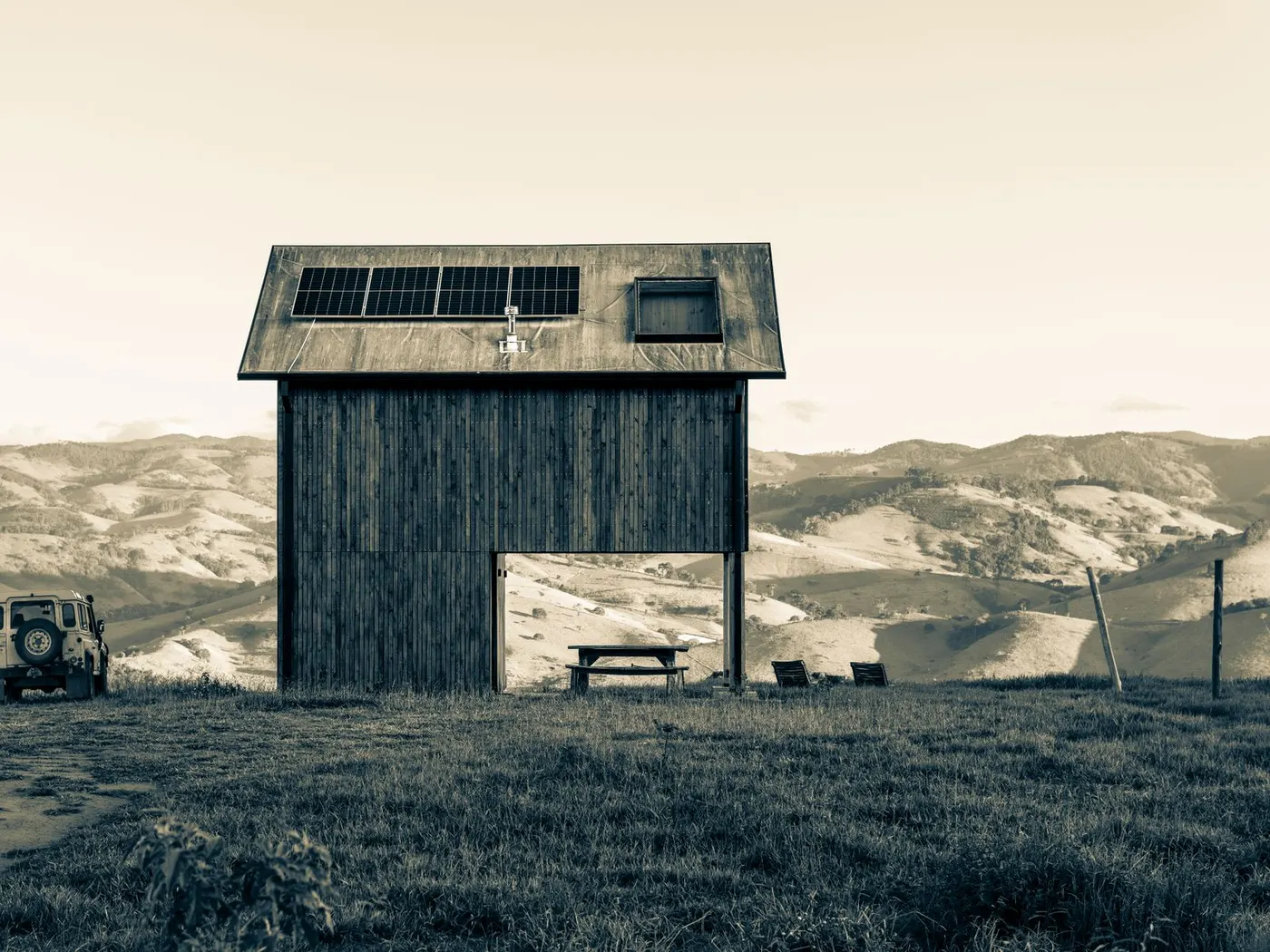
A solar panel's wattage is the power it produces in a standard laboratory test, not what it delivers on your roof. A 100W panel is a small 12V module about a metre long, made for caravans, camping and battery charging. The 555W to 640W panels now used on South African homes are about 2.3m to 2.4m long and run in strings into a home inverter. In between are 150W to 200W panels for larger 12V setups and 460W panels for smaller roofs.
Wattage tells you how big the panel is, not how good it is. This guide explains what the rating means, how much each size really produces per day in South African cities, what each size costs from dated retailer listings, and how to work out how many you need.
Key takeaways
Wattage is measured at standard test conditions: 1,000W of sunlight per square metre on a 25°C cell. Real output is lower, especially on a hot roof.
A 555W panel facing north produces about 2.3kWh to 2.8kWh a day averaged over the year in major SA cities. A 100W panel produces about 0.4kWh to 0.5kWh.
Small panels cost much more per watt. In listings checked on 20 October 2026, a 100W panel cost about R9 per watt and 585W to 630W home panels about R3.33 per watt.
Bigger wattage means a bigger, heavier panel. Fewer panels does not always mean more power on an awkward roof.
Get a free solar quote
Share your average electricity bill and we will arrange a free, no-obligation quote sized to your home and budget. Compare rent-to-own, subscription and outright options.
Mon–Fri 8am–5pm · Sat 8am–1pm · Free quote across South Africa
What the wattage on a solar panel means
The STC rating
Every panel's headline wattage is its maximum power at Standard Test Conditions (STC): sunlight of 1,000W per square metre, a cell temperature of 25°C and a standard light spectrum (AM1.5). Jinko's Tiger Neo 605W to 630W datasheet defines it in exactly those terms, and the Cinco specification sheets use the same definition. STC lets you compare panels like for like. It is not a promise about your roof.
Bifacial panels, which collect some light from the back, can carry a second, higher figure. The same Jinko datasheet lists 668W to 696W "bifacial" ratings for its 605W to 630W panels, measured with extra light on the rear. Compare panels on the front STC rating unless your installer has designed for rear gain, such as on a raised ground mount. Read more on bifacial solar panels on South African roofs.
Why real output is lower
Two things pull output below the label:
Less sunlight than the test. Most of the day, sunlight is weaker than 1,000W per square metre.
Heat. Output falls as the cell heats up. The datasheet gives a temperature coefficient: -0.29% per °C for the Jinko panels above, -0.34% per °C for Canadian Solar's HiKu6 460W and -0.35% per °C for Cinco's 200W panel. As an illustration, a cell running at 60°C on a hot roof is 35°C above STC, so a -0.34% panel loses about 12% of its power from heat alone.
Some datasheets show this directly. Canadian Solar's 460W panel is rated at 345W at NMOT, its nominal operating condition with less sunlight and a hotter cell. That's 75% of the STC figure, on the same panel.
Wiring, inverter losses, dust and shade take a little more. That's why the yield figures below already allow for 14% system losses.
Common panel sizes and what they're for
Wattage
Typical use
Example panel and size
Weight
Efficiency
100W
Caravans, camping, 12V lights, small battery charging
Cinco 100W: 995 × 680mm
7kg
14.8%
150W to 160W
Larger 12V systems, 12V fridges, small cabins
Cinco 160W: 1,480 × 680mm
9kg
16.1%
200W
24V systems, or 12V with an MPPT controller
Cinco 200W: 1,580 × 808mm
15kg
15.7%
460W
Home roofs where space is tight or fragmented
Canadian Solar HiKu6 460W: 1,903 × 1,134mm
24.2kg
21.3%
555W
Home and commercial roofs
Canadian Solar TOPHiKu6 555W: 2,278 × 1,134mm
not listed
21.5%
605W to 630W
Most new home installations
Jinko Tiger Neo: 2,382 × 1,134mm
32.4kg
22.4% to 23.3%
Dimensions and efficiencies from the manufacturer datasheets or retailer specification pages linked in the sources, checked on 20 October 2026.
The pattern is clear: as wattage rises, panels get longer, wider and heavier. Efficiency rises too. The 100W panel produces about 148W per square metre of panel. The 605W to 630W panels manage about 224W to 233W per square metre. On a roof, that efficiency is what lets a modern array fit.
Above about 650W, modules are mostly made for commercial and utility arrays. None of the home retail listings we checked went higher than a 640W panel.
12V panels and the controller question
Small panels are built to charge 12V batteries. The Cinco 100W panel's maximum-power voltage is 18.0V at 5.56A, which leaves headroom to charge a 12V battery in heat and low light.
The controller matters. A basic PWM controller holds the panel near battery voltage, so the panel can't work at its 18V sweet spot. At a charging voltage of about 13.5V, that 100W panel delivers roughly 13.5V × 5.56A, or about 75W, at best. An MPPT controller converts the extra voltage into charging current and recovers most of the difference. That calculation is ours, from the datasheet figures.
Watch the voltage on 200W panels. Cinco's 200W panel runs at 33.55V, close to a home panel's voltage, so it suits a 24V battery or a 12V system with an MPPT controller, not a 12V PWM setup. Home panels in the 555W to 630W range run at about 40V each and are wired in series strings into a hybrid or grid-tied inverter. They aren't meant for a small 12V controller.
How much does each panel produce per day in South Africa?
We used PVGIS, the European Commission's solar model, to estimate daily output for north-facing panels at a 26° tilt (a common roof pitch) with 14% system losses. The same data runs our roof fit calculator, which works out panel count and output for your actual roof faces.
City
100W
460W
555W
620W
Johannesburg
0.48 (0.47)
2.21 (2.17)
2.66 (2.61)
2.98 (2.92)
Pretoria
0.47 (0.47)
2.19 (2.17)
2.64 (2.62)
2.94 (2.93)
Bloemfontein
0.50 (0.45)
2.29 (2.08)
2.76 (2.51)
3.08 (2.80)
Durban
0.41 (0.38)
1.87 (1.74)
2.25 (2.10)
2.52 (2.35)
Gqeberha
0.44 (0.34)
2.03 (1.56)
2.45 (1.88)
2.74 (2.10)
Cape Town
0.46 (0.28)
2.12 (1.30)
2.56 (1.57)
2.86 (1.75)
kWh per panel per day, year-round average with the June average in brackets. North-facing, 26° tilt, no shade. Source: PVGIS 5.2, checked on 20 October 2026.
620W panel2.98
555W panel2.66
460W panel2.21
100W panel0.48
Average daily output per panel in Johannesburg, kWh (PVGIS 5.2, north-facing, 26° tilt)
Two practical notes:
Flat panels produce less. A 100W panel lying flat on a caravan roof averages about 0.43kWh a day in Johannesburg, falling to 0.32kWh in June. In Cape Town it averages 0.41kWh but drops to about 0.18kWh in June. If you camp in the Cape in winter, size for that.
Direction matters. East- or west-facing panels produce less than north-facing ones. The roof fit calculator adjusts for roof direction and pitch.
To check whether a small panel can keep up with a 12V appliance, compare the appliance's daily watt-hours from its specification sheet with the panel's output above. Leave a margin for cloudy days and battery losses.
Prices by wattage
These are single-panel, panel-only online prices. They exclude mounting, cabling, controllers or inverters, and installation. All are VAT-inclusive unless noted.
Panel
Retailer
Price
Price per watt
Cinco 100W
Sustainable.co.za
R911.95
R9.12
Cinco 100W
SunStore
R942.59
R9.43
Omega 150W (STW-151)
MacSell Solar Outlet
R850, out of stock, VAT not stated
R5.67
Cinco 160W
Sustainable.co.za
R1,176.95
R7.36
Cinco 200W
Sustainable.co.za
R1,295.95
R6.48
Canadian Solar HiKu6 460W
Sustainable.co.za
R1,855.95
R4.03
JA Solar 465W black frame
Sustainable.co.za
R1,674.95
R3.60
Canadian Solar TOPHiKu6 555W
SunStore (minimum order three)
R2,450.13
R4.41
585W to 630W panels, 16 listings
Solar Price Index Q3 2026
median R3.33 per watt
R3.13 to R3.52
JA Solar 640W
Sustainable.co.za
R2,375.95
R3.71
Retailer prices checked on 20 October 2026. Sustainable.co.za shows most prices as a sale against a higher "regular" price. Price-index figures checked on 26 September 2026. Price per watt is a SolarGuide calculation.
The lesson is that 100W to 160W panels cost two to three times more per watt than home panels. That's fine for a caravan, where a 100W panel is all that fits. It makes no sense for a house.
What does a 550W solar panel cost?
Of the four retailers we checked on 20 October 2026, only one listed a 550W-class panel: a Canadian Solar 555W at R2,450.13 from SunStore, with a three-panel minimum. That's about R4.41 per watt, more per watt than the 585W to 630W panels most retailers now stock. If a quote specifies a 550W panel, ask for the exact model and compare its price per watt with the current Solar Price Index. For a wider look at panel prices and what installation adds, see our solar panel prices guide.
Panel count is simple arithmetic once you know the system size in kilowatts:
Number of panels = system size in watts ÷ panel wattage, rounded up
Array size
100W panels
460W panels
555W panels
620W panels
3kW
30
7 (3.22kW)
6 (3.33kW)
5 (3.10kW)
5kW
50
11 (5.06kW)
9 (5.00kW)
9 (5.58kW)
8kW
80
18 (8.28kW)
15 (8.33kW)
13 (8.06kW)
SolarGuide calculation. Final counts depend on the inverter's string limits and the roof layout.
To work backwards from energy, divide the daily kWh you want from solar by your city's output per 1kW of panels. That's the 620W column above divided by 0.62, or about 4.8kWh a day in Johannesburg year-round. Covering 12kWh of daytime use there needs about 2.5kW of panels: five 555W panels, or four 620W panels if you can accept slightly less.
This is also why small panels don't work on homes. Fifty 100W panels would cover about 34 square metres of roof, while nine 555W panels cover about 23 square metres for the same 5kW. For the full sizing method, from your bill to a panel count, read how many solar panels you need. If roof area is the limit, our roof space guide shows how much each panel size needs with clearances.
Free tool
Estimate your system & savings
Move the slider to your monthly bill for an instant, indicative suggestion.
This is an indicative starting point. The site assessment and signed quote confirm the system, current price, equipment, savings and backup time. Rent-to-own payments increase by 6.5% each year.
Is a higher-wattage panel always better?
No. A 620W panel gives more power per panel and usually costs less per watt. But at 2.38m long and over 32kg it needs a long, clear run of roof. On a hipped roof broken up by valleys, vents and a chimney, more of the smaller 460W panels sometimes fit into the gaps and give a bigger total array. The bigger panels also run at higher current, which the inverter's inputs must be rated for.
Judge the total array in kilowatts on your usable roof, not the wattage of one panel. Alumo, SolarGuide's installation partner, uses 615W panels in its rent-to-own solar packages and 655W panels in its Essential subscription. It confirms the layout for your roof at the site assessment.
Not sure which system you need?
Get a free, no-obligation quote sized to your home, usage and budget. It only takes a minute.
How much power does a 100W solar panel produce a day?
About 0.4kWh to 0.5kWh a day on average in major South African cities when facing north at a 26° tilt, according to PVGIS. Lying flat on a caravan roof it produces less, and in a Cape Town winter it can fall below 0.2kWh a day.
How many watts of solar panels do I need for a house?
It depends on how much electricity you use in daylight and how much you want to store for the evening. Divide your target daily kWh by your city's output per 1kW of panels, about 4kWh to 5kWh a day across South Africa's main cities on a north-facing roof. A 3kW to 8kW array is roughly 5 to 15 modern panels; your bill and roof decide where you land.
Is a 550W or a 620W panel better?
Neither is better on its own. In current listings, 585W to 630W panels usually cost less per watt than 550W-class panels. The right choice is whichever gives the largest well-designed array on your usable roof, within the inverter's limits.
Can I connect a home solar panel to a 12V battery?
Not with a basic PWM controller. A 555W to 630W panel runs at about 40V and is designed for strings into a home inverter. For 12V systems, use panels designed for 12V charging, such as 100W to 160W modules, or a suitably rated MPPT controller.
Is SolarGuide the installer?
No. SolarGuide is an independent referral partner. Alumo supplies, installs, finances and warrants the systems. We help you compare options and get a free quote. All pricing is indicative and subject to a site assessment and credit approval.
SolarGuide is an independent referral partner. We help you compare options and arrange a free quote — Alumo supplies, installs, finances and warrants the systems. Pricing is indicative, sourced from Alumo’s published catalogue, and subject to a site assessment and credit approval.