Start with the problem you want the upgrade to solve
Bring monitoring screenshots to an assessment. Choose a few clear days and include solar production, household load, grid import and battery charge level where your app provides them. These patterns are clues for the assessor, rather than a diagnosis:
| What you see | What to ask the assessor |
|---|
| Grid imports continue during sunny daytime hours | Is generation too small for the load, or is another limit or setting involved? |
| The battery rarely reaches the intended charge level | Would more panels supply the shortfall, and can the battery accept the extra charging power? |
| Production drops when the battery fills and household demand is low | Is generation being curtailed because there is nowhere permitted or useful for it to go? |
| Output repeatedly plateaus while loads remain high | Is the constraint the inverter, solar input, battery, export setting or another system limit? |
| The system trips when several appliances run together | Would load management or an inverter upgrade address this better than extra panels? |
Do not estimate savings by multiplying extra panel wattage by your whole electricity bill. The useful gain depends on when the energy arrives, what you can use or store, and any approved export arrangement. Our home solar decision hub separates savings, backup and payment choices if the upgrade objective is still unclear.
Gather these details before requesting a quote
You do not need to inspect live wiring or climb onto the roof. Use invoices, commissioning documents, monitoring records and labels that can be photographed safely from an accessible position.
- The full inverter model, including every suffix, plus its serial number and installation date.
- The existing panel model and quantity, preferably with the original datasheet.
- The recorded string layout: how many panels are grouped together and which solar input each group uses. Ask the original installer if this is missing.
- The battery model, capacity and settings, if a battery is installed.
- Your electricity distributor, existing solar approval and electrical Certificate of Compliance, or CoC.
- Available roof area, shade concerns and your goal, such as reducing daytime imports or recharging sooner.
A string is a group of panels connected together. A maximum power point tracker, or MPPT, controls the operating point of a solar input to harvest energy. Several connectors can share one tracker, so an unused connector does not establish that an independent MPPT is available.
Keep the actual datasheets with the assessment request. The panel wattage guide explains the difference between a panel's headline watts and its other electrical ratings.
The checks that determine whether your inverter can stay
Ask the installer to record these checks against the exact equipment and the proposed layout.
| Check | Evidence to request |
|---|
| The inverter accepts solar directly | The applicable manual identifies photovoltaic, or PV, inputs. A battery inverter without a suitable solar input needs a different assessed design. |
| Each proposed string stays within the voltage limits | A cold-weather open-circuit voltage check, plus operating-voltage checks against the MPPT range, including hot conditions. |
| Current stays within the relevant input limits | Both operating-current and short-circuit-current checks for each input or tracker, using the manufacturer's definitions. |
| The proposed array fits the permitted power and string configuration | The exact model's array-size guidance, usable PV power, tracker count and allowed number of strings. |
| The roof and installation can support the addition | Roof condition, mounting, shade, cable routes, connectors, protection and earthing reviewed for the changed system. |
Voltage and current are separate checks. Remaining below an array's wattage limit does not compensate for exceeding a voltage or current limit.
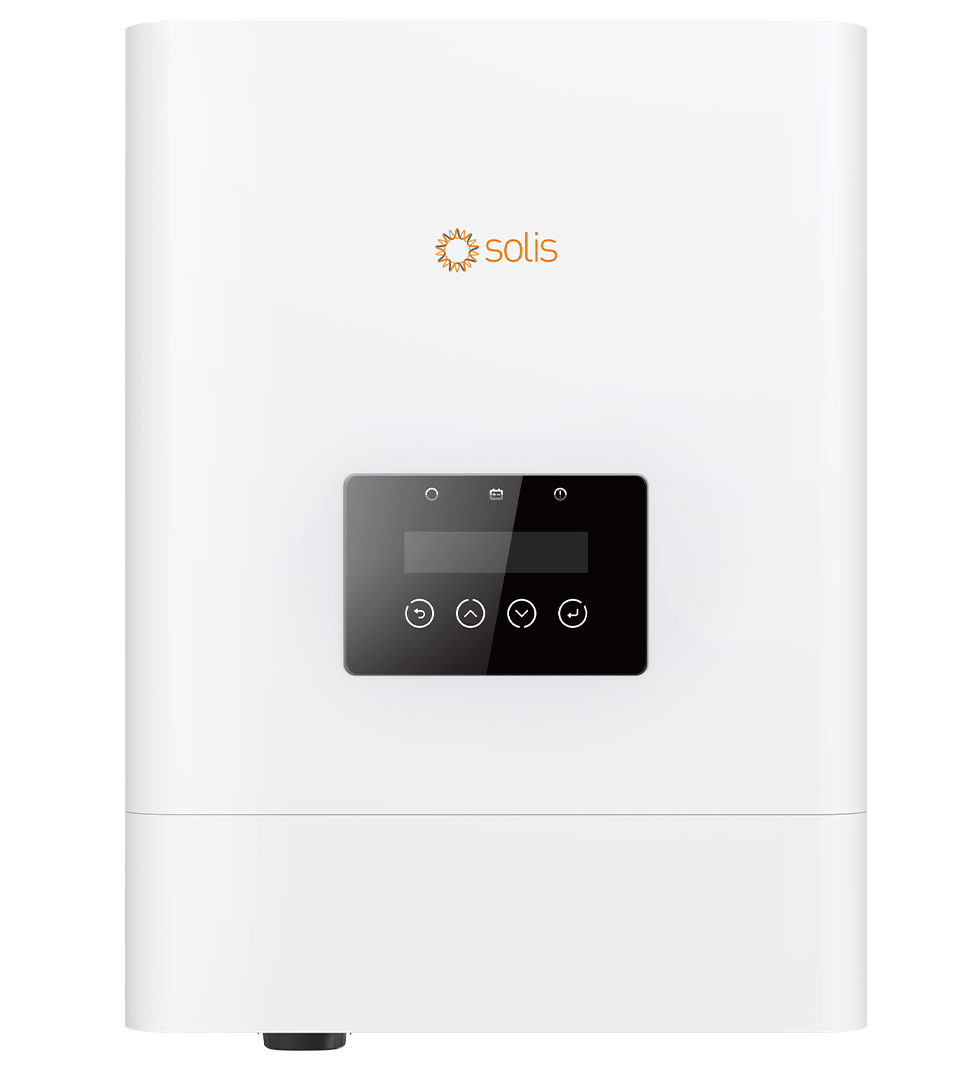
The manufacturer manual also defines who may work on the equipment. For example, the Solis S6-EH1P(3-8)K-L-PLUS manual, version 1.3 dated 2 April 2026, warns that illuminated panels energise PV conductors and restricts operations to a licensed electrician or a person authorised by Solis. Use these checks to assess a proposal; leave measurements, disconnections and wiring to the qualified installer.
Why two 5kW systems can have different upgrade options
The South African Solis Solarator flyer, version 2.1, distinguishes several limits for the S6-EH1P5K-L-PLUS:
| Specification for the 5K column in this document | Published value |
|---|
| Rated AC output | 5kW |
| Recommended maximum PV array size | 10kW |
| Maximum usable PV input power | 8kW |
| Maximum PV input voltage | 500V |
| MPPT operating-voltage range | 90V to 435V |
| Maximum PV input current | 16A per MPPT |
| Maximum short-circuit current | 20A per MPPT |
| MPPTs / maximum input strings | 2 / 2 |
These are manufacturer specifications, checked on 25 October 2026. They describe that document's model column, not every Solis 5kW inverter or every similarly named revision. Match the label and applicable documents before using them.
The distinction between array size, usable PV input and AC output explains why dividing 5,000W by the wattage of a new panel gives an incomplete answer. The proposed layout still has to pass each input check.
A cold-weather example that fails despite modest total wattage
This is an illustrative SolarGuide calculation showing a failed voltage check. It is not a proposed installation.
Trina's TSM-NEG19RC.20 datasheet, revision TSM_EN_2024_A_E1, gives the 615W version an open-circuit voltage of 49.3V at a cell temperature of 25°C, with a voltage temperature coefficient of -0.24% per °C.
Suppose a proposal placed ten of those panels in one series string:
- Nameplate power: 10 × 615W = 6.15kWp.
- Open-circuit voltage at the datasheet's 25°C cell temperature: 10 × 49.3V = 493V.
- At an assumed cell temperature of -5°C, the 30°C reduction increases the calculated voltage by 7.2%.
- Corrected string voltage: 493V × 1.072 = 528.5V.
That exceeds the 500V maximum in the Solis example, even though 6.15kWp sits below its published array and usable-PV power figures. Checking watts alone would miss the problem.
The -5°C assumption illustrates the calculation; it is not a design temperature for every South African location. A designer must choose the appropriate local minimum and apply relevant tolerances and design rules. Passing a voltage check would still leave current, operating range, protection and the other checks unresolved. Bifacial modules also require the designer to account for rear-side generation when assessing current.
Victron's MPPT installation guidance likewise tells designers to account for open-circuit voltage and its temperature coefficient, because voltage rises in cold conditions. Its controller-specific limits must not be substituted for your inverter's limits.
Not sure which system you need?
Get a free, no-obligation quote sized to your home, usage and budget. It only takes a minute.
Get your free quote →Can you mix old and new solar panels?
Do not choose a replacement or addition on wattage or brand alone. Ask how its voltage and current characteristics, connectors, orientation and shading fit the existing arrangement, and whether the manufacturers support the combination.
A separate independent MPPT may offer an assessment route for a different panel group. That group still needs a suitable operating voltage and must satisfy its own input limits. If all trackers are occupied, adding another connector does not create an extra tracker.
Manufacturer requirements differ. SMA's Sunny Boy Smart Energy operating manual, for example, specifies matching module type and alignment per input and equal module counts when two strings share an input. Those are requirements for that SMA range, not permission to apply the same arrangement to a different inverter.
Ask for written confirmation of the proposed combination. If the original panel model is discontinued, compare an approved substitute, a separate assessed array or a wider replacement scope. The cheapest panel purchase can become an expensive installed change when mounting, protection or existing wiring also needs work.
Check approval and warranty scope before accepting the upgrade
Identify the distributor on your electricity account. Ask what it requires for the proposed modification, including whether the approval record, declared capacity, drawings, equipment certification or export settings must change. Keeping the same inverter does not, by itself, answer that question.
For Cape Town customers, the City's embedded-generation authorisation page sets out its application route. Confirm the treatment of your particular addition with the City and assessor. Other municipalities and Eskom have their own processes; our SSEG registration guide explains how to identify the right route.
Have the quote name who will test and document the altered electrical work and provide the applicable CoC documentation. Also check roof rights or estate consent where relevant.
Warranty responsibility needs a separate answer. Ask who warrants the existing inverter, the added panels and the new workmanship, and whether the change needs prior approval. Solis's published warranty terms include exclusions relating to failure to follow product documentation and improper design or installation; the applicable terms depend on the product and its production date. Keep your original warranty documents and obtain confirmation for your system.
What a useful upgrade quote should include
Request a comparison of the feasible options, including retaining the inverter where supported. The installed quote should identify:
- Exact panel models, quantity and proposed array layout.
- The inverter checks and any equipment or settings that need changing.
- Mounting, roof work, cabling, connectors and protection included in the price.
- Application, testing, documentation and commissioning responsibilities.
- An estimate of additional usable generation, with the load and export assumptions shown.
- VAT, exclusions, warranty responsibility and the cost of any required corrective work.
An equipment-only panel price cannot tell you the installed upgrade cost. Use the solar quote scorecard to compare scope, and the roof-fit calculator for an initial space check. A calculator result does not confirm roof structure or electrical compatibility.
Request an assessment of your existing system
Alumo's residential services page, checked on 25 October 2026, says it assesses panel, battery and inverter additions, including systems it did not originally install. It states an NRS-approval condition and service coverage within 180km of its branches. These are provider claims; your location, exact equipment, existing condition and proposed work still need confirmation.
Request an assessment of your existing solar system's upgrade options. Include your location, full inverter model, panel model and count if known, and what you want the upgrade to achieve. The enquiry route is to Alumo; it does not promise support for every model or the sale of particular panels.
SolarGuide is an independent comparison and referral publisher. Eligible Alumo referrals may earn us a fee. Alumo supplies, installs and warrants the work it agrees to undertake; the assessment and written quotation determine suitability, price, scope and responsibilities.
Sources checked on 25 October 2026. This guide supports a buying decision. A qualified installer must assess and design the actual modification.
Frequently asked questions
How many panels can I add to a 5kW inverter?
The 5kW label is insufficient to answer. The exact model's PV power, voltage, current and string limits must be checked against the existing array and proposed panels. Roof space, approval conditions and useful demand also affect the decision. Ask for a documented layout and checks, rather than a universal panel count.
Can I add panels to a battery backup system that has none?
Possibly. First confirm whether the inverter has a suitable PV input and what the manufacturer permits. A battery backup inverter without that input needs a different assessed arrangement or replacement equipment. The existing battery, installation and distributor requirements also need review.
Will extra panels let my inverter run more appliances at once?
They can supply more solar energy when conditions allow, but they do not change the inverter's rated AC output. If simultaneous loads exceed the system's limits, discuss load management or a suitable inverter upgrade. Additional panels also leave the battery's energy capacity unchanged.
Do new panels have to be the same brand as the old ones?
Brand alone does not establish compatibility. Exact electrical characteristics and manufacturer rules matter. A separate independent MPPT may allow another panel group, subject to design checks; mixing models into an existing group needs specific approval and assessment.
Can I keep my original installer and warranty?
Ask the original installer and applicable warranty provider before changing the system. Request written confirmation of who remains responsible for the existing equipment and who covers the new work. If another provider takes on the upgrade, have that division of responsibility recorded in the quotation.
SolarGuide is an independent referral partner. We help you compare options and arrange a free quote — Alumo supplies, installs, finances and warrants the systems. Pricing is indicative, sourced from Alumo’s published catalogue, and subject to a site assessment and credit approval.