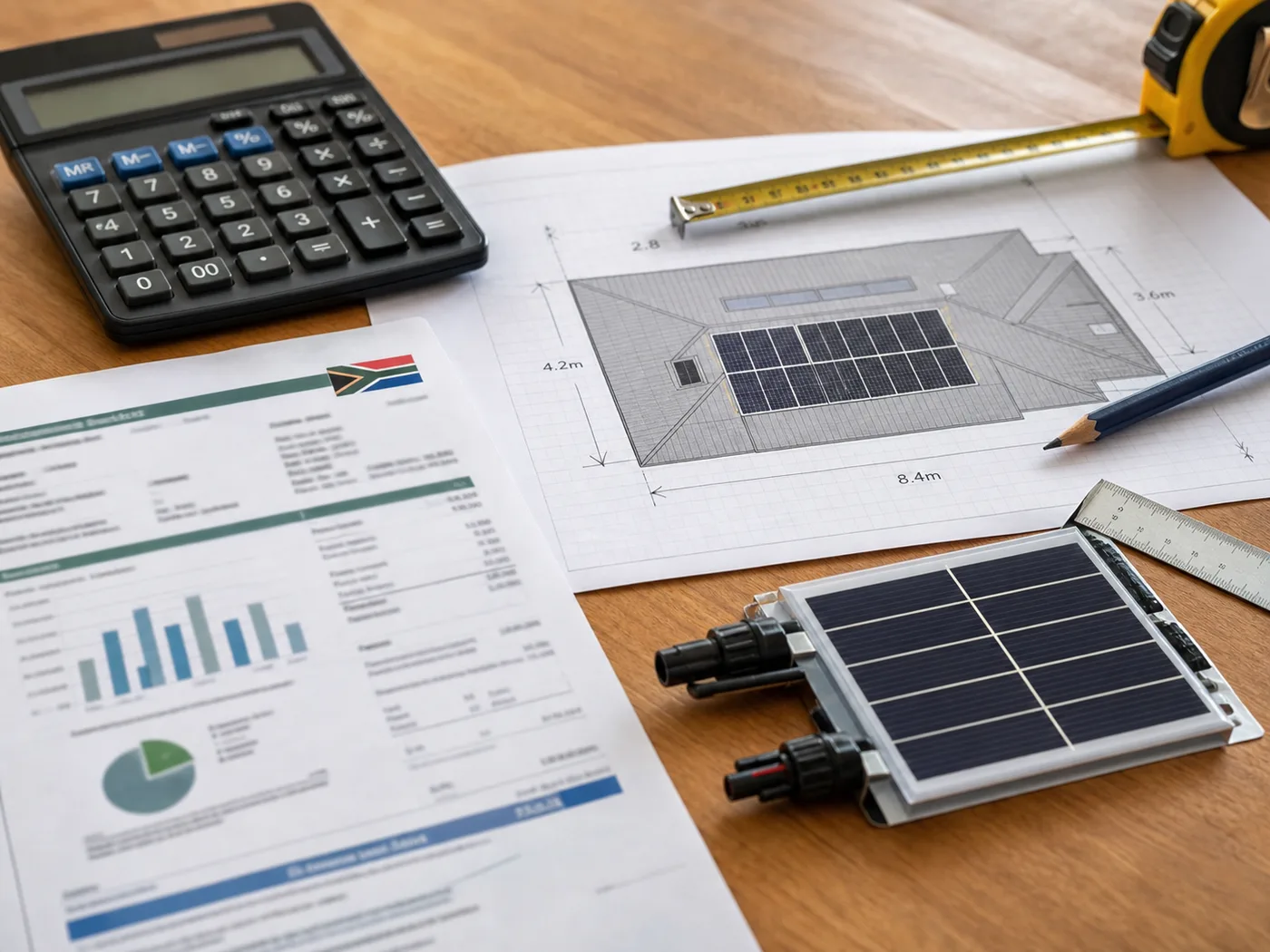
Use the calculator for an indicative starting point, then confirm the system against your roof, phase type, appliance loads and preferred backup level.
"How many panels do I need?" is usually the first question anyone asks before going solar, and it's the one that gets the vaguest answers. Some installers throw out a round number before they've even seen your electricity bill. The truth is that the right number depends on how much power you actually use, how much of that you want solar to cover, your roof, and your budget — in that order.
The good news is that you can get to a solid estimate yourself in about ten minutes with nothing more than a recent municipal bill and a bit of honesty about your habits. This guide walks you through the maths the way a decent installer would, so you can sanity-check any quote you're handed and avoid paying for panels you'll never use.
Key takeaways
Panel count is driven by your daily kWh usage, not your house's size or how many bedrooms it has.
A typical Cape Town or Joburg home uses 15–30 kWh a day; that usually points to somewhere between 6 and 14 panels.
Roof space, orientation and shading can cap how many panels you can physically fit, which changes the plan.
Panels, inverter and battery are three separate decisions — sizing one wrong makes the others underperform.
A proper site assessment beats any online calculator, because it accounts for your actual roof and shading.
Start with your electricity usage, not your roof
The single most useful number for sizing a solar system is your daily energy consumption in kilowatt-hours (kWh). Your municipal bill shows monthly consumption — divide that by 30 to get a daily average. If your household burns through, say, 750 kWh a month, that's roughly 25 kWh a day.
That daily figure is the foundation for everything. A solar panel's job is to generate kWh during daylight; the number of panels you need is simply a function of how many kWh you want to produce.
What a single panel actually produces
A modern residential panel from a brand like Trina or Jinko is typically rated around 450–560 watts. In good South African sun, and we get plenty of it, a single panel realistically generates somewhere between 1.8 and 2.5 kWh on a clear day, depending on your region, roof angle and the season. Winter output in Gauteng or the Cape drops noticeably, which is why you never size for a perfect summer's day.
So as a rough rule: to cover 20 kWh of daytime usage, you're looking at roughly 8–11 panels. To cover 30 kWh, closer to 12–16. These are ballparks, not gospel, but they get you in the right zone.
Daytime vs total usage
Here's the nuance most people miss. Solar panels only produce during the day. If most of your consumption happens after dark (geyser heating in the evening, cooking, TVs, aircon at night) then panels alone won't cover it. That load either comes from a battery charged during the day, or from the grid. This is why battery sizing matters just as much as panel count, and why the two decisions have to be made together.
Match panels to your actual goal
Not everyone wants the same thing from solar. Be clear about which camp you're in, because it changes the panel count dramatically.
Goal 1: Just survive load-shedding
If your main aim is keeping the lights, wifi, fridge and a few plugs alive during load-shedding, you don't need a big array. A few panels feeding a modest inverter and battery cover the essentials. Alumo's entry Watt-a-Deal package, with three panels, is built for this.
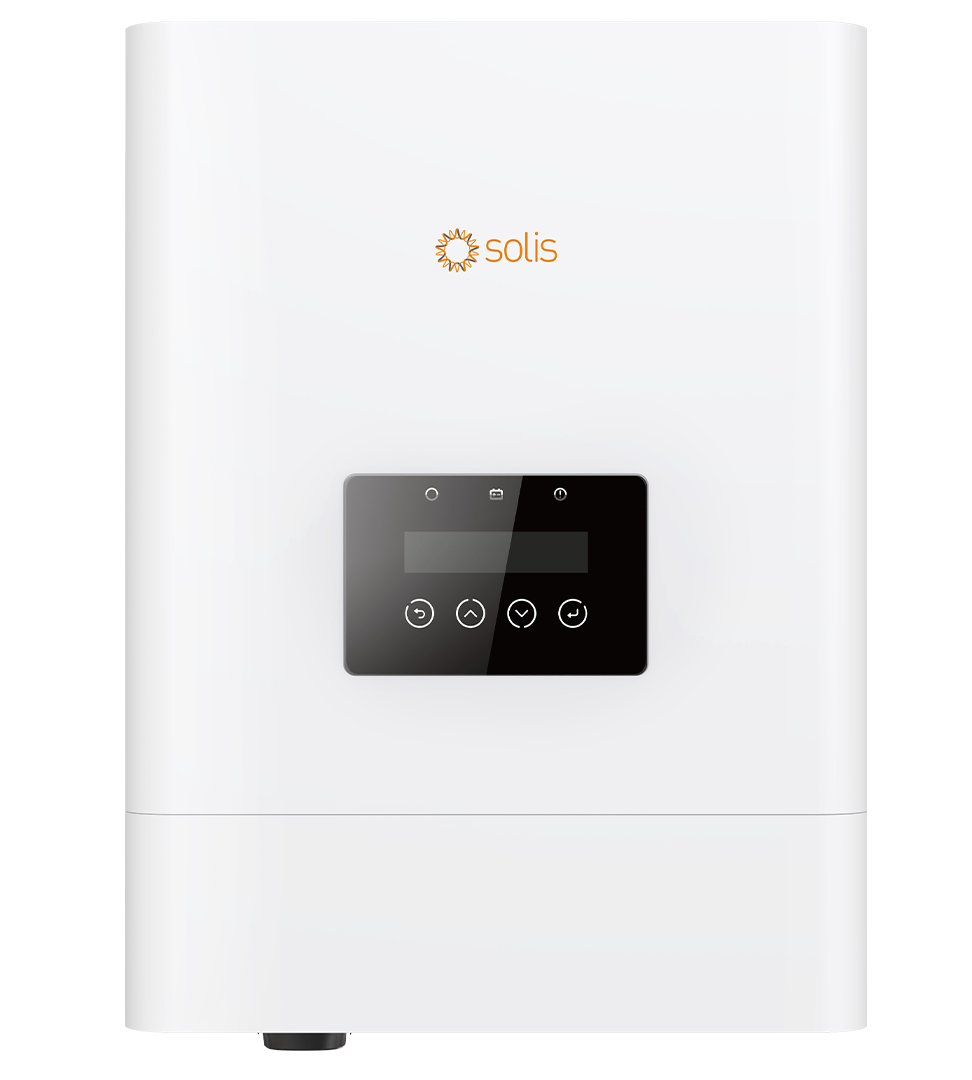
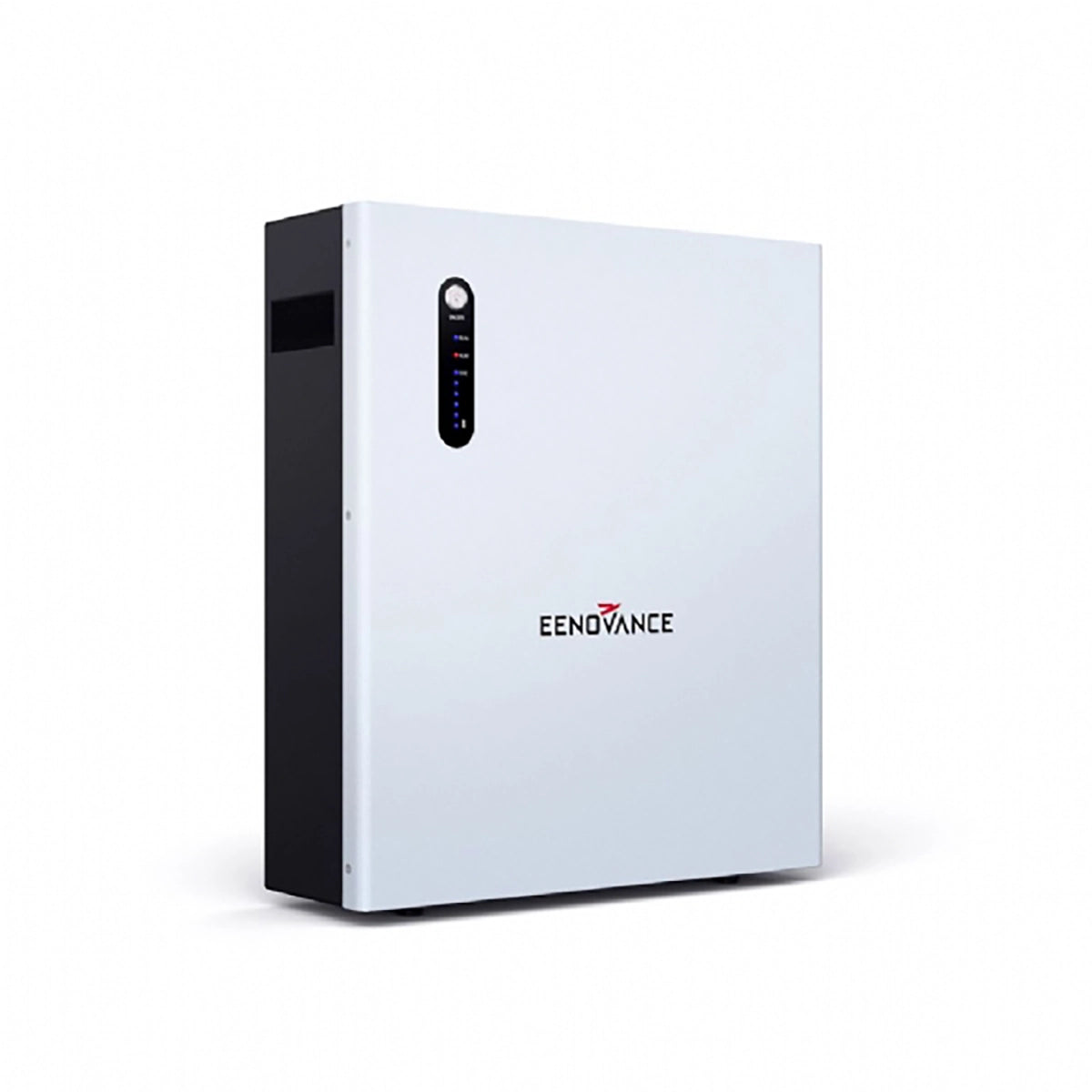
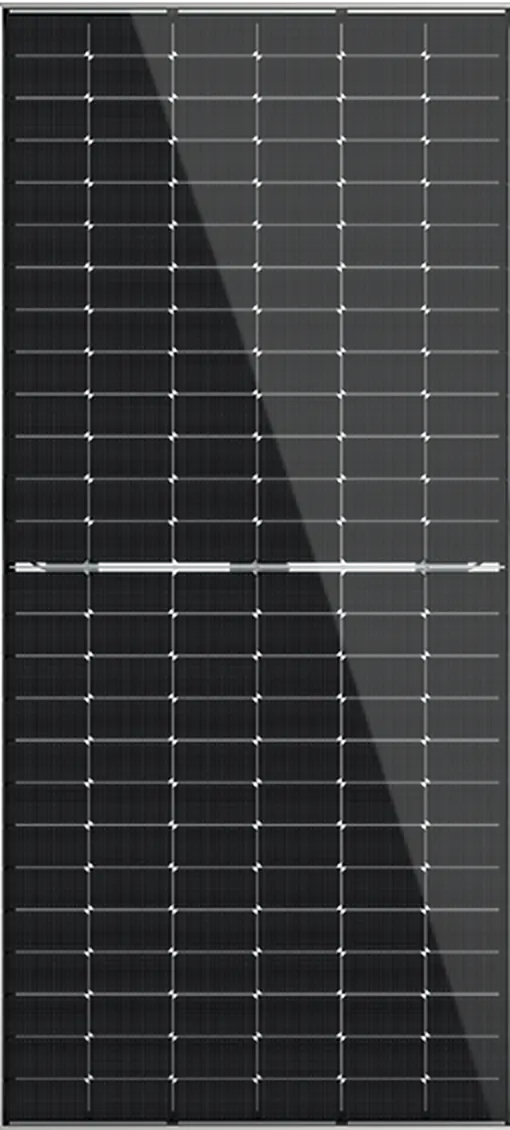
Alumo's current solar-plus-battery rent-to-own range uses a Solis 5kW inverter and Eenovance 5.32kWh battery: Watt-a-Deal has three 615W panels from R1,418/month, The Big Watt has four from R1,487/month, and The Power Bae has six from R1,626/month on a seven-year term. Three- and five-year prices, solar-only configurations and battery-only pricing are available on our current package comparison.
If you want to genuinely cut your monthly electricity spend, you need enough panels to cover a large chunk of your daytime load and to charge a battery for the evening peak. This is where most families land, and it usually means six panels and up.
Goal 3: Go big or near-independent
Larger homes with pool pumps, multiple aircons and electric geysers, aiming to buy as little from Eskom as possible, need substantial arrays — often 12 panels or more — paired with a bigger inverter and meaningful battery storage.
Not sure which system you need?
Get a free, no-obligation quote sized to your home, usage and budget. It only takes a minute.
You can want 16 panels all you like; your roof gets a vote. A common 580–630W panel takes up about 2.6–2.7 square metres, so with clearance a 12-panel array needs around 32–36 m² of usable, unshaded roof. The roof fit calculator shows how many fit on your actual roof faces.
Orientation and angle
In the southern hemisphere, north-facing roof sections are the gold standard — they catch the most sun across the day. East and west faces still work well and can actually smooth out your production curve (morning and afternoon peaks). South-facing slopes are the weakest and usually avoided unless there's no alternative.
Shading is the silent killer
A single chimney, tree or neighbouring wall throwing shade across panels in the late afternoon can drag down output more than you'd expect. A good installer surveys shading across the day and across seasons before finalising the layout. This is exactly the kind of thing an online estimate can't see, and why a physical site assessment is non-negotiable.
Pair the panels with the right inverter and battery
Panels are only one leg of the stool. The inverter converts solar DC into usable AC and sets the ceiling on how much power your home can draw at once. The battery stores daytime surplus for night and load-shedding.
If you oversize panels but undersize the inverter, you clip production on sunny days. If you have great panels and a tiny battery, you'll still be pulling from Eskom every evening. Balance is everything, and it's why packaged systems exist. The components are matched to work together.
For a typical family home wanting real bill relief plus solid backup, a 5kW inverter with six panels and a mid-size battery is a common sweet spot. Alumo's The Power Bae is built around exactly that.
Say you're a family of four in Centurion using about 600 kWh a month, so 20 kWh a day. Roughly half your usage is in daylight (fridge, pool pump, daytime appliances) and half after dark.
To cover the ~10 kWh of daytime load, you need roughly 5–7 panels.
To carry a chunk of the evening load, you want a battery that can deliver several kWh through the peak.
A 5kW inverter comfortably handles the household's simultaneous draw.
That points squarely at a six-panel system with a decent battery, not the 16-panel monster some quotes might push. Getting the number right saves you tens of thousands of rand.
Want the real number for your home rather than a ballpark? Get a free quote → and a technician will size it against your actual bill and roof.
Common sizing mistakes to avoid
Sizing for your worst month and paying for idle capacity the rest of the year. Aim for strong year-round coverage, not a perfect July.
Ignoring the geyser. An electric geyser can be a third of your bill. A geyser timer or heat-pump changes the whole calculation and can shrink the array you need.
Buying panels without battery headroom. If you plan to expand later, make sure the inverter and battery can grow with you.
Trusting a number quoted over the phone. No one can size your system accurately without seeing your consumption data and your roof.
Free tool
Estimate your system & savings
Move the slider to your monthly bill for an instant, indicative suggestion.
This is an indicative starting point. The site assessment and signed quote confirm the system, current price, equipment, savings and backup time. Rent-to-own payments increase by 6.5% each year.
Frequently asked questions
How many solar panels does an average South African house need?
Most homes land between 6 and 14 panels, depending on daily usage. A load-shedding backup setup might use just four, while a large home aiming to minimise its Eskom bill could need twelve or more. Your daily kWh consumption is what decides it.
Can I run my whole house on solar panels alone?
Panels only produce during daylight, so running your whole home — including nights — means pairing them with enough battery storage. Going fully off-grid is possible but expensive; most South Africans choose a hybrid system that uses solar and battery first and falls back to the grid when needed.
How much roof space do I need per panel?
Roughly 2 square metres per panel. A six-panel system needs around 12–14 m² of usable, unshaded roof, ideally facing north, east or west.
Will more panels always save me more money?
Only up to a point. Once your panels cover your daytime usage and fully charge your battery, extra panels produce surplus you may not be able to use or sell back. Right-sizing beats oversizing every time.
Who works out the exact number for me?
A qualified installer does, via a site assessment. SolarGuide is an independent referral partner — Alumo supplies, installs, finances and warrants the systems. We help you compare options and get a free, no-obligation quote; pricing is indicative and subject to a site assessment and credit approval.
SolarGuide is an independent referral partner. We help you compare options and arrange a free quote — Alumo supplies, installs, finances and warrants the systems. Pricing is indicative, sourced from Alumo’s published catalogue, and subject to a site assessment and credit approval.