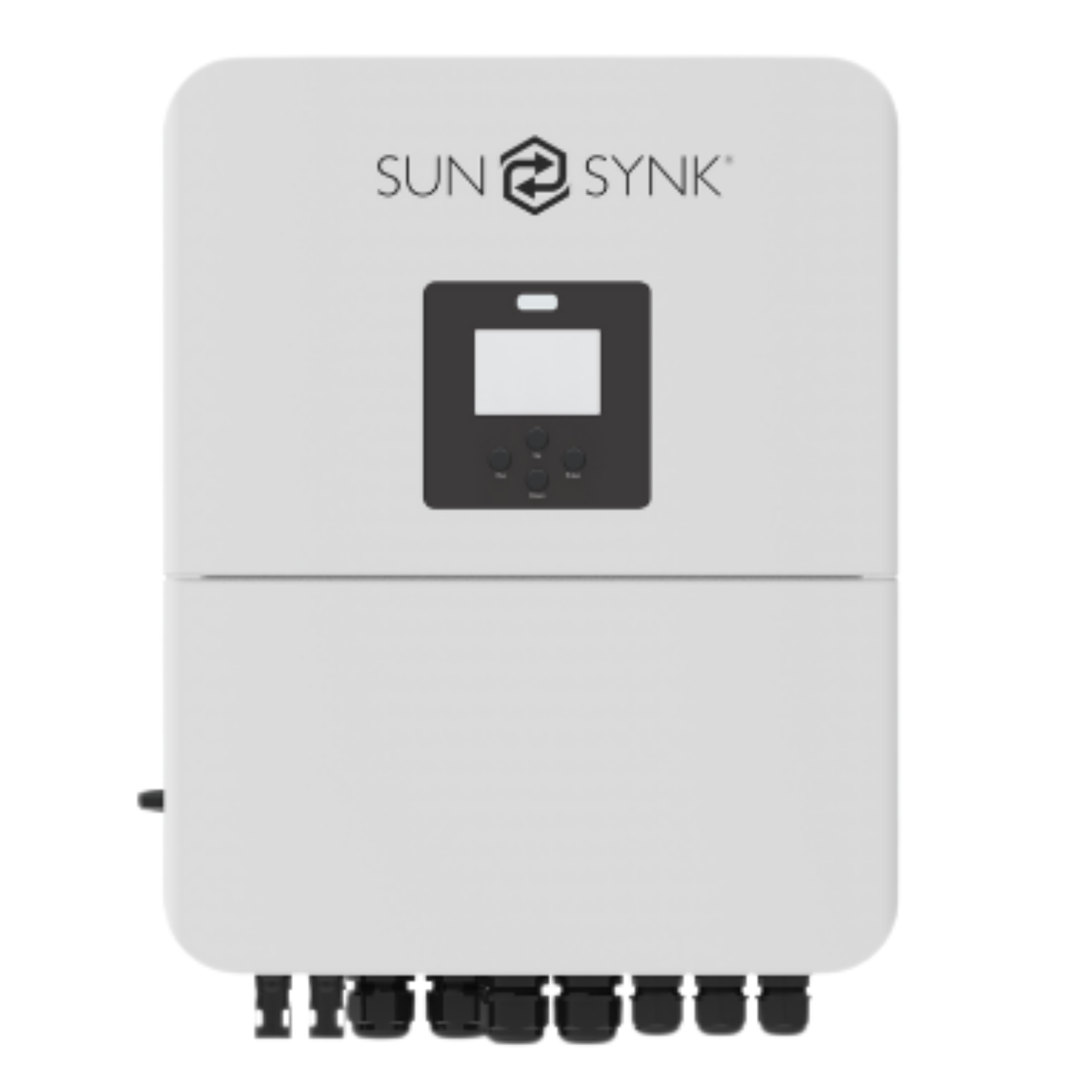
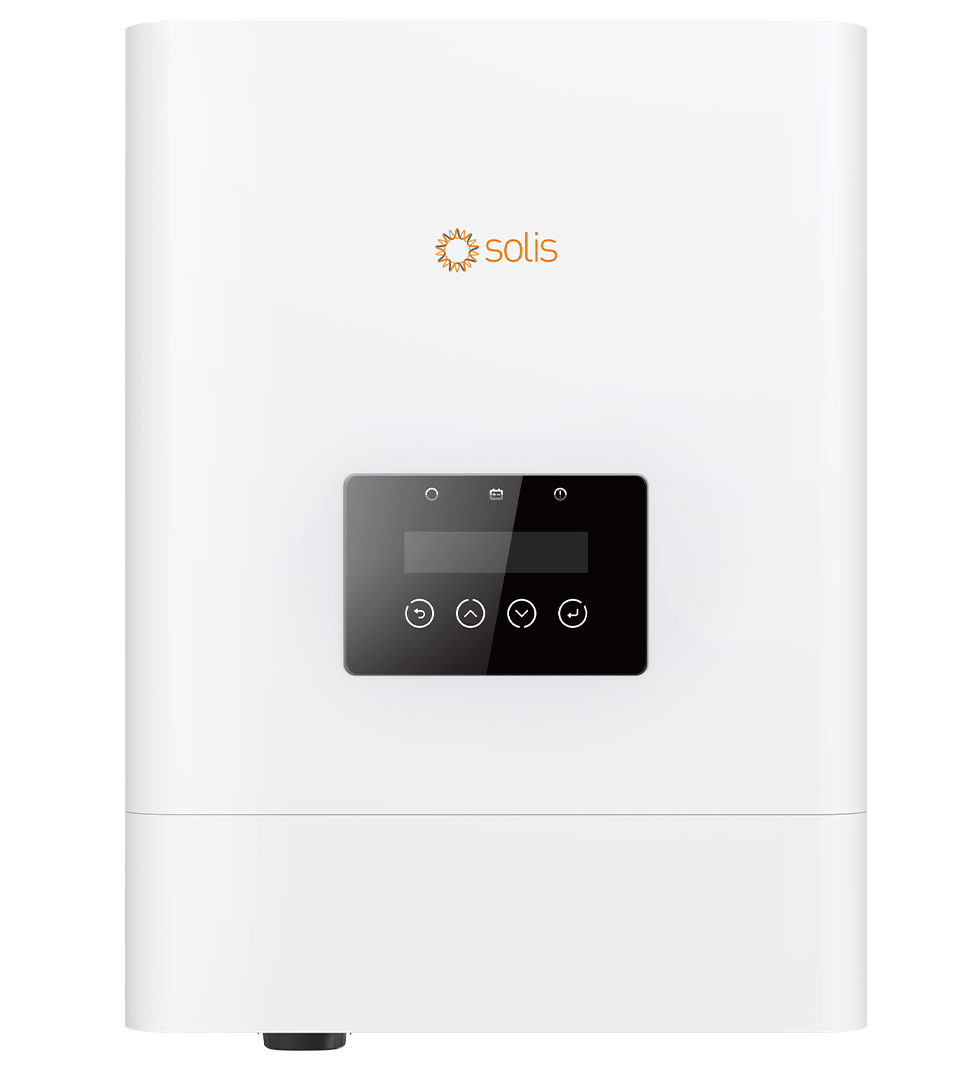
The right inverter and battery pairing matters more than a headline kW or kWh figure. See the models currently listed by SolarGuide, then ask for a quote based on your home and usage.
Two inverters can both say "5kVA" on the box and still run quite different things. One South African listing we checked is rated 5,000VA and 5,000W. Another, an older model still found in many homes, is rated 5,000VA but only 4,000W. That 1,000W gap is the difference between boiling the kettle while the oven is on and tripping the inverter in the dark.
The reason is that kVA and kW measure different things. Budget inverters are usually sold on the bigger kVA number, while hybrid inverters are usually sold in kW. This guide explains the difference in plain language, shows what real datasheets say, and works through what a 3kVA and a 5kVA inverter can run, appliance by appliance, so you can check a unit before you buy it.
Key takeaways
kVA is apparent power; kW is the real power your appliances use. An inverter's watt rating, not its kVA label, tells you what it can run.
Some "5kVA" inverters deliver 5,000W and some only 4,000W. Some "3kVA" units deliver 3,000W and some 2,400W. The datasheet says which.
Surge rating matters for fridges and pumps, but you should size around the continuous watt figure.
Before buying, check continuous watts, surge and how long it lasts, solar input, battery current, transfer time and grid approval.
kVA vs kW in plain language
Watts (W) and kilowatts (kW) measure real power: the energy that actually boils water, turns a motor or lights a bulb. Volt-amperes (VA) and kilovolt-amperes (kVA) measure apparent power: the voltage multiplied by the current flowing in the wires. One kVA is 1,000VA, just as one kW is 1,000W.
For a simple heating load such as a kettle, a heater or an iron, the two numbers are the same. All the current does useful work, so 2,000VA means 2,000W. Loads with motors and some electronics are different. Part of the current flows back and forth without doing useful work, so the current in the wires is higher than the real power alone would need.
The ratio between the two is the power factor:
Real power (W) = apparent power (VA) × power factor
A power factor of 1 means VA and W are equal. A power factor of 0.8 means 5,000VA delivers 4,000W. The inverter has to carry the full current either way, which is why its electronics are rated in VA as well as in W.
Why budget inverters are sold in kVA
The kVA figure is always the bigger of the two numbers, or equal to the watt figure. It describes the current the inverter can push, which matters to the electronics. But you buy an inverter to run appliances, and appliances use watts. So when a listing leads with kVA, look for the watt rating next to it. If you cannot find one, ask for the datasheet before you pay.
For grid approval purposes, the distinction is often blurred. The City of Cape Town's Requirements for Small-Scale Embedded Generation says kVA and kW ratings for solar PV systems "are similar and shall be used interchangeably for estimation purposes". That is a sensible shortcut for sizing a grid connection. It is not a reason to assume a 5kVA box gives you 5kW at the plug.
What real 5kVA and 5kW inverters are rated for
Here is what the datasheets and retailer specification sheets say for some common units. We checked each on 20 October 2026.
The older Axpert 5K is a 4kW inverter. ComX lists it as "5000VA/4000W", a power factor of 0.8. It is no longer sold, but many are still installed, and second-hand units turn up for sale. If you are buying or inheriting one, plan around 4,000W.
Newer budget units often match VA and W. The RCT VM3 and the Mecer Axpert V 5kW are both listed at 5,000VA and 5,000W. The label is the same as the old model, but the real output is 25% higher.
A hybrid's output can depend on the source. Sunsynk's datasheet gives 5,000W rated output, 5,500W maximum and a surge of twice rated power for 10 seconds. LuxPower's LXP 5K gives 5,000W with solar but 4,000W from the battery alone, which is the figure that matters at night. Our LuxPower review covers that model in more detail.
And at 3kVA?
The same split shows up one size down:
RCT's older Axpert 3K is rated 3,000VA/2,400W on RCT's Axpert MKS datasheet, again a power factor of 0.8.
Mecer's Axpert V 3kW (SOL-I-AX-3VP) is listed at 3,000VA/3,000W, with a 6,000VA surge, a 24V battery and a 1,200W PWM solar charger, according to the ComX listing.
So "3kVA" can mean 2,400W or 3,000W. On a kettle-and-microwave evening, that difference decides whether the inverter copes.
Surge vs continuous: the second number that matters
Every appliance with a motor or compressor draws far more power for a moment as it starts than it does once running. A fridge, a borehole pump or a pool pump can trip an inverter on start-up even though its running power looks small. That is what the surge (or peak) rating is for.
A surge figure means little without a duration. Sunsynk states twice rated power for 10 seconds. LuxPower states 4,500W for 30 seconds on the LXP 5K. The Axpert-style spec sheets above state 10,000VA without saying for how long. If you need to start a pump or a large compressor, ask for both numbers.
Treat surge as a safety margin, not usable capacity. Size the inverter so your everyday simultaneous load sits under the continuous watt rating, with room to spare for a motor kicking in.
What a 3kVA vs 5kVA inverter can run
Here are four worked examples, using wattages from our appliance power table. Your own appliances' rating plates override these figures.
The evening essentials (about 450W): eight 8W LED bulbs (64W), Wi-Fi router and fibre box (15W), TV and decoder (100W), a fridge-freezer while its compressor runs (150W) and two laptops at 60W each (120W).
Scenario
Total load
3kVA rated 2,400W
3kVA rated 3,000W
5kVA rated 4,000W
5kVA rated 5,000W
A. Evening essentials
450W
Yes
Yes
Yes
Yes
B. Essentials + 2,200W kettle
2,650W
No
Yes
Yes
Yes
C. Essentials + kettle + 1,200W microwave
3,850W
No
No
Yes, just
Yes
D. Essentials + kettle + 2,000W oven
4,650W
No
No
No
Yes
Evening essentials450 W
+ kettle2650 W
+ kettle + microwave3850 W
+ kettle + oven4650 W
Worked example loads against 2,400W, 3,000W, 4,000W and 5,000W inverters
What this tells you:
Any of these inverters runs the essentials. Lights, Wi-Fi, TV, laptops and a fridge use a fraction of even the smallest unit's capacity. For many households that is the whole job.
A 2,400W "3kVA" unit cannot boil a typical kettle on top of the essentials. A 3,000W unit can, as long as nothing else heavy is on.
The 4,000W "5kVA" unit runs out first when two heating appliances overlap. Scenario C fits with only 150W to spare, so a fridge compressor starting at the same moment could push it over. Scenario D does not fit at all.
A true 5,000W inverter handles two heavy appliances plus the essentials, but not three. The 5kW inverter guide walks through a full evening on 5kW.
The practical rule is the same at every size: stagger the heavy heating appliances. Boil, then cook. If your household routinely runs several heavy loads together, the next step is a bigger inverter, not a bigger battery. Our guide to sizing your inverter explains how to work out your real simultaneous load.
Not sure which system you need?
Get a free, no-obligation quote sized to your home, usage and budget. It only takes a minute.
kVA and kW only tell you how much you can run at once. How long you can run it depends on the battery, measured in kilowatt-hours (kWh). A 5,000W inverter on a small battery still runs out quickly if you cook on it.
The battery also has to deliver the current. Voltage matters here. At 24V, which is what many 3kVA units use, a 2,400W load draws about 100A from the battery (2,400W ÷ 24V, before losses). At 48V the same load draws about 50A. Check that the battery's maximum discharge current covers the inverter's full output, or the battery may limit what the inverter can deliver. The battery backup runtime calculator lets you try your own loads against a battery size.
How to read an inverter datasheet before you buy
Ask for the datasheet, not the retailer's headline. Then check these lines:
Rated or continuous output in watts. This is what the inverter can run all evening. If there are two figures, find the one for battery-only operation.
Apparent power in VA. Useful for comparison. If it is higher than the watt figure, the watt figure is your limit.
Surge or peak power, and its duration. Needed for fridges, pumps and power tools.
Waveform. Choose pure sine wave for fridges, motors and electronics. Our budget inverters guide explains modified sine wave and where it causes problems.
Solar charger type and maximum PV input. MPPT chargers harvest more from modern panels than PWM chargers, and the maximum PV figure caps how many panels you can add. The Mecer Axpert V 5kW, for example, lists a 2,400W PWM charger; the Sunsynk 5kW lists 6,500W of PV input.
Battery voltage and maximum charge and discharge current. This decides which batteries suit it and how much power they can supply.
Battery communication. A port for the lithium battery's management system (BMS), such as CAN or RS485, lets the inverter charge the battery as it requires.
Transfer time. The Axpert-style units above list 10ms in their computer setting and 20ms for home appliances. Faster is better if a reboot would cost you work.
Grid standard. If the inverter will be wired into your house, look for NRS 097-2-1 among the certifications. Sunsynk's datasheet lists it. Many budget units do not, which can stop you registering the system with your municipality or Eskom. Our SSEG registration guide explains the process.
Warranty and enclosure. Check the years, who honours the warranty locally, and whether the case is rated for indoor or outdoor mounting.
What 5kVA and 3kVA inverters cost
Equipment-only prices from one South African retailer, ComX, checked on 20 October 2026. These exclude batteries, panels, protection and installation, and prices change often.
Model
Listed price (incl. VAT)
Mecer Axpert V 3kW (3,000VA/3,000W, 24V)
R4,010
Mecer Axpert V 5kW (5,000VA/5,000W, 48V)
R4,635
RCT Axpert VM3 5kVA (5,000VA/5,000W, 48V)
R11,280
The price gap between these units mostly reflects the solar charger, battery communication and build, not the headline kVA. Our inverter prices guide covers what hybrid inverters cost.
Which should you buy?
For plug-in backup of essentials only, a 3kVA unit rated 3,000W, or any 5kVA unit, is enough. Confirm pure sine wave output.
If you want to boil a kettle during an outage, avoid a 3kVA unit rated 2,400W.
If two heavy appliances will overlap, look for a true 5,000W continuous rating, from the battery as well as from solar.
If you want backed-up circuits on your DB board, solar that lowers your bill, or a system you can register, look at a properly installed hybrid system rather than a box from a shop.
If that last point describes you, get a free quote sized around the appliances you need to keep on. Alumo assesses your home and designs, installs, finances and warrants the system. Its current solar-plus-battery rent-to-own packages are built around a Solis 5kW inverter (alumo.co.za, checked 20 October 2026). SolarGuide helps you compare options and does not sell any of the inverters named in this guide.
Frequently asked questions
Is a 5kVA inverter the same as 5kW?
Not always. kVA is apparent power and kW is real power. Real power equals apparent power multiplied by the power factor. The older RCT Axpert 5K is rated 5,000VA but 4,000W, while the newer RCT Axpert VM3 and Mecer Axpert V 5kW are rated 5,000VA and 5,000W. Check the watt rating on the datasheet.
What can a 5kVA inverter run?
A 5kVA inverter rated 5,000W can run lights, Wi-Fi, a TV, laptops and a fridge (about 450W together) plus two heavy appliances, such as a 2,200W kettle and a 2,000W oven, at the same time. A 5kVA unit rated 4,000W can run the essentials plus a kettle and a microwave, but not a kettle and an oven together.
What can a 3kVA inverter run?
All the household essentials, comfortably. A 3kVA unit rated 3,000W can also boil a 2,200W kettle with the essentials on. A 3kVA unit rated 2,400W cannot, so check which one you are buying.
How do I convert kVA to kW?
Multiply kVA by the power factor. At a power factor of 0.8, 5kVA is 4kW and 3kVA is 2.4kW. At a power factor of 1, kVA and kW are equal. The inverter's datasheet gives its watt rating directly, which is the safest figure to use.
Is SolarGuide the installer?
No. SolarGuide is an independent referral partner. Alumo supplies, installs, finances and warrants the systems we refer. We help you compare options and get a free quote. All pricing is indicative and subject to a site assessment and credit approval.
Sources and review note
Checked on 20 October 2026. Ratings for the RCT Axpert 5K and Axpert VM3 5kVA come from the specification sheets published by ComX (Axpert 5K, Axpert VM3 5kVA); ComX lists the Axpert 5K as discontinued. RCT Axpert 1K, 3K and 5K ratings are confirmed by RCT's Axpert MKS datasheet. Mecer Axpert V ratings and prices come from ComX's listings for the 5kW (SOL-I-AX-5VP) and 3kW (SOL-I-AX-3VP) models. Sunsynk figures come from its 3.6/5kW single-phase hybrid datasheet, v22. LuxPower figures come from its LXP 3-6K datasheet. The kVA and kW quote comes from the City of Cape Town's Requirements for Small-Scale Embedded Generation (version 51, September 2023). Appliance wattages come from our appliance power table; the scenario totals and battery current figures are SolarGuide calculations. Alumo's inverter brand comes from alumo.co.za. Prices are single-retailer listings for the inverter only. SolarGuide has not tested these inverters, and none of these brands or retailers is a SolarGuide partner. If you spot a factual error, tell us and we'll correct it.
SolarGuide is an independent referral partner. We help you compare options and arrange a free quote — Alumo supplies, installs, finances and warrants the systems. Pricing is indicative, sourced from Alumo’s published catalogue, and subject to a site assessment and credit approval.