Solar energy's advantages in South Africa are real and measurable: electricity prices that keep rising, outages that haven't fully gone away, panels built to last decades and a grid that still runs mostly on coal. Its disadvantages are just as specific: a large upfront cost, municipal rules that can eat into the saving, export credits worth a fraction of what you pay for power, and a battery that will need replacing before the panels do.
Most lists of pros and cons are written for any country. This one is about South Africa in 2026, with the tariff decisions, city rules and outage figures that apply here, each linked to its source. Use it to check which side of each point your home falls on before you ask for a quote.
Key takeaways
NERSA approved an 8.76% increase for Eskom-direct customers from 1 April 2026 and 9.01% for municipalities from 1 July 2026. Every unit of solar you use yourself avoids those increases.
National load-shedding has been suspended since 16 May 2025, but Eskom still applied load reduction to 193,556 customers in Gauteng and KwaZulu-Natal in October 2026. Backup needs a battery: panels alone switch off when the grid fails.
City rules can shrink the saving. In Johannesburg, registered solar homes must leave prepaid for a conventional tariff with much higher fixed charges.
Exported power earns far less than imported power costs. In Ekurhuleni, an exported unit earns 114.61c and a bought unit costs 337.00c, both before VAT.
Solar suits owner-occupiers with daytime use, a sunny roof and plans to stay. It suits very low users, short stays and heavily shaded roofs least.
Get a free solar quote
Share your average electricity bill and we will arrange a free, no-obligation quote sized to your home and budget. Compare rent-to-own, subscription and outright options.
Mon–Fri 8am–5pm · Sat 8am–1pm · Free quote across South Africa
The pros and cons at a glance
Advantages
Disadvantages
Protects you from annual tariff increases
High upfront cost, and no household tax rebate since February 2024
Each unit you use saves the full tariff
Some municipalities add fixed charges or move you off prepaid
Keeps essentials running in outages, with a battery
Exported units earn far less than imported units cost
Panels carry long power warranties
Batteries wear out sooner than panels
Much lower lifecycle emissions than coal power
Needs a suitable, unshaded roof and approval to connect
Can be paid for monthly
Output drops in winter and stops at night
The rest of this guide explains each point, with the source behind it.
The advantages of solar energy in South Africa
1. Protection from rising electricity tariffs
This is the biggest financial advantage. On 10 March 2026, NERSA approved an average increase of 8.76% for Eskom-direct customers from 1 April 2026 and 9.01% for municipalities from 1 July 2026. The 9.01% is what Eskom charges municipalities, and each city then sets its own household tariffs. City Power put its average at 8.63%, and Tshwane said 8.8%.
The longer trend is steeper. The CSIR's 2025 utility statistics report says national average tariffs have risen 190% since 2014, "mostly above inflation". A unit your panels supply in ten years' time costs you nothing extra, whatever the tariff is by then.
2. Every unit you use yourself saves the full rate
A solar unit you use in your home replaces a unit you would have bought, so it saves the whole price, VAT included. In 2026/27 that is 411.09c per kWh on most eThekwini household tariffs and 413.79c on Cape Town's Domestic tariff up to 600kWh, including VAT. On block tariffs, solar usually removes your most expensive units first.
That's why the best systems are sized to what the house uses while the sun is up, with the geyser and pool pump moved to midday, and a battery to carry some solar into the evening.
3. Backup when the grid goes down
Load-shedding is paused, not gone from memory. On 16 October 2026, Eskom reported 518 consecutive days without load-shedding since 16 May 2025. The same statement said load reduction still affected 193,556 customers, 2.7% of its customer base, in Gauteng and KwaZulu-Natal, with a target to end it by March 2027. Cable theft, storms and substation faults cause outages too. Our guide to load reduction vs load-shedding explains the difference and how much battery a short outage needs.
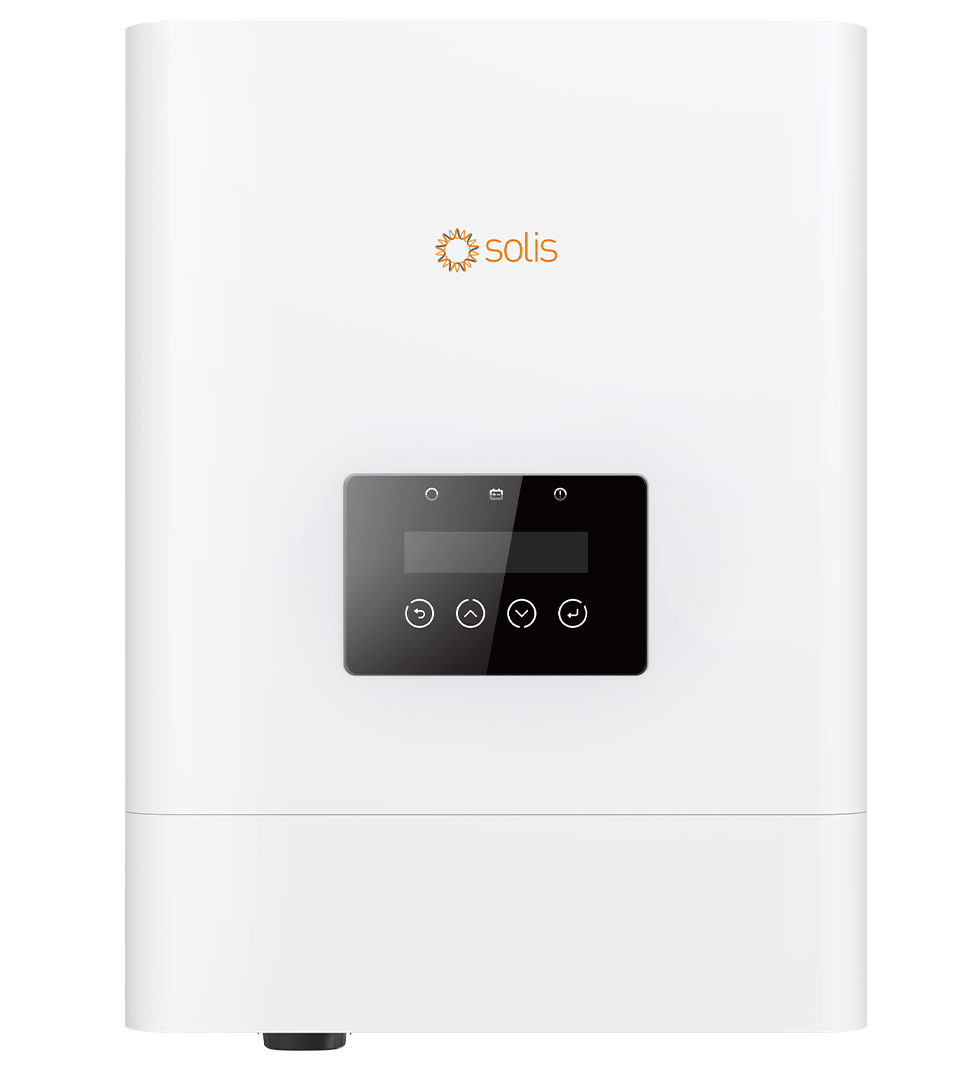
The catch: solar panels on their own don't give backup. Grid-connected inverters must switch off when the grid fails, a safety feature called anti-islanding that is listed on hybrid inverter datasheets such as Sunsynk's. To keep the lights on, you need a hybrid inverter with a battery.
4. Panels are built to last
Solar panels have no moving parts and carry long warranties. Jinko's Tiger Neo 605W to 630W datasheet, for example, gives a 12-year product warranty and a 30-year linear power warranty, with 1% degradation in the first year and 0.40% a year after that. On those terms, a panel is warranted to deliver about 87% of its rated power in year 30 (SolarGuide calculation). Inverters and batteries have shorter warranties, which is covered below.
5. Much lower emissions than coal power
South Africa's grid still runs mostly on coal. In the first half of 2025, coal supplied 86.2TWh, or 81.1% of the system load, according to the CSIR report above. Over their whole life, including manufacturing, rooftop solar panels produce far less greenhouse gas per unit than coal plants. The IPCC's AR5 technology annex gives median lifecycle emissions of 41g CO2-equivalent per kWh for rooftop solar against 820g for pulverised coal.
Pulverised coal820 g CO2e/kWh
Rooftop solar PV41 g CO2e/kWh
Median lifecycle greenhouse gas emissions per kWh (IPCC AR5, Annex III, Table A.III.2)
Panels and batteries do have a manufacturing footprint and need responsible disposal at the end of their life. The lifecycle figure includes manufacturing.
6. You don't need to pay cash
You can spread the cost. Alumo, which installs, finances and warrants the systems SolarGuide refers, advertises rent-to-own solar and battery packages from R1,449 a month over seven years (with 6.5% annual escalation and an R700 initiation fee) and subscriptions from R1,499 a month, checked on 20 October 2026. Final systems and terms are confirmed after a site assessment and credit approval.
A full system is a large purchase. In SolarGuide's Solar Price Index Q3 2026, checked on 26 September 2026, the median 5kW hybrid kit cost R60,943 for equipment alone, with about 5kWh of battery. Mounting, protection, labour, compliance and registration all come on top. Monthly plans lower the entry cost, but you pay escalation and a larger total over the term.
There is also no household tax break any more. SARS's solar rebate, 25% of the cost of new panels up to R15,000, only applied from 1 March 2023 to 29 February 2024.
2. City rules can cut the saving
This is the disadvantage most buyers miss. Registering a solar system with your municipality can change your tariff, and the new tariff may carry fixed charges that solar can't reduce.
Johannesburg. City Power's 2026/27 conditions say residential customers with embedded generation must be on a time-of-use conventional tariff, and prepaid customers must migrate. Conventional fixed charges start at R930.37 a month before VAT for single-phase 60A, against R210 on Prepaid High. In our worked example on the Johannesburg tariff page, a 600kWh home that solar would save about R1,178 a month on prepaid saves only about R357 once moved to the conventional tariff.
Ekurhuleni. No customer with solar may stay on Tariff A. Moving to Tariff B adds a monthly basic charge, and in our worked example for a 600kWh home on Tariff A.2 it cuts a R1,162.65 saving to R824.92.
eThekwini. Solar customers move to a net billing tariff with a Network Access Charge of R87.84 per kVA of inverter size a month, including VAT. A 5kVA inverter adds R439.20 a month.
Cape Town. Choosing a feed-in system moves a Domestic customer to Home User, which swaps a fixed charge of about R74 a month for R431.10.
Tshwane. The draft 2026/27 schedule proposes a R324 monthly fixed charge for solar homes, and the City's requirements cap generation for a single-phase 60A home on a shared feeder at 3.45kVA (25% of the supply), well below a typical 5kW inverter.
None of this makes solar a bad idea, but it changes the sums. Ask any installer to model your bill on the tariff you will move to, not the one you are on now.
3. Exported power earns much less than imported power costs
You can't bank surplus power at full value. Where a municipality credits exports at all, it pays a feed-in rate well below its selling price, and you must be registered with an approved bidirectional meter.
Municipality, 2026/27
Export credit (excl. VAT)
What you pay to import (excl. VAT)
Ekurhuleni, Tariff B
114.61c/kWh
337.00c/kWh, flat
City Power Johannesburg
124.60c/kWh
288.27c/kWh and up
City of Cape Town
107.98c/kWh plus 25.00c incentive
Home User from 309.52c/kWh
eThekwini
160.52c/kWh
357.47c/kWh, flat
Sources: each city's 2026/27 tariff schedule, as summarised on SolarGuide's city tariff pages, checked on 21 October 2026. Cape Town's Home User rate is 355.95c including VAT.
Ekurhuleni import price337.00 c/kWh
Ekurhuleni export credit114.61 c/kWh
Ekurhuleni Tariff B, 2026/27, excluding VAT. A unit you use yourself is worth about three times a unit you export.
eThekwini also states that export credits reduce your electricity account but can't be redeemed for cash. Exports are a bonus, not the business case.
4. Batteries wear out before panels do
The battery is the part with the shortest life. Lithium batteries are rated in cycles and years, and they lose capacity as they age, so plan for a replacement within the life of the panels. A battery also adds cost without cutting your bill on its own: it saves money only when it stores solar for the evening, and pays for itself in resilience rather than rands during outages. Check the warranty's cycle count, years and guaranteed remaining capacity.
5. You need the right roof and permission
Solar needs unshaded roof space, ideally facing north. Trees, chimneys and neighbouring buildings cut output, and a small or south-facing roof may not fit a useful system. If you rent or live in a sectional-title complex, you need the landlord's or body corporate's consent first.
Every grid-connected system, including one that never exports, also needs municipal or Eskom approval in most areas, an inverter certified to NRS 097-2-1 and an electrical Certificate of Compliance. In Johannesburg, the tariff switch alone costs R756.70 to R1,458.20 including VAT, depending on your existing meter.
6. Output follows the sun
Panels produce nothing at night and less in winter and cloud. The effect depends on where you live. In PVGIS, the European Commission's solar model, north-facing panels in Cape Town produce about 2.83kWh per kW a day in June against 4.61kWh averaged over the year, at a 26° tilt. Johannesburg's winter dip is much smaller, at 4.71kWh against 4.80kWh. Evening cooking and heating still come from the grid or a battery.
Not sure which system you need?
Get a free, no-obligation quote sized to your home, usage and budget. It only takes a minute.
The honest way to settle it is with your own numbers: your bill, your roof and the tariff you'll be on after registration. Get a free solar quote → and Alumo will assess the site and model the system against your actual use.
Frequently asked questions
What are the main advantages of solar energy in South Africa?
Solar shields the units you use from tariff increases, such as NERSA's 8.76% for Eskom-direct customers and 9.01% for municipalities in 2026/27. It saves the full tariff on every unit you use yourself, keeps essentials running in outages when paired with a battery, and has far lower lifecycle emissions than coal power.
What are the main disadvantages of solar energy in South Africa?
The upfront cost is high and the household tax rebate ended in February 2024. Some municipalities add fixed charges or move solar homes off prepaid, exported units earn much less than imported units cost, batteries need replacing during the system's life, and output drops at night and in winter.
Does solar work during load-shedding or a power outage?
Only with a battery and a hybrid inverter. A grid-tied system without a battery must switch off when the grid fails, for the safety of people working on the lines. A hybrid system with a battery keeps your chosen circuits running.
Can I sell my extra solar power back to the municipality?
In many metros, yes, if your system is registered and you have an approved bidirectional meter. The credit is much lower than what you pay for electricity: in 2026/27, Ekurhuleni credits 114.61c per kWh against an import price of 337.00c, both before VAT. Using your solar yourself is worth far more.
Is SolarGuide the installer?
No. SolarGuide is an independent referral partner. Alumo supplies, installs, finances and warrants the systems. We help you compare options and get a free quote. All pricing is indicative and subject to a site assessment and credit approval.
Sources and review note
Checked on 22 October 2026. Tariff increases come from NERSA's media statement of 10 March 2026. The long-term tariff trend and the coal share of generation come from the CSIR's Utility Statistics Report (29 September 2025). Load-shedding and load reduction figures come from Eskom's statement of 16 October 2026. Lifecycle emissions come from the IPCC's Fifth Assessment Report, Working Group III, Annex III, Table A.III.2. Panel warranty terms come from Jinko's Tiger Neo 605W to 630W datasheet, and anti-islanding from the Sunsynk 5kW hybrid inverter datasheet. The tax rebate period comes from SARS. City tariffs, fixed charges, export credits and solar rules come from each municipality's 2026/27 tariff documents, as summarised and linked on SolarGuide's city tariff pages, checked on 21 October 2026; Tshwane's figures are from its draft schedule. Equipment prices come from the SolarGuide Solar Price Index Q3 2026, checked on 26 September 2026. Winter output figures come from the European Commission's PVGIS 5.2, run on 20 October 2026. Alumo's offers were checked on 20 October 2026. Worked savings and the year-30 panel output are SolarGuide calculations. If you spot a factual error, tell us and we'll correct it.
SolarGuide is an independent referral partner. We help you compare options and arrange a free quote — Alumo supplies, installs, finances and warrants the systems. Pricing is indicative, sourced from Alumo’s published catalogue, and subject to a site assessment and credit approval.