A properly sized off-grid system for a modest home using 10kWh a day comes to roughly R111,000 to R151,000 in equipment alone, depending on where you live. That's built from median retail prices in SolarGuide's Solar Price Index, checked on 26 September 2026. Installation, mounting, protection, a generator and compliance work all come on top. A grid-connected hybrid kit for the same home starts at about R61,000 in equipment, because it doesn't have to carry you through a cloudy winter week alone.
The gap comes almost entirely from batteries. With no grid behind you, the system has to cover your worst stretch of weather, not an average day. This guide shows how that sizing works, prices each part from dated listings and explains when going off-grid makes sense. If you want the plain differences between grid-tied, hybrid and off-grid first, read our grid-tied vs off-grid vs hybrid explainer. This page is about the cost.
Key takeaways
Off-grid means no grid at all. Size it for your worst week, not an average day.
Battery storage is the biggest cost. In our worked example it is about 60% to 66% of the equipment bill.
Location changes the answer a lot. Cape Town's June output is about 40% lower than Johannesburg's on the same panels.
A generator is the usual safety net for the few days a year the sun can't keep up.
For a home that already has a grid connection, a hybrid system is almost always cheaper. Off-grid suits farms, remote plots and sites with no grid nearby.
What "fully off-grid" really requires
A fully off-grid home has no Eskom or municipal connection. Every unit of electricity you use comes from your panels, your battery or a generator. That changes the design in three ways:
Winter sizing. Panels have to cover your daily use in the weakest month for solar where you live.
Days of autonomy. The battery has to carry you through runs of cloudy days, not just one night.
A plan for the rest. Even a generous system will occasionally run low. A generator is the common answer for those days.
A hybrid system keeps the grid connected. Solar and battery run the house first, and the grid tops up when they fall short. The grid quietly covers the cloudy week, so the battery only has to cover your evenings and outages. That one difference is why a hybrid costs so much less.
Off-grid also means changing how the house uses energy. Electric geysers, stoves and heaters use a lot of electricity, so it usually pays to move hot water and cooking to solar water heating or gas before sizing an off-grid system. The worked example below assumes you have done that.
Step 1: Find your winter solar yield
The amount a panel produces depends on where you live, the season and the panel's tilt. We used PVGIS, the European Commission's free solar model, to estimate daily output for 1kW of north-facing panels with its standard 14% system losses. The same data source powers our roof fit calculator.
City
Year-round average, 26° tilt
June, 26° tilt
June, 45° tilt
Johannesburg
4.80kWh
4.71kWh
5.26kWh
Pretoria
4.75kWh
4.72kWh
5.28kWh
Bloemfontein
4.97kWh
4.52kWh
5.16kWh
Durban
4.06kWh
3.79kWh
4.29kWh
Gqeberha
4.42kWh
3.39kWh
3.93kWh
Cape Town
4.61kWh
2.83kWh
3.22kWh
Daily output per 1kW of north-facing panels. Source: PVGIS 5.2, checked on 20 October 2026.
Two things stand out. First, a steeper tilt helps in winter, which is worth considering for an off-grid array that has to get through June. Second, the winter cliff is a coastal and Cape problem. Gauteng's dry, sunny winters keep June output close to the yearly average, while Cape Town's rainy winter cuts it by about 40%.
Johannesburg5.26
Bloemfontein5.16
Durban4.29
Gqeberha3.93
Cape Town3.22
June output per 1kW of panels at 45° tilt, kWh a day (PVGIS 5.2)
These are monthly averages. Real weather comes in runs, and three grey days in a row is what flattens an off-grid battery. That is why the next step uses a day-by-day simulation, not the averages. For more on winter output, see our guide to solar in winter.
Step 2: Size the battery for days of autonomy
"Days of autonomy" is how long a full battery can run the house with no sun at all:
Days of autonomy = usable battery kWh ÷ daily use in kWh
For lithium iron phosphate (LiFePO4) batteries we assume 80% of the nominal capacity is usable, keeping 20% in reserve. Check the depth of discharge on your battery's datasheet. A 20kWh nominal battery bank gives 16kWh usable. For a home using 10kWh a day, that's 1.6 days of autonomy.
More autonomy means fewer flat-battery days, but each extra day costs as much as the first. Doubling battery capacity doesn't halve your risk either, because a long enough cloudy spell beats any bank. That's the point where a generator becomes cheaper than more batteries.
Worked example: an off-grid home using 10kWh a day
To show how the numbers fit together, we ran PVGIS's off-grid simulator, which steps through 16 years of hourly weather data (2005 to 2020). It reports how often the battery runs empty.
Assumptions:
The home uses 10kWh a day, every day, on PVGIS's standard daily use pattern. Hot water and cooking are on gas or solar water heating. A home using 20kWh a day needs roughly double the panels and batteries.
Panels face north at 45°, with no shade.
LiFePO4 batteries, with 20% of nominal capacity held in reserve (80% usable).
The simulator holds daily use flat all year. Real homes often use more in winter for lights and heating, so treat these results as a best case.
Share of days the battery runs empty:
System
Johannesburg, whole year
Cape Town, whole year
Cape Town, June
6kW panels, 15kWh battery
2.3%
6.7%
28%
6kW panels, 20kWh battery
0.9%
2.9%
14%
6kW panels, 30kWh battery
0.2%
0.8%
4%
8kW panels, 30kWh battery
0.1%
0.4%
1.3%
10kW panels, 20kWh battery
0.2%
0.8%
2.7%
Source: PVGIS 5.2 off-grid calculator, run on 20 October 2026. Rounded.
In Johannesburg, 6kW of panels with a 20kWh battery bank runs empty on about 0.9% of days, roughly three or four days a year. Most of those fall in the cloudier summer and autumn months, not winter. In Cape Town the same system runs empty on about 14% of June days, four or so days in that month alone. To get Cape Town's June shortfall down to a few percent, you need either 8kW of panels with 30kWh of batteries, or more panels on a smaller bank (10kW with 20kWh). Which one is cheaper depends on battery prices and roof or ground space.
The inverter is sized separately, for the biggest load you run at once rather than daily energy. We've assumed an 8kW hybrid inverter that supports off-grid operation. Sunsynk, for example, says its 5kW hybrid supports "grid-tied, off-grid, and UPS operation". Check the exact model's datasheet for off-grid mode, generator input and the maximum panel input before you buy. For small 12V or 24V setups, see how to choose and size a solar charge controller.
Not sure which system you need?
Get a free, no-obligation quote sized to your home, usage and budget. It only takes a minute.
What it costs: equipment build-up from dated prices
These prices are the medians of VAT-inclusive retail listings in SolarGuide's Solar Price Index Q3 2026, all checked on 26 September 2026. They are equipment-only online prices, not installed quotes.
Component
Price basis (median)
Johannesburg design: 6kW panels, 20kWh
Cape Town design: 8kW panels, 30kWh
Solar panels (585W to 630W)
R3.33 per watt, 16 listings
R19,980
R26,640
Lithium batteries (~10kWh units)
R32,980 each, 12 listings
R65,959 (2 units)
R98,939 (3 units)
8kW hybrid inverter
R25,361, 19 listings
R25,361
R25,361
Equipment subtotal
about R111,300
about R150,940
Battery share of equipment
about 59%
about 66%
SolarGuide calculation from Solar Price Index medians checked on 26 September 2026. Individual listings range widely: ~10kWh batteries from R28,570 to R53,775, and 8kW inverters from R15,590 to R38,891.
BatteriesR65959
InverterR25361
PanelsR19980
Johannesburg design equipment cost by component (Solar Price Index medians, 26 September 2026)
What the subtotal leaves out
The equipment subtotal is not the price of a working off-grid home. A real quote adds:
Mounting. Roof rails or a ground-mount frame. Off-grid sites often need ground mounts at a steep tilt.
Protection and cabling. DC and AC isolators, fuses, surge protection, earthing and cable runs, which can be long on a farm.
A generator and its connection, if you want one.
Labour, commissioning and compliance. The house wiring and inverter connection are electrical installation work, so a registered electrical contractor must issue a Certificate of Compliance, according to the Department of Employment and Labour.
Delivery, which matters more the further out the site is.
We don't publish an installation figure because there is no standard rate to cite: it depends on the site, distance, mounting and cable runs. Ask for an itemised quote that separates equipment, mounting, protection, labour and compliance. Then you can compare it line by line with the medians above.
Is an "off-grid solar kit" cheaper?
Kits bundle an inverter, a battery and panels at a package price. In the price index, 5kW hybrid kits cost R56,118 to R66,927, equipment only, and one 8kW hybrid kit with 10.24kWh of storage was R104,469. The cheapest kit listed, a LuxPower and Sunnew 5kW kit that the index notes uses an off-grid inverter, was R42,481 with a 5.12kWh battery and six 585W panels. Each of these kits carries 5kWh to 10kWh of storage. That's enough for evenings and outages on a grid-connected home, but well short of the 20kWh to 30kWh our off-grid example needs. Treat a kit as a starting point and check that its battery and panel numbers match your winter sizing.
Generator backup: the cheap insurance
Sizing a battery to never run flat gets very expensive. The last few percent of days cost the most to cover. A common approach is to accept a handful of shortfall days a year and keep a generator for them.
Things to check:
Generator input. Some hybrid inverters have a dedicated generator connection and can start charging when the battery gets low. Confirm this on the datasheet.
Size. The generator only needs to charge the battery and carry the house for a few hours. It doesn't have to match your peak load on its own if the inverter can combine the two, but confirm that with the installer.
Running costs. Fuel and servicing add up if the generator runs often. If your design leans on it weekly, add panels or batteries instead.
In the Johannesburg example, a generator covering three or four days a year is much cheaper than the extra 10kWh battery (about R33,000 at the median price) needed to cut those days to roughly one.
Off-grid vs hybrid: the honest cost comparison
For a home that already has a grid connection, the grid does the job that the extra batteries and generator do off-grid, at far lower cost. In the price index:
Median 5kW hybrid kit, equipment only: R60,943 (three listings, 5.12kWh to 5.32kWh of storage).
Off-grid equipment for the same 10kWh-a-day home: about R111,300 in Johannesburg or R150,940 in Cape Town, before a generator.
On equipment alone, going fully off-grid costs roughly R50,000 to R90,000 more than a grid-connected hybrid kit in this example. You still pay for your Eskom or municipal connection with a hybrid, and you buy some winter units from the grid. Whether independence is worth the premium depends on your fixed charges, how reliable your supply is and how much you value never seeing a bill. But the hardware premium is real and large.
When off-grid is the right call
No grid on site. A farm, game lodge or rural plot where a new connection would cost more than the extra batteries.
An unreliable rural supply where long outages are common and the grid can't be relied on as a backup.
Small, separate loads such as a borehole pump, a cottage or a gate far from the house, where running a cable costs more than a small standalone system.
If you have a working grid connection and your aim is lower bills and backup through outages, a hybrid gives you most of the benefit for much less. Size it from your bill, keep the grid for the cloudy week and add panels or batteries later if you want to lean on Eskom less.
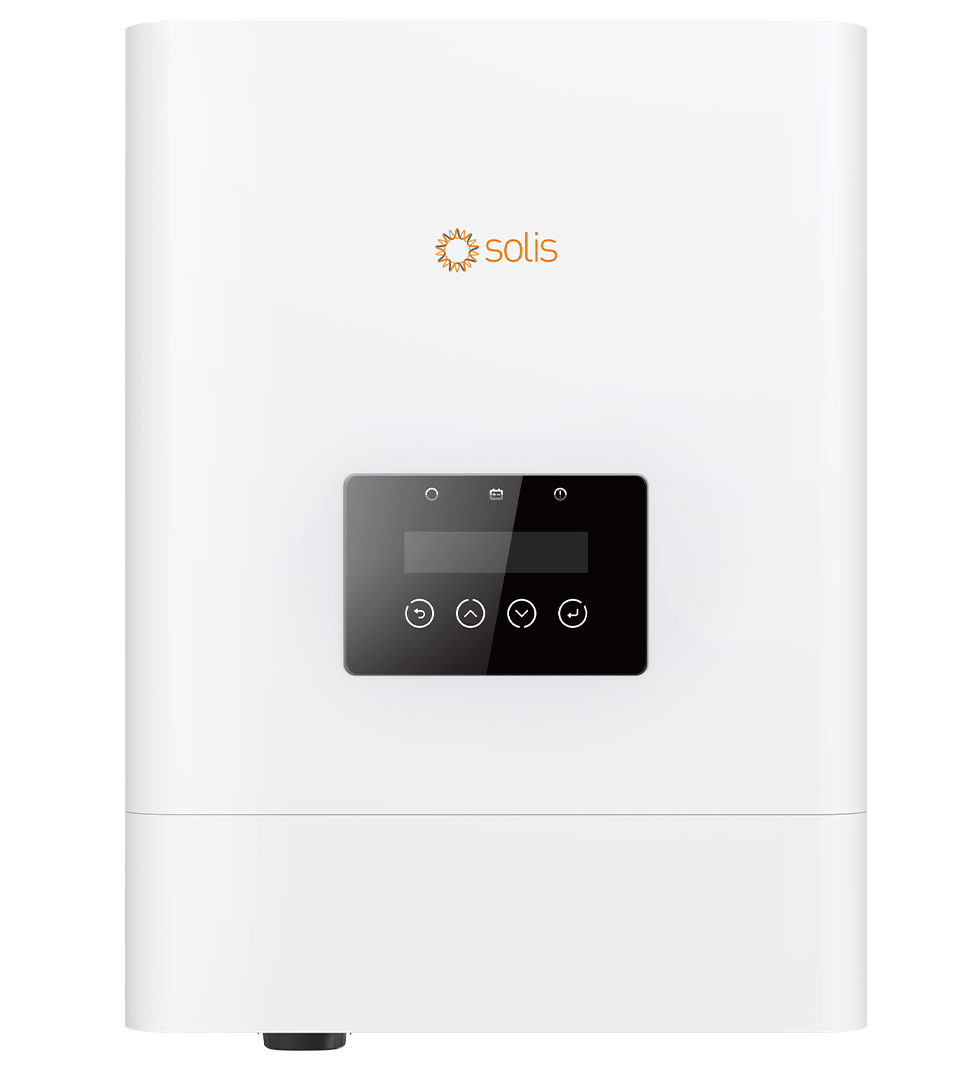
SolarGuide's partner, Alumo, installs grid-tied hybrid systems, not off-grid systems. Its rent-to-own solar and battery packages use a Solis 5kW inverter, an Eenovance 5.32kWh battery and 615W panels, on a seven-year term with a 6.5% annual escalation. If your home is grid-connected, that is the kind of system worth comparing against an off-grid quote. If your site has no grid at all, you'll need an installer who designs off-grid systems.
How much does an off-grid solar system cost for a house in South Africa?
In our worked example, a home using 10kWh a day needs roughly R111,000 (Johannesburg) to R151,000 (Cape Town) in equipment, based on median retail prices checked on 26 September 2026. Installation, mounting, protection, a generator and compliance are extra. A home using more electricity needs proportionally more panels and batteries.
Can a 5kW system run a house off-grid?
A 5kW inverter can run a modest home's loads at any moment, but the inverter rating isn't the limit off-grid. What matters is enough panels to cover winter use and enough battery to last through cloudy days. Most 5kW kits carry 5kWh to 10kWh of storage, which is too little to go fully off-grid for a home using 10kWh a day.
Do I need a generator if I go off-grid?
Not strictly, but it is the common safety net. Covering the last few cloudy days a year with batteries alone costs far more than a generator that runs a handful of times. Check that your inverter has a generator input.
Is going off-grid cheaper than staying on Eskom?
Not on hardware. Off-grid equipment in our example costs about R50,000 to R90,000 more than a grid-connected hybrid kit for the same home. Whether you save over time depends on your tariff, fixed charges and how long the batteries last, so compare it with a hybrid quote on the same assumptions.
Is SolarGuide the installer?
No. SolarGuide is an independent referral partner. Alumo supplies, installs, finances and warrants the systems; its home packages are grid-tied hybrids. We help you compare options and get a free quote. All pricing is indicative and subject to a site assessment and credit approval.
Sources and review note
Checked on 20 October 2026. Solar yields and the off-grid simulations come from the European Commission Joint Research Centre's PVGIS 5.2 (grid-connected and off-grid calculators, SARAH2 radiation data for 2005 to 2020, 14% system losses), run on 20 October 2026. Equipment prices are medians of VAT-inclusive listings in the SolarGuide Solar Price Index Q3 2026, checked on 26 September 2026, where every listing is linked. Off-grid operation wording comes from Sunsynk's 5kW hybrid inverter page. Certificate of Compliance requirements are from the Department of Employment and Labour. Alumo package details come from alumo.co.za, checked on 20 October 2026. The sizing, cost build-up and comparisons are SolarGuide calculations from the stated assumptions, not installer quotes. None of the retailers or brands named is a SolarGuide partner. If you spot a factual error, tell us and we'll correct it.
SolarGuide is an independent referral partner. We help you compare options and arrange a free quote — Alumo supplies, installs, finances and warrants the systems. Pricing is indicative, sourced from Alumo’s published catalogue, and subject to a site assessment and credit approval.