Current commercial solar price examples
The following figures were checked on 22 September 2026. They are prices published by individual providers, not a market index or a recommendation.
Grid-tied solar without batteries
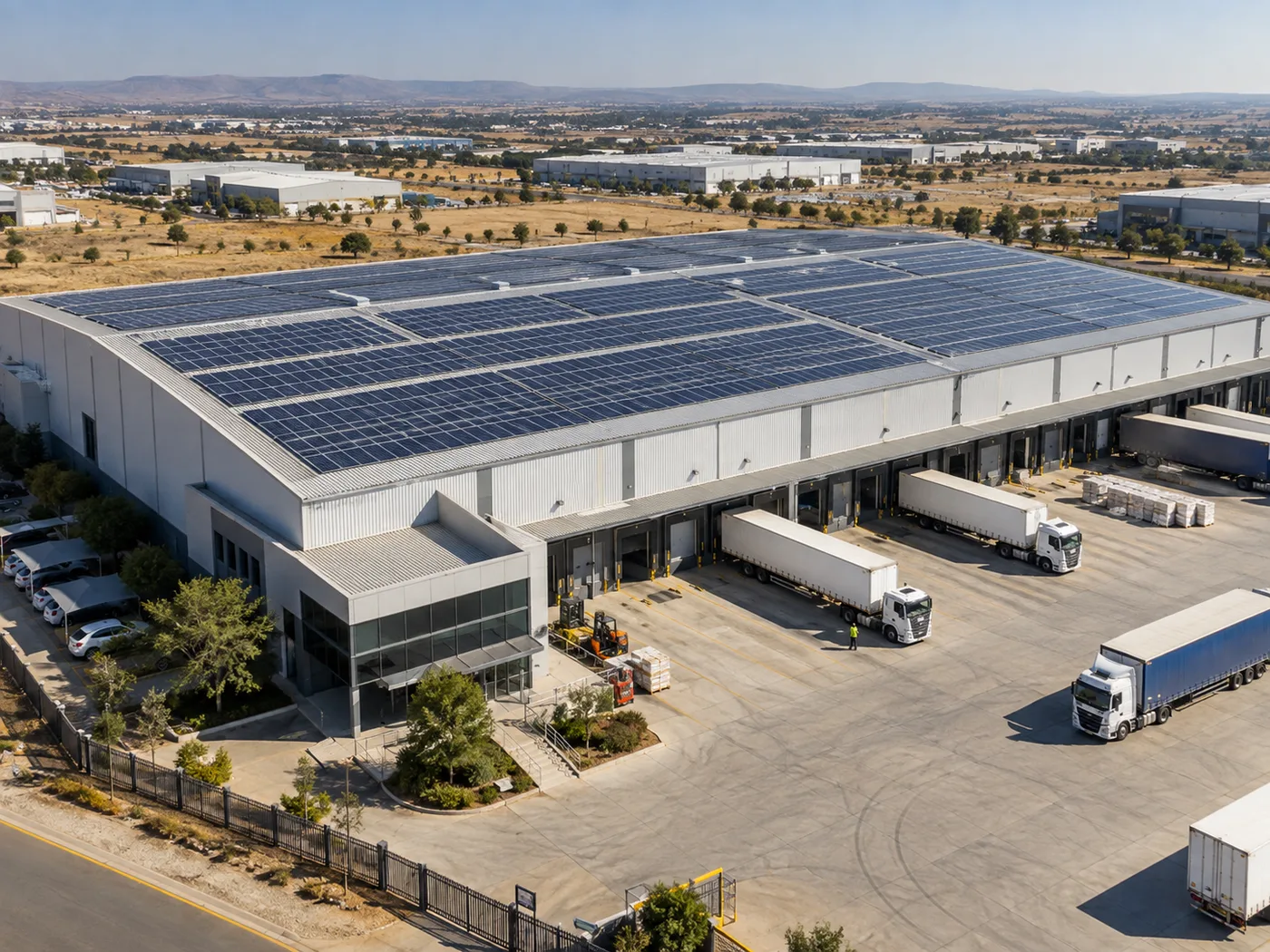
Focal Energy's 2026 commercial cost guide publishes these indicative budgets for a standard grid-tied commercial rooftop installation. The figures exclude VAT and battery storage.
| Panel capacity | Indicative installed budget | Approximate cost per kWp |
|---|
| 50 kWp | R520,000 | R10,400 |
| 100 kWp | R870,000 | R8,700 |
| 200 kWp | R1,570,000 | R7,850 |
| 500 kWp | R3,620,000 | R7,240 |
| 1 MWp | R6,700,000 | R6,700 |
The falling cost per kWp reflects economies of scale, but the table should only be used for early budgeting. Roof condition, cable distance, structural work, network requirements and site access can move a real quote away from these figures.
A standard grid-tied system also stops operating when the grid fails unless the design includes approved backup or islanding capability. It can reduce daytime grid purchases, but it is not automatically a continuity system.
Hybrid solar with substantial battery storage
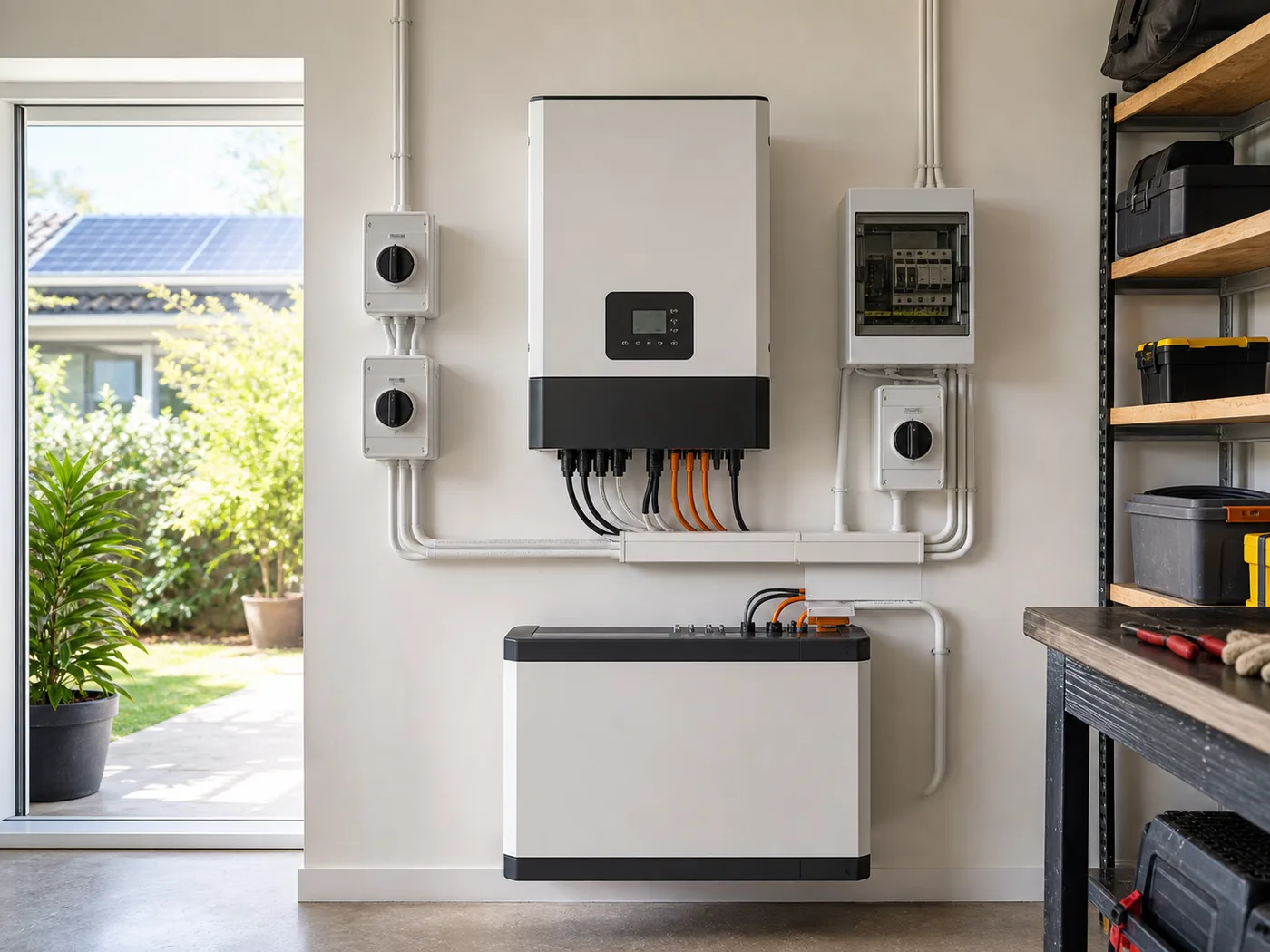
Alumo's current business page publishes two battery-backed reference packages:
| Provider package | Published configuration | Outright price | Rent-to-own starting price |
|---|
| Energy Efficiency | 50.05 kWp panels, 50 kW inverter, 120 kWh battery | From R999,000 | From R18,000 a month for 7 years |
| Business Powerhouse | 100.1 kWp panels, 125 kW inverter, 261 kWh battery | From R1.9 million | From R34,000 a month for 7 years |
Alumo describes these as starting points and says its calculator is based on electricity usage while excluding pole fees and other additional costs. The public page does not state every assumption behind its savings figures or the total rent-to-own cost. Request the annual escalation, initiation fees, insurance, maintenance, buy-out and total paid in writing.
The grid-tied and hybrid examples should not be compared as if they are the same product. Batteries can support continuity, shift energy and manage selected loads, but they add equipment, control and replacement considerations that a solar-only budget does not contain.
The three numbers people often mix up
Panel capacity in kWp
Kilowatt-peak describes the rated capacity of the solar array under standard test conditions. It is the number most often used when providers publish a solar price per kWp.
The array's real annual output depends on orientation, shading, temperature, losses, location, downtime and any export limit. A 100 kWp label is not an annual energy guarantee.
Inverter power in kW
The inverter determines how much power the system can convert or supply at a point in time. Its rating must suit the site's phase arrangement, peak load, motors, existing generator and connection rules.
Panel capacity and inverter power do not have to match exactly. A credible proposal explains the design ratio and any expected clipping rather than presenting one number as the whole system size.
Battery storage in kWh
Battery capacity affects how much energy can be stored. Usable capacity, discharge limits, supported power, reserve settings and the critical load determine runtime.
A battery budget should identify the job the battery must do. Backup, peak shaving, tariff arbitrage and solar self-consumption need different operating logic. The commercial peak-shaving guide explains how to test a demand-charge case using the site's tariff and interval data. Buying storage before defining the use case is an expensive way to discover that the design does not solve the business problem.
What changes the installed commercial solar cost?
The load profile
Solar produces during daylight. A business that uses most of its electricity while the array is generating can consume more solar directly. A monthly bill cannot show this match. Half-hourly or hourly interval data is more useful because it shows when the site imports power and when demand peaks.
Backup scope
The price changes quickly when a project must keep refrigeration, production, pumps, security or data equipment running through an outage. The design may need batteries, hybrid inverters, new essential-load boards, generator integration or a staged shutdown plan.
Separate continuity value from electricity savings. Lost trading margin, spoiled stock and generator fuel can support a resilience case, but they should not be added to the energy saving without a documented method.
Roof, carport or ground conditions
The proposal may need to allow for structural assessment, roof repairs, waterproofing, access equipment, carport steelwork, trenching, fencing or civil works. An asbestos roof, a long cable route or a congested distribution board can change the project before another panel is added.
Electrical and network work
Commercial projects can require board upgrades, protection changes, transformers, metering, export control, grid studies, professional designs and distributor applications. Ask which of these are included, provisional or excluded.
The current NERSA clarification reported by SAnews says grid-connected embedded generation of 100 kW or less must register with the relevant distributor, while facilities above 100 kW register directly with NERSA. Your municipality or Eskom may also require its own application and technical documents.
Equipment and service scope
Two quotes with the same headline capacity can use different module, inverter and battery models. They can also include different monitoring, cleaning, call-out, warranty and operations obligations.
Write the exact models, quantities, warranty holders and response process into the comparison. A product warranty is not the same as a workmanship warranty or an operations and maintenance agreement.
Build the budget in layers
Ask every bidder to separate these lines:
- solar modules, inverters, batteries and monitoring equipment;
- mounting, cabling, protection and distribution-board work;
- structural, roofing, trenching, access and civil work;
- design, engineering, studies, professional sign-off and applications;
- installation, commissioning, training and handover documents;
- maintenance, monitoring, insurance and fault response;
- VAT and any other taxes or fees;
- finance charges, escalation, initiation fees and buy-out; and
- exclusions, provisional sums and conditions that can change the final price.
This format makes scope gaps visible. It also stops a low equipment price from being mistaken for a complete installed project.
Prepare a commercial solar assessment
Bring your bills, operating hours, site details and critical loads. We will route the enquiry for a business assessment and provider quote.
Start a business assessment →Compare finance routes on total cost and risk
| Route | Initial cash | Who owns the system? | What the business must compare |
|---|
| Cash purchase | Highest | Business from purchase | Installed cost, tax treatment, maintenance, insurance, performance and residual value |
| Loan or asset finance | Deposit and fees vary | Depends on agreement, often the business subject to lender security | Interest, term, security, settlement, tax treatment and total repayment |
| Rent-to-own or lease | Usually lower | Provider or funder during the term | Monthly payment, escalation, maintenance, buy-out, early exit and ownership transfer |
| Power purchase agreement | Usually limited project capital | PPA provider | Energy rate, escalation, minimum purchase, performance, roof rights, change in law and termination |
The business solar finance comparison shows how to shortlist these routes using total cost, cash flow, ownership and risk. The solar PPA guide explains the contract questions behind the last option. The Section 12B guide covers the current tax allowance and its ownership requirements.
Model the return without double counting
A commercial proposal can create value in several ways. Keep each one visible:
- Avoided energy purchases: solar electricity used on site replaces energy that would otherwise be bought from the distributor.
- Demand reduction: a project may reduce measured demand if generation and storage are available during the tariff's demand window. This needs interval modelling.
- Export credit: only include export where the distributor permits it, the tariff is confirmed and the necessary metering is in the scope.
- Avoided generator cost: fuel and maintenance can be compared with a battery-backed design if the operating assumptions match.
- Avoided interruption cost: use contribution margin or a documented operational cost, not gross revenue.
Fixed, network, capacity and service charges may remain after solar is installed. A provider should map each saving to the actual tariff line and show a downside case for lower consumption, lower tariff growth and weaker solar production.
Tax treatment belongs in the ownership decision
The SARS guide to renewable-energy asset allowances says qualifying photovoltaic assets of 1 MW or less may be deducted at 100% of cost in the year they are first brought into use for the taxpayer's trade. Ownership, first use, qualifying cost and trade requirements apply.
The temporary 125% Section 12BA allowance applied to qualifying assets brought into use before 1 March 2025. Do not build a 2026 proposal around that expired window.
A deduction reduces taxable income. It is not a rebate and may belong to the asset owner rather than the energy user. Ask a tax practitioner to review the proposed ownership and finance agreement before including the allowance in the business case.
What your reviewers will need
Finance
Provide the current tariff, interval consumption, capital or finance schedule, escalation, total paid, tax assumptions and sensitivity cases. State whether the model includes VAT, maintenance, insurance, degradation and component replacement.
Technical and facilities
Provide the single-line diagram, load profile, phase and supply details, roof information, critical loads, generator arrangement, connection requirements and planned site expansion. The commercial site assessment guide provides a practical data and site-readiness checklist. Use the commercial solar approvals checklist to identify distributor, professional, metering and property work that belongs in the budget.
Procurement and legal
Provide the full scope, exclusions, delivery milestones, warranties, performance method, liability, insurance, access rights, early termination and end-of-term outcome.
The commercial project screening calculator turns the first screening inputs into a practical assessment route. The commercial solar overview explains the broader decision. Smaller owner-managed businesses can also use the small-business solar guide to separate continuity from bill savings.
Frequently asked questions
How much does a 50 kW commercial solar system cost in South Africa?
The answer depends on whether 50 kW refers to inverter power or panel capacity and whether the project includes batteries. Current published examples include about R520,000 excluding VAT for a 50 kWp grid-tied rooftop system without storage, and R999,000 for a 50.05 kWp hybrid package with a 50 kW inverter and 120 kWh of storage. Both are provider indications checked on 22 September 2026, not quotes for every site.
How much does commercial solar cost per kWp?
One current provider guide publishes grid-tied rooftop budgets from about R10,400 per kWp at 50 kWp to R6,700 per kWp at 1 MWp, excluding VAT and batteries. Use a per-kWp figure only for early budgeting because roof, electrical, civil, connection and storage scope can change the installed price.
Are batteries included in commercial solar prices?
Not always. Many cost-per-kWp benchmarks cover grid-tied solar without batteries. Ask the quote to separate panel capacity, inverter power, usable battery storage, backup circuits and the operating purpose of the battery.
Is buying commercial solar cheaper than paying monthly?
Buying often avoids a provider's financing margin, but it uses business capital and leaves the owner responsible for performance and maintenance outside contracted services. Compare the lifetime cost, tax position and risk allocation of cash, debt, rent-to-own and PPA routes rather than comparing only the first payment.
Can SolarGuide give my business a fixed price online?
No. A credible commercial price needs load, tariff, site, supply, backup and property information. SolarGuide is an independent referral partner. Alumo provides its own assessment, design, finance terms, installation and warranties. Published prices are indicative and remain subject to site assessment, final design and credit approval.
Start a commercial solar assessment with your bills, operating hours, site details and critical-load list ready.
SolarGuide is an independent referral partner. We help you compare options and arrange a free quote — Alumo supplies, installs, finances and warrants the systems. Pricing is indicative, sourced from Alumo’s published catalogue, and subject to a site assessment and credit approval.