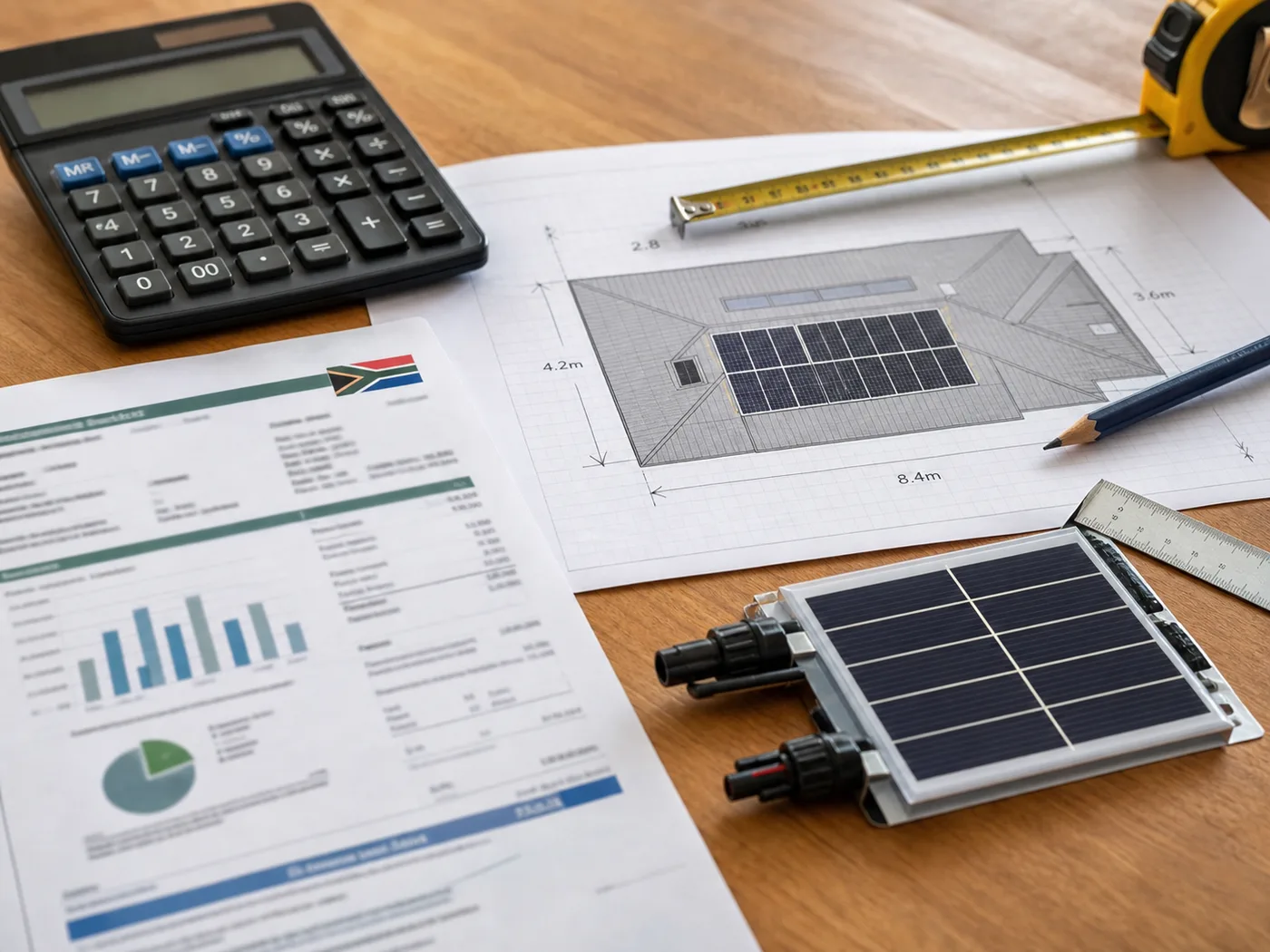
The same system can look very different as an outright purchase, rent-to-own plan or subscription. Compare the published package structures before you request a tailored quote.
When load-shedding bites, the generator feels like the fast, cheap fix. You can buy one this weekend, plug it in, and have power tonight, all for a fraction of what a solar system costs upfront. It's a tempting bit of maths, and it's exactly why so many South African homes bought one.
But the sticker price is a trap. A generator's real cost isn't what you pay in the shop. It's what you feed it, month after month, for years. Solar costs more to install and almost nothing to run. A generator costs less to buy and a fortune to keep running. Over five years, that flips the comparison entirely. This guide walks through the true cost of each, honestly and without invented figures, so you can see which one actually wins.
Key takeaways
A generator is cheap to buy and expensive to run; solar is the reverse.
Fuel is the killer — every hour of load-shedding costs real rands with a generator, and nothing with solar.
Generators only run during outages; solar saves you money every single day by cutting your Eskom bill.
Over five years, ongoing fuel and servicing usually push a generator's total cost far higher than it first appears.
Solar leaves you with an asset; a generator leaves you with a depreciating machine and years of fuel receipts.
The upfront cost: the generator's only real win
Let's be fair to the generator: on day one, it wins on price. A petrol generator big enough to run a few essentials costs a small fraction of a solar-and-battery system. If your only goal is "get some lights and Wi-Fi on tonight for as little as possible", nothing beats it.
That's the entire case for a generator, and it's a genuine one for people who can't or won't lay out more upfront. But it's a day-one snapshot of a five-year story, and the plot changes fast once you switch it on.
Where the generator's cost really lives
The purchase price is just the entry ticket. The real spending starts the moment it runs. A generator burns fuel by the litre, and during heavy load-shedding it can run for hours a day. It needs oil changes and servicing. It has a limited lifespan, especially the cheaper models run hard. And it does nothing for you when the power is on. It's a machine that only earns its keep during outages, and costs you every minute it does.
Fuel: the number that changes everything
Fuel is where the generator quietly becomes the expensive option. Every hour it runs, it burns petrol or diesel that you pay for at the pump, and pump prices in South Africa are neither low nor stable. Multiply an hourly fuel cost by the hours of load-shedding in a bad month, then by twelve months, then by five years, and the total climbs into serious money.
The uncomfortable part is that you have no control over it. You can't fix your fuel cost the way you can fix a solar repayment. When petrol goes up, so does the cost of keeping your generator running, on top of the Eskom bill you're still paying for all the hours the grid is up.
Solar's running cost: essentially nothing
Solar's running cost is where it wins. Once installed, the sun is free. Your panels generate power at no marginal cost, your battery stores it, and load-shedding becomes a non-event you barely notice. There's no fuel to buy, no queue at the petrol station with jerry cans, no hourly meter ticking over in your head every time the lights go out.
And here's the part the generator can never match. Solar saves you money even when the grid is up. Every day, your panels offset power you'd otherwise buy from Eskom. A generator sits silent and useless between outages. Solar is working, and saving, every sunny hour.
Not sure which system you need?
Get a free, no-obligation quote sized to your home, usage and budget. It only takes a minute.
Stretch the comparison across five years and the two diverge sharply. The generator's line starts low but climbs relentlessly: fuel every month, servicing every year, and quite possibly a replacement unit if a cheaper model gives out under heavy use. Add it all up and the "cheap" option often ends up costing far more than its purchase price suggested.
Solar's line starts high, at the upfront or financed system cost, but then flattens almost completely. Running cost is minimal, maintenance is minimal, and the savings flow the other way as it cuts your grid bill day after day. Somewhere in those five years the lines cross. From that point solar is cheaper overall, and pulling further ahead every month.
What you own at the end
There's a final difference that doesn't show up in the running costs. After five years, the generator is an older, depreciated machine with a stack of fuel receipts behind it and more to come. The solar system is a paid-down (or paid-off) asset that keeps generating, keeps saving, and can even lift your home's resale value. One is a sunk cost. The other is an investment.
The things money doesn't quite capture
Cost isn't only rands. A generator is loud: the drone through every outage, the neighbour's disapproval, the fumes you can't run indoors. It needs you to physically start it, refuel it and manage it. Solar just works, silently and automatically. The power stays on and most of the time you forget load-shedding is even happening.
Where a generator still fits
To be fair, a generator isn't always the wrong call. If your budget genuinely can't stretch to solar even on finance, or you occasionally need serious surge power for heavy machinery, a generator has a role. Some homes run both, with solar for daily use and silent backup and a generator as a rare deep-outage failsafe. But as the primary answer to load-shedding, its running cost makes it hard to justify over five years.
Reframing it as a monthly decision
Here's the practical way to decide. A financed solar system turns into a fixed monthly repayment, often close to what you were already paying Eskom. A generator turns into a variable monthly fuel bill on top of your full Eskom bill. One replaces your spending. The other stacks on top of it.
Once you see it that way, the generator stops looking cheap. Want to see what a solar system would cost you per month versus feeding a generator for five years? Get a free Alumo quote → and run the real comparison for your home.
Free planning tool
Solar finance and payback calculator
Compare cash payback with a financed system, using your own bill, tariff and assumptions.
R 2 500
R 110 000
70%
Payment route
Cash payback
5.2 years
20-year net saving
R 851 001
Year-one saving
R 1 750/mo
Estimated array
4.4 kW
About 8 × 550 W panels
Roughly 23.3 m² of usable roof
Indicative scenario only. It excludes finance fees, tax effects, maintenance, export credits and site-specific generation. The assumptions are visible below so the result can be challenged instead of treated as a quote.
Is solar cheaper than a generator over five years?
For most households, yes. A generator is cheaper to buy but expensive to run, with fuel and servicing adding up every month, while solar costs more upfront but runs on free sunlight and also cuts your daily Eskom bill. Over five years, solar's total cost typically comes out lower.
How much does it cost to run a generator during load-shedding?
It depends on the fuel price, the generator's consumption and the hours of load-shedding, but it's a real per-hour cost every single time it runs, and it's on top of the Eskom bill you still pay when the grid is up. Fuel is the biggest and least controllable cost of owning one.
Does solar save money when there's no load-shedding?
Yes, and that's a key advantage over a generator. Solar offsets power you'd otherwise buy from Eskom every sunny day, so it saves money continuously. A generator only does anything during an outage and sits idle the rest of the time.
Can I use both a generator and solar?
You can. Some homes run solar for everyday use and silent load-shedding backup, keeping a generator as a rare failsafe for very long outages. But as the main solution, solar's far lower running cost usually makes it the better primary choice.
Which is the better investment, solar or a generator?
Solar leaves you with an asset that keeps saving for decades and can raise your home's resale value. A generator is a depreciating machine with ongoing fuel costs. SolarGuide is an independent referral partner. Alumo supplies, installs, finances and warrants the systems. Pricing is indicative and subject to a site assessment and credit approval.
SolarGuide is an independent referral partner. We help you compare options and arrange a free quote — Alumo supplies, installs, finances and warrants the systems. Pricing is indicative, sourced from Alumo’s published catalogue, and subject to a site assessment and credit approval.