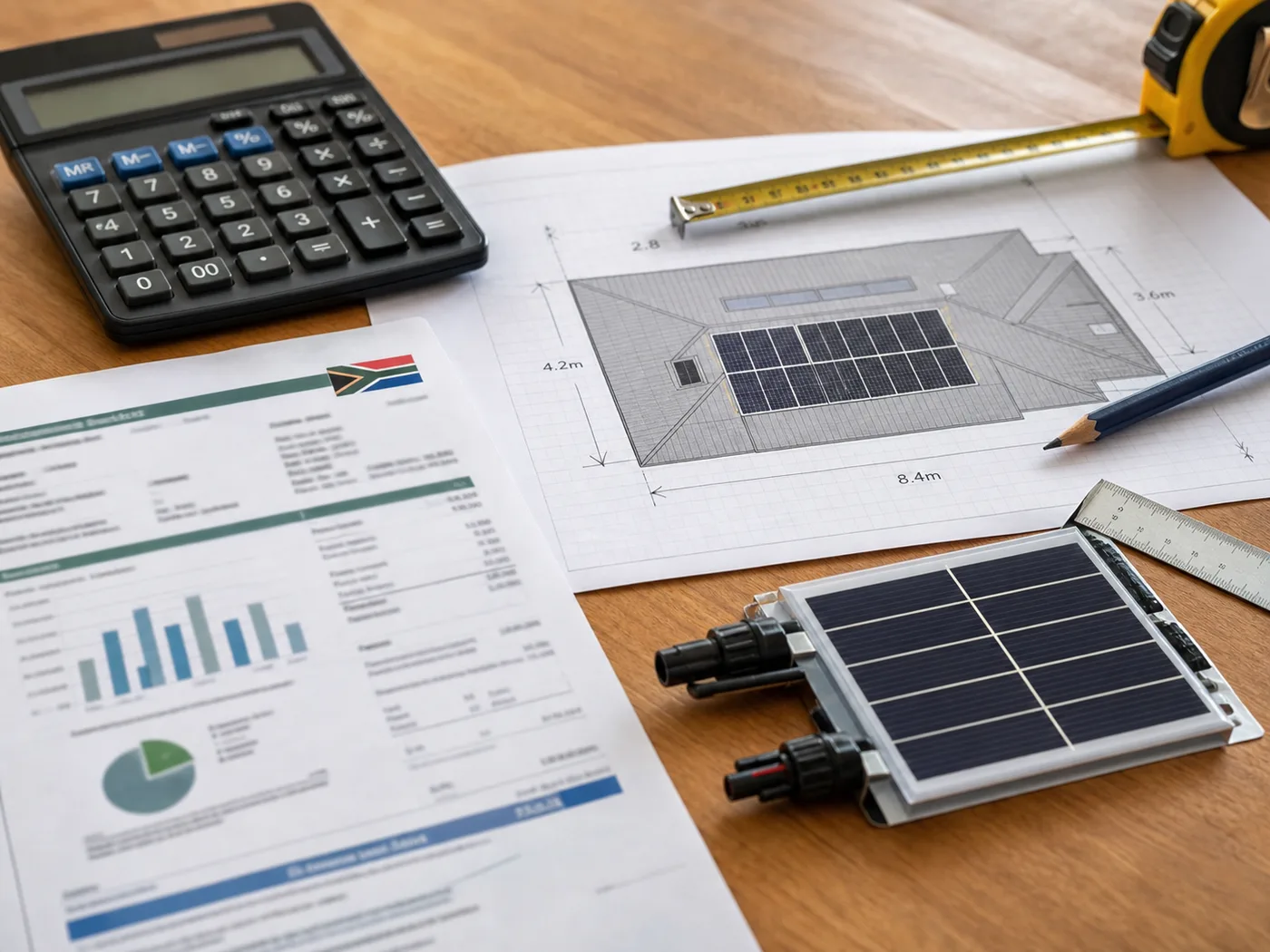
The same system can look very different as an outright purchase, rent-to-own plan or subscription. Compare the published package structures before you request a tailored quote.
A R3,000 monthly electricity bill puts you firmly in the territory where solar is arguably overdue. At that level you're spending R36,000 a year on power that gets cut during load-shedding and climbs with every Eskom tariff hike. The question isn't really whether solar makes sense. It's what size system you need and what it'll cost you.
This guide maps a R3,000 bill onto a real system size and price, then does the comparison that actually matters: how the monthly repayment stacks against the bill you're already paying. Everything here is kept honest, with no invented figures, just a clear framework for reasoning about your own home.
Key takeaways
A R3,000 bill usually points to a 5kW-class hybrid system with a healthy battery.
Higher bills pay back faster, because you're offsetting more expensive grid power in bigger volumes.
Financed, a 5kW system often costs less per month than a R3,000 Eskom bill, with backup included.
Battery capacity is the main cost lever; match it to how much backup you genuinely need.
When you use power (day vs night) shapes how much of the R3,000 solar can realistically remove.
What a R3,000 bill signals
Your bill is a proxy for consumption, and a R3,000 monthly spend signals a solidly above-average household. This is typically a larger family home, or one with power-hungry extras: a pool pump, a couple of geysers, extensive electronics, maybe a home office running through the day. You're using enough that a small starter system would leave too much of your bill untouched.
That usually points to a 5kW-class hybrid inverter as the natural starting point, paired with enough battery to carry your essentials (and then some) through load-shedding, and a full set of panels to generate hard through the day. The higher your genuine daytime usage, the more of that R3,000 solar can realistically claw back.
Why R3,000 homes pay back faster
There's a pleasing bit of maths here: the bigger your bill, the faster solar tends to pay for itself. A R3,000 home is offsetting expensive grid power in large volumes, so the rand savings each month are bigger than they'd be for a lighter user. Every tariff increase then widens that saving further. Heavy users have more to gain, which is exactly why solar is such an easy call at this level.
The right system size for R3,000
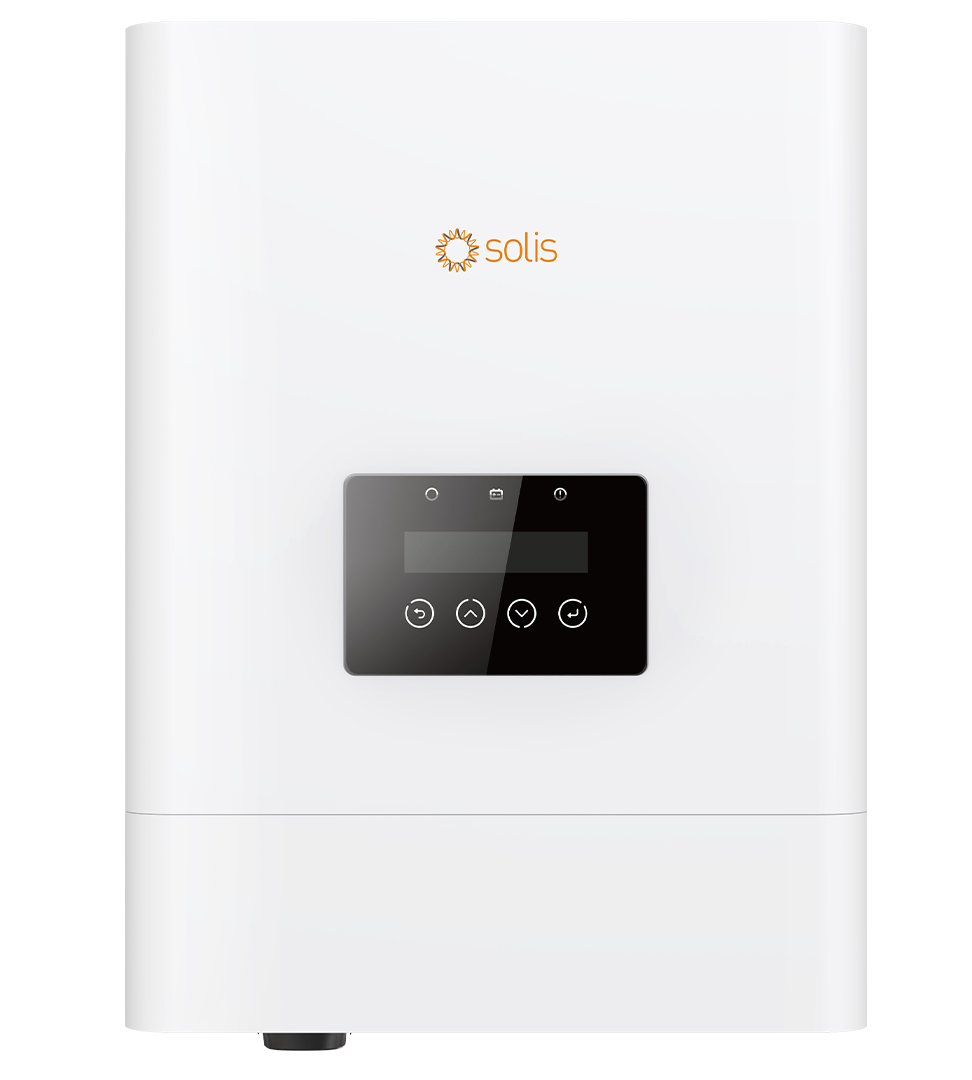
Alumo's current solar-plus-battery rent-to-own range uses a Solis 5kW inverter and Eenovance 5.32kWh battery: Watt-a-Deal has three 615W panels from R1,418/month, The Big Watt has four from R1,487/month, and The Power Bae has six from R1,626/month on a seven-year term. Three- and five-year prices, solar-only configurations and battery-only pricing are available on our current package comparison.
If your R3,000 comes with a pool pump running all day, a borehole, or several high-draw appliances you want to run at once, you may benefit from a larger inverter or additional battery capacity. The trade-off is cost: more capability means a higher monthly figure. The right move is to be specific about which loads you actually need to run during an outage, rather than sizing for a worst case that never happens.
When 5kW might be more than enough
Not every R3,000 bill needs a 5kW system. If a big slice of your bill is a single inefficient geyser, sometimes a solar geyser or heat-pump plus a smaller PV system does the job for less. This is where an honest assessment beats a blanket recommendation. The goal is to remove the cost, not to buy the biggest system on the shelf. Get a free Alumo quote → if you want that worked out against your real usage.
Not sure which system you need?
Get a free, no-obligation quote sized to your home, usage and budget. It only takes a minute.
Paid cash, a 5kW system sized for a R3,000 home lands in the mid tens of thousands of rands, and pays itself back over a handful of years. After that the savings are pure profit for the decades the panels keep producing.
Financed is where the R3,000 bill really reframes things. A 5kW-class rent-to-own system typically carries a monthly repayment that's below R3,000. The Power Bae starts from R1,626 a month on a seven-year term, or R2,327 on a three-year term. So from day one, you could be paying less per month than your current Eskom bill, while gaining load-shedding backup and building ownership of a real asset.
Put the two side by side. Your R3,000 goes to Eskom for power that's interrupted during load-shedding and rises every year. A starting repayment of R1,626 for The Power Bae goes towards a system that keeps your lights on during outages and belongs to you at the end of the term. You're spending less and getting more.
And it improves every year
Your Eskom bill won't stay at R3,000; it climbs with every tariff increase. Alumo's rent-to-own payment rises by a set 6.5% a year. So the gap widens in your favour in any year the tariff increase is bigger than that, and you know your payment for every year of the term in advance.
Getting the battery right
Within a R3,000-bill system, the battery is the biggest single influence on price. A 5kWh-ish battery, like the Eenovance 5.32kWh battery in The Power Bae, comfortably carries essentials and moderate loads for several hours, covering most load-shedding stages. If your area sees long Stage 6 blocks or you want to run heavier appliances deep into the night, additional storage buys that resilience, at a higher monthly cost.
The discipline is to size storage to real need. A R3,000 home often wants a bit more battery than a R2,000 one, but there's still no reason to over-buy capacity that sits unused. A technician sizing against your actual usage will land this far better than any online rule of thumb.
Want a system matched to your real R3,000 bill and roof? Get a free Alumo quote → and get numbers based on your actual usage rather than an average.
Free planning tool
Solar finance and payback calculator
Compare cash payback with a financed system, using your own bill, tariff and assumptions.
R 2 500
R 110 000
70%
Payment route
Cash payback
5.2 years
20-year net saving
R 851 001
Year-one saving
R 1 750/mo
Estimated array
4.4 kW
About 8 × 550 W panels
Roughly 23.3 m² of usable roof
Indicative scenario only. It excludes finance fees, tax effects, maintenance, export credits and site-specific generation. The assumptions are visible below so the result can be challenged instead of treated as a quote.
What size solar system do I need for a R3,000 electricity bill?
Most R3,000-a-month homes suit a 5kW-class hybrid system with a battery of around 5kWh and a full set of panels, enough to run heavier loads and carry essentials through load-shedding. Homes with pools, boreholes or very high simultaneous usage may need extra inverter or battery capacity.
How much does solar cost for a R3,000 bill?
Alumo currently describes outright systems as bespoke and confirms the cash purchase price after assessing the property and energy use. Rental buyout and cash-equivalent figures should not be treated as a current outright quote.
Will a 5kW system cover my whole R3,000 bill?
It can offset a large share, and for daytime-heavy households a very large share, but rarely 100% unless you size storage generously and shift usage into daylight. How much you remove depends on your usage pattern as much as the system size.
Does a higher bill mean solar pays back faster?
Generally yes. A R3,000 home offsets expensive grid power in bigger volumes, so the monthly rand savings are larger, and rising tariffs widen that saving each year, which tends to shorten the payback compared to a lighter user.
Which Alumo package suits a R3,000 bill?
The Power Bae (Solis 5kW inverter, Eenovance 5.32kWh battery, six 615W panels) is the natural fit for this band. SolarGuide is an independent referral partner. Alumo supplies, installs, finances and warrants the systems. Pricing is indicative and subject to a site assessment and credit approval.
SolarGuide is an independent referral partner. We help you compare options and arrange a free quote — Alumo supplies, installs, finances and warrants the systems. Pricing is indicative, sourced from Alumo’s published catalogue, and subject to a site assessment and credit approval.