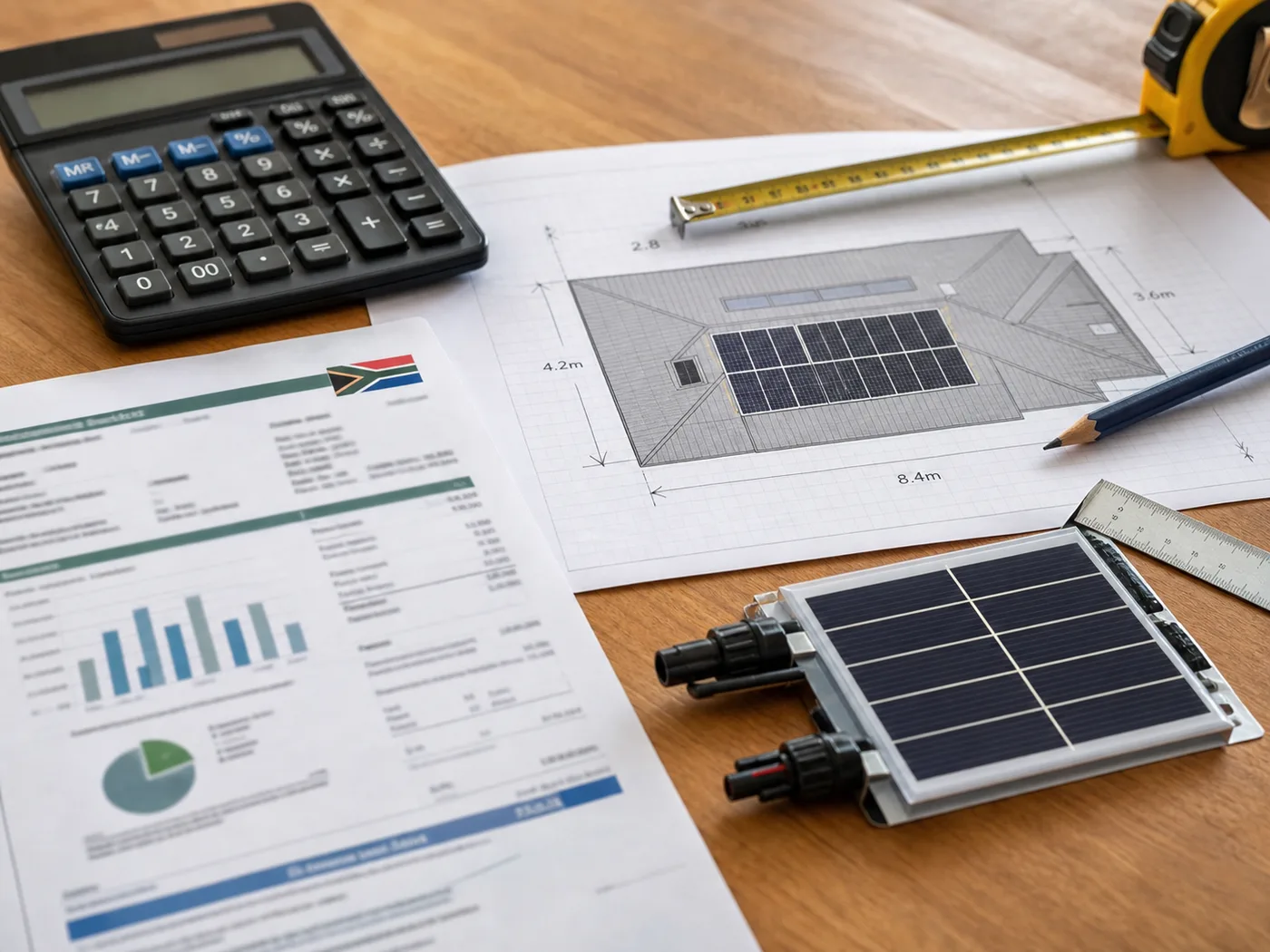
Use the calculator for an indicative starting point, then confirm the system against your roof, phase type, appliance loads and preferred backup level.
It is the doubt that stops a lot of South Africans from pulling the trigger on solar: what happens when the sun is not blazing? A grey, drizzly week in Cape Town, a misty Highveld winter morning, the short cold days of July — if solar only works when the sky is a perfect blue, is it really worth it in a country that, contrary to the postcards, does get plenty of cloud and cold?
It's a sensible question, and the answer is more encouraging than the doubt suggests. Solar panels absolutely work on cloudy days and through winter. They produce less than on a bright summer noon, but "less" is not "nothing", and a well-designed system is built to handle the difference. Two things settle the worry: what actually drives solar output (it's light, not warmth, and not even direct sunshine alone), and how a battery turns a variable daily harvest into steady power whenever you need it.
Key takeaways
Solar panels work on cloudy days and in winter — they generate less, but far from nothing.
Panels run on light, not heat; in fact they are slightly more efficient in cooler temperatures.
Winter means shorter days and a lower sun, so daily output drops even when skies are clear.
A properly sized battery is what smooths out cloudy spells and short winter days into reliable power.
Panels run on light, not heat
The first myth to clear up is that solar panels need heat. They do not. They generate electricity from light — specifically from photons striking the silicon cells — and light reaches your roof even when the sky is overcast. Clouds scatter and reduce sunlight, but a surprising amount still gets through, which is why you can still get sunburnt on an overcast day at Muizenberg. Your panels are catching that same diffuse light.
In fact, heat is mildly bad for panels. As we cover elsewhere, output drops as a panel heats up, so a cool, bright winter's day on the Highveld (crisp air, clear sky, cold panels) can be genuinely excellent for generation. The panels are working in their comfort zone rather than baking. So the hunch that winter is automatically worse for solar is only half right: the cold actually helps, and it's other factors that reduce the winter harvest.
Why cloudy days reduce output — but don't stop it
On an overcast day, panels typically produce a fraction of their bright-sky output. How big that fraction is depends on how thick the cloud is: light haze barely dents production, while a dark, heavy storm front cuts it substantially. But even under thick cloud, a system keeps trickling out power rather than switching off.
The practical point is that a run of cloudy days is a dip, not a blackout, for your generation. Your panels keep topping up your battery through the daylight hours, just more slowly. Whether that dip ever reaches your plug sockets depends entirely on how much storage you have — which is where the battery earns its place.
Winter is really about daylight, not cold
If the cold helps panels, why does winter output drop? Two reasons, and neither is temperature.
First, the days are shorter. Fewer hours of daylight means fewer hours of generation, full stop. A panel that harvests for many hours in December simply has fewer hours to work with in June.
Second, the sun sits lower in the sky. In a South African winter the sun tracks lower across the north, so its light hits your roof at a shallower angle and passes through more atmosphere to get there. Both effects reduce the intensity reaching your panels. This is also why the angle your panels are mounted at matters — a good installer sets the tilt to balance summer and winter harvests for your specific location, whether you are in sunny Upington or cloudier Knysna.
The result is a real but manageable seasonal dip. Your system generates noticeably less in mid-winter than mid-summer, which is exactly why sizing the system to your needs — rather than to a perfect summer's day — is so important.
Not sure which system you need?
Get a free, no-obligation quote sized to your home, usage and budget. It only takes a minute.
Here is the insight that resolves the whole worry. Solar generation is variable — it rises and falls with the time of day, the season and the weather. Your electricity needs are not variable in the same way; you want lights, wifi and a working fridge whether or not a cloud is passing. The component that bridges that gap is the battery.
During the day, your panels generate power. Whatever your home is not using right then charges the battery. When generation drops — at night, during a cloudy spell, on a short winter afternoon — you draw from the stored energy instead. A well-sized battery means a grey day or an early winter sunset does not translate into a dark house. It also, of course, is what carries you through load-shedding regardless of the weather, since Eskom's outages do not wait for sunshine.
This is why the honest way to size a system is around your real consumption and your local conditions, not a best-case scenario. A home in a cloudier, cooler region, or a household that wants to sail through both winter dips and heavy load-shedding, benefits from more panels and a larger battery. A four-panel starter system with a small battery covers essentials; stepping up to a six-panel system with a bigger battery gives you the headroom to shrug off a grey week. Get a free quote → if you want that sizing done against your actual usage.
For households mainly wanting reliable backup through load-shedding with sensible everyday savings, a mid-tier package strikes the balance, with enough storage to bridge the normal daily ups and downs.
Solar in South Africa is a genuinely strong proposition — the country gets far more sunshine hours than much of Europe, where solar is nonetheless widespread and worthwhile. But being realistic beats being oversold. Expect your generation to vary: brilliant on clear summer days, reduced but still useful under cloud, and lower through winter's short days. A system designed around those realities, with a battery sized to smooth them out, delivers reliable power year-round.
The mistake to avoid is undersizing on the assumption of endless sunshine, then feeling short-changed the first cloudy winter week. The fix is a proper assessment: your consumption, your roof, your region's weather and your load-shedding exposure all feed into the right panel count and battery size. Get a free quote → to have a specialist size a system against your actual conditions, so cloudy days and winter are a dip you barely notice rather than a nasty surprise.
Free tool
How long will your battery last?
Pick a battery size and what you want to keep running.
5.0 kWh
Estimated backup time
12.9 hours
Running about 350 W
Rough estimate at ~90% usable depth. Real runtime depends on the exact appliances and battery. A quote sizes it properly.
Yes. Panels generate from light, and light still reaches your roof through cloud. Output drops depending on how thick the cloud is, but panels keep producing rather than switching off, and your battery covers the shortfall.
Do solar panels work in winter in South Africa?
Yes. Winter output is lower mainly because the days are shorter and the sun sits lower, not because of the cold — panels are actually slightly more efficient in cooler temperatures. A properly sized system and battery handle the seasonal dip.
Does cold weather damage solar panels?
No. Cold does not harm panels, and mild cold actually improves their efficiency. Quality panels are built to withstand the full range of South African conditions, from winter chill to summer heat and hail.
How do I keep power during cloudy or winter days?
A correctly sized battery is the answer. It stores energy your panels generate during daylight so you can draw on it when generation dips — whether from cloud, a short winter afternoon, or load-shedding.
Should I fit more panels because of winter and cloudy weather?
If you live in a cooler, cloudier region or want to fully cover winter and heavy load-shedding, more panels and a larger battery give useful headroom. A site assessment sizes this to your real usage rather than a best-case summer day.
SolarGuide is an independent referral partner. Alumo supplies, installs, finances and warrants the systems; SolarGuide helps you compare and get a free quote. Pricing is indicative and subject to a site assessment and credit approval.
SolarGuide is an independent referral partner. We help you compare options and arrange a free quote — Alumo supplies, installs, finances and warrants the systems. Pricing is indicative, sourced from Alumo’s published catalogue, and subject to a site assessment and credit approval.