Commercial solar depends on operating hours, load profile, roof or ground space and the cost of interruption. Start with the business solutions overview and build the enquiry around your numbers.
For a retail business, an hour of load-shedding is an hour the till can't ring. The card machine goes offline, the barcode scanners die, the lights drop and, in a hot Highveld summer or a humid Durban afternoon, the air-conditioning that keeps customers browsing shuts off too. Shoppers don't wait in a dark shop. They walk out and buy the same thing down the road from the store that still has power. In retail, the electricity bill is only half the problem. The real cost is the sales you never make.
Solar addresses both. For an independent shop, a franchise outlet or a chain rolling out across multiple sites, a properly designed system keeps the doors open and the tills live through every stage of load-shedding, flattens a rising power bill, and via Section 12B of the Income Tax Act lets a trading business write the cost off against taxable income. This guide covers how solar works for retail specifically, including the extra wrinkles of a franchise or multi-site rollout.
Key takeaways
In retail, staying open during load-shedding protects sales that you cannot recover later — usually the bigger win over the bill saving.
Retail load is dominated by lighting, refrigeration or display cooling, air-conditioning and POS — steady rather than spiky, which often makes it an easy solar fit.
Section 12B lets a trading retailer deduct the full cost of a solar system in the year it is brought into use.
Franchises and chains benefit from a repeatable design rolled out site by site, with consistent branding and backup.
SolarGuide helps you compare and get a free quote; Alumo supplies, installs, finances and warrants the system.
Why retailers can't afford to go dark
Lost sales beat the electricity saving
A closed trading hour is revenue that never returns. Unlike a factory that can catch up on output later, a shop only sells while customers are inside. When load-shedding empties your store during a Saturday rush, that margin is gone. Framed that way, solar stops being a green nice-to-have and becomes continuity insurance that happens to pay for itself.
Cold chain and comfort
Any retailer with a cold section — a bottle store, a deli, a pharmacy with a cold room, a convenience store with fridges and freezers — carries the same risk as a restaurant: stock spoiling every hour the power is off. And for general retail, air-conditioning is not a luxury. A stuffy, dark shop clears out fast, while a cool, well-lit one keeps people browsing and spending.
The lit shop wins the street
When the whole centre or high street goes dark and your store is still glowing, you become the obvious place to shop. On a load-shedding day, reliability is a marketing advantage you cannot buy any other way.
Sizing solar for a retail space
Retail load is steadier than a kitchen
Good news for retailers: your load profile is usually smoother than a restaurant's. The big draws (LED lighting, refrigeration or display cooling, air-conditioning and the POS network) run fairly steadily through trading hours, and most of that demand falls squarely in daylight when panels are producing. A daytime-heavy load is the ideal solar candidate. You can lean on a bigger array and a proportionally smaller battery, because you consume as you generate.
As always, the most useful thing you can hand an installer is 12 months of electricity bills, ideally with the half-hourly data your municipality or Eskom can provide. That shows when and how hard you draw power, which sets the system size.
Separate the essentials
A smart design keeps the revenue-critical loads (POS, card machines, lighting, refrigeration, Wi-Fi and security) on backup so you never stop trading, while managing heavier or non-essential loads around the grid. For a retailer with significant refrigeration, the battery is sized to protect that cold chain through the longest realistic outage.
Alumo's business packages for retail
For a substantial shop or a busy franchise outlet, Alumo's commercial tiers fit:
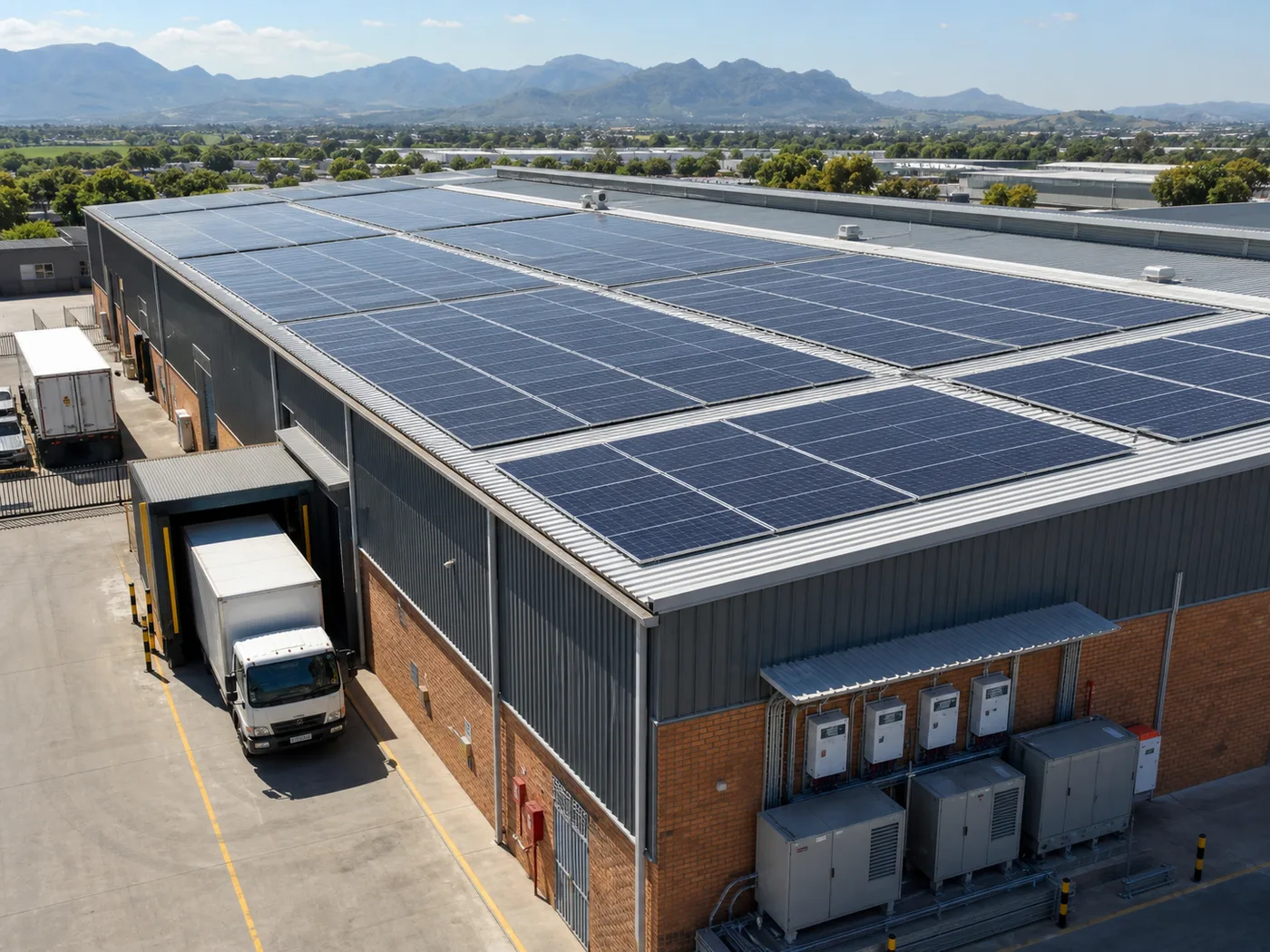
Energy Efficiency: roughly 120kWh of battery storage and a 50.05 kWp array, from around R18,000/month. This suits a large single store with meaningful refrigeration and air-conditioning.
Powerhouse: a 125kW inverter, around 261kWh of battery and a 100.1 kWp array, from around R34,000/month. This is for a supermarket, a big-box retailer or an anchor tenant with heavy cooling and lighting loads.
80–125kW
inverter range
120–261kWh
battery storage
50–100 kWp
solar array
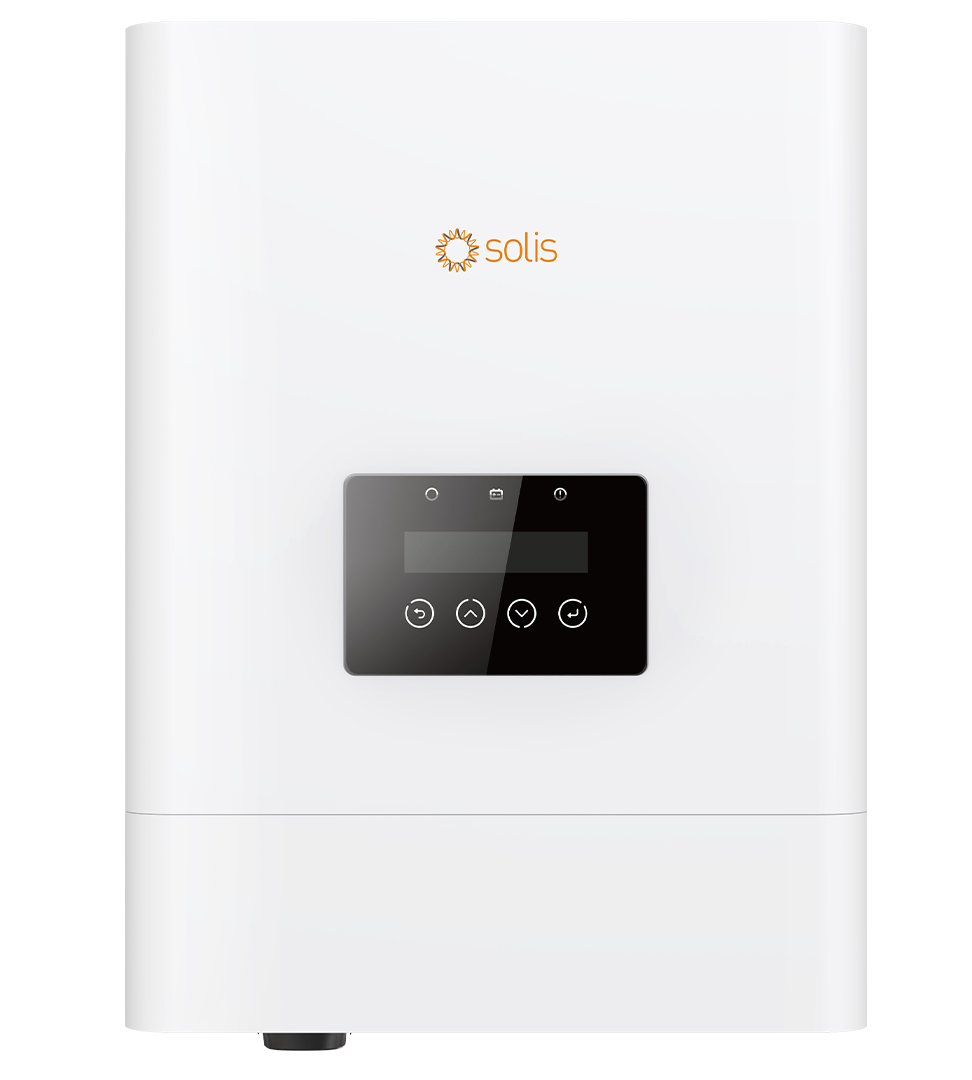
Alumo's current solar-plus-battery rent-to-own range uses a Solis 5kW inverter and Eenovance 5.32kWh battery: Watt-a-Deal has three 615W panels from R1,418/month, The Big Watt has four from R1,487/month, and The Power Bae has six from R1,626/month on a seven-year term. Three- and five-year prices, solar-only configurations and battery-only pricing are available on our current package comparison.
Rolling solar out across several outlets is a different exercise to fitting one shop. The win here is repeatability. Once you have a design that works for one store format, you can template it across similar sites, which speeds up quoting, installation and budgeting. Franchisors increasingly see energy resilience as part of protecting the brand. A franchise where half the stores go dark during load-shedding is inconsistent in exactly the way a franchise isn't supposed to be.
A few practical points for multi-site rollouts. Each site still needs its own assessment, because roof space, load and municipal jurisdiction differ. Landlord consent matters in leased premises — rooftop rights and who owns the installation at lease-end must be agreed up front. And a phased rollout, starting with the highest-turnover or worst-hit stores, spreads the investment while protecting the sites that matter most first. Get a free Alumo quote → to scope a single store or a whole portfolio.
Not sure which system you need?
Get a free, no-obligation quote sized to your home, usage and budget. It only takes a minute.
Under Section 12B of the Income Tax Act, a trading business can deduct the cost of a qualifying renewable energy asset used in producing income. For a profitable retailer, that writes off the qualifying cost against taxable income, so a meaningful slice of the system comes back through a lower tax bill. The usual honest caveats apply: it only helps a business making taxable profit, the asset must be used in producing income, and the details depend on your structure, so involve your accountant before you sign.
Alumo's commercial packages are structured as predictable monthly plans, turning a large capital outlay into a fixed operating cost that often sits at or below your current Eskom spend and doesn't climb every year. Alumo also backs its systems with a money-back savings guarantee: the system is designed to deliver a promised saving, and if it doesn't perform as promised, Alumo stands behind that commitment. It isn't unconditional (it rests on a proper load assessment and the agreed terms) but it puts the savings case in writing. Combine the monthly structure, the Section 12B deduction and the guarantee, and the economics for a trading shop become hard to argue with.
Is your shop a good fit?
If load-shedding costs you sales, if your power bill keeps rising, and if you pay tax on real profit, retail solar is close to a no-brainer. And if you run a franchise or a chain, a repeatable rollout multiplies the benefit across every site. The best first step is a free assessment: hand over a year of bills, let the design be built around your actual load, and see the monthly figure and guaranteed saving in black and white.
To ballpark the numbers before you book that assessment, the payback estimator below works off your current monthly power spend.
Free planning tool
Solar finance and payback calculator
Compare cash payback with a financed system, using your own bill, tariff and assumptions.
R 2 500
R 110 000
70%
Payment route
Cash payback
5.2 years
20-year net saving
R 851 001
Year-one saving
R 1 750/mo
Estimated array
4.4 kW
About 8 × 550 W panels
Roughly 23.3 m² of usable roof
Indicative scenario only. It excludes finance fees, tax effects, maintenance, export credits and site-specific generation. The assumptions are visible below so the result can be challenged instead of treated as a quote.
Will solar keep my tills running during load-shedding?
Yes — that is the core benefit. A well-designed system keeps the revenue-critical loads, POS, card machines, lighting, refrigeration, Wi-Fi and security, live through every stage of load-shedding, so you keep trading while nearby shops go dark. The system is sized around exactly those essentials plus your cold chain, based on your actual load.
Can I roll solar out across all my franchise stores?
Yes, and there is a real advantage to it. Once a design works for one store format, it can be templated across similar sites, which speeds up quoting and installation and keeps the brand consistent. Each site still needs its own assessment for roof space, load and municipal rules, and a phased rollout starting with the highest-turnover or worst-affected stores spreads the investment sensibly.
What is the Section 12B tax benefit for a retailer?
Section 12B of the Income Tax Act lets a trading business deduct the cost of a qualifying renewable energy asset used in producing income. For a profitable retailer, that lowers taxable income and reduces the true after-tax cost of the system. It only helps a business making taxable profit and the details depend on your structure, so confirm with your accountant.
What does the money-back savings guarantee mean?
Alumo designs each system to deliver a promised level of saving and backs it with a money-back savings guarantee — if the system does not perform as promised, Alumo stands behind it. The guarantee is based on a proper assessment of your load and the agreed terms, so it is not unconditional, but it puts the savings case in writing. Confirm the exact terms as part of your quote.
Who installs and finances the system?
Alumo supplies, installs, finances and warrants the system, including the commercial packages suited to retail. SolarGuide is an independent referral partner — we help you compare options and get a free quote. All pricing is indicative and subject to a site assessment and credit approval.
SolarGuide is an independent referral partner. We help you compare options and arrange a free quote — Alumo supplies, installs, finances and warrants the systems. Pricing is indicative, sourced from Alumo’s published catalogue, and subject to a site assessment and credit approval.