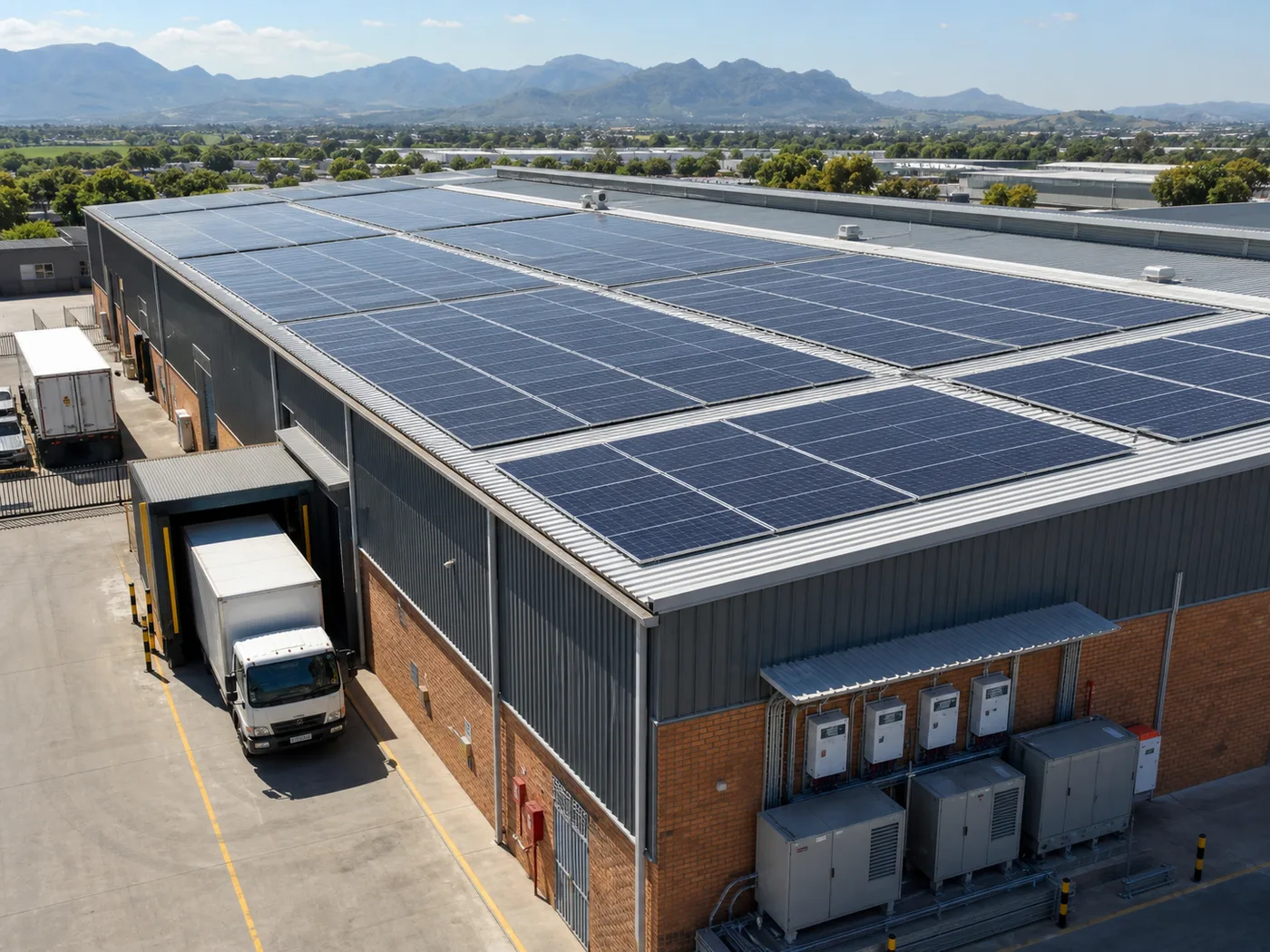
Commercial solar depends on operating hours, load profile, roof or ground space and the cost of interruption. Start with the business solutions overview and build the enquiry around your numbers.
There is a particular dread that hits a restaurant owner the moment the lights flicker. The pass goes dark mid-service, the extraction fan winds down, the card machine drops offline with a table of eight waiting to pay, and the walk-in fridge starts its slow climb towards a temperature that could cost you a weekend's stock. In hospitality, load-shedding is not an inconvenience. It is lost covers, spoiled food and customers who quietly decide to eat somewhere with the lights on.
Solar changes that. For a busy restaurant, a coffee shop, a bakery or a dark kitchen, a properly designed system keeps you trading through every stage of load-shedding and flattens a power bill that has quietly become one of your biggest fixed costs. Section 12B of the Income Tax Act then lets you write the investment off against taxable income. This guide walks through how solar works for a food business specifically, because kitchen load behaves nothing like a home.
Key takeaways
Staying open through load-shedding usually matters more than the bill saving — lost covers and spoiled stock dwarf the electricity cost.
Kitchen load is heavy and spiky: fridges, ovens, extraction and coffee machines all draw hard, so the inverter must handle your real simultaneous peak.
Section 12B lets a trading restaurant deduct the full cost of a solar system in the year it is brought into use.
Alumo's Energy Efficiency and Powerhouse business packages cover typical restaurant and multi-site loads.
SolarGuide helps you compare and get a free quote; Alumo supplies, installs, finances and warrants the system.
Why food businesses feel load-shedding hardest
The stock in your fridges is money on the line
Most trades can down tools for two hours and pick up where they left off. A restaurant cannot. Your cold chain is running whether you are serving or not, and every hour the walk-in and freezers sit without power is an hour closer to throwing out proteins, dairy and prepped mise en place. One badly timed Stage 4 day can wipe out thousands of rands of stock. That cost never shows up as "electricity," but it comes straight out of your margin.
Downtime is lost covers you never get back
A closed dinner sitting is revenue that just evaporates. You cannot serve those tables tomorrow instead. A coffee shop that cannot pull a shot during the morning rush loses its single most profitable hour. Frame solar as continuity insurance rather than a green project and the maths gets a lot more persuasive. The avoided downtime often pays for the system faster than the bill saving alone.
The open sign is a magnet
There is a quieter upside too. When the whole strip goes dark and your windows are still glowing, the foot traffic finds you. Reliability becomes a genuine competitive edge on a load-shedding evening.
Sizing solar around a kitchen
Kitchen load is heavy and spiky
This is where a food business differs from an office or a shop. Your load is not a smooth line. It is a series of hard spikes. A combi oven firing, a compressor kicking in on the walk-in, the extraction system, an espresso machine heating its boiler, an induction hob: several of these can hit at once, and the inverter has to swallow that combined surge without tripping. Undersize it and the system stumbles at exactly your busiest moment.
The single most useful thing you can hand an installer is 12 months of electricity bills, ideally with the half-hourly data your municipality or Eskom can supply. That load profile shows when you draw power and how high your peaks climb, which decides how big the inverter and battery need to be.
Decide what has to stay live
Not everything needs backing up. A smart design separates your loads: the non-negotiables (refrigeration, POS, card machine, lighting, Wi-Fi, extraction) sit on backup, while heavy cooking equipment you can manage around a schedule may stay on the grid or a generator for the rare deep outage. A restaurant that runs a gas kitchen has a very different, and often cheaper, electrical profile than an all-electric one. Flag your cooking setup early, because it shapes the whole design.
Free planning tool
Solar finance and payback calculator
Compare cash payback with a financed system, using your own bill, tariff and assumptions.
R 2 500
R 110 000
70%
Payment route
Cash payback
5.2 years
20-year net saving
R 851 001
Year-one saving
R 1 750/mo
Estimated array
4.4 kW
About 8 × 550 W panels
Roughly 23.3 m² of usable roof
Indicative scenario only. It excludes finance fees, tax effects, maintenance, export credits and site-specific generation. The assumptions are visible below so the result can be challenged instead of treated as a quote.
For a typical sit-down restaurant or a busy multi-till coffee shop, Alumo's commercial tiers are the natural fit:
Energy Efficiency — roughly 120kWh of battery storage and a 50.05 kWp array, from around R18,000/month. This suits a substantial single-site restaurant or a high-volume café with serious refrigeration.
Powerhouse — a 125kW inverter, around 261kWh of battery and a 100.1 kWp array, from around R34,000/month. This is for large venues, central production kitchens or a group running several concepts under one roof.
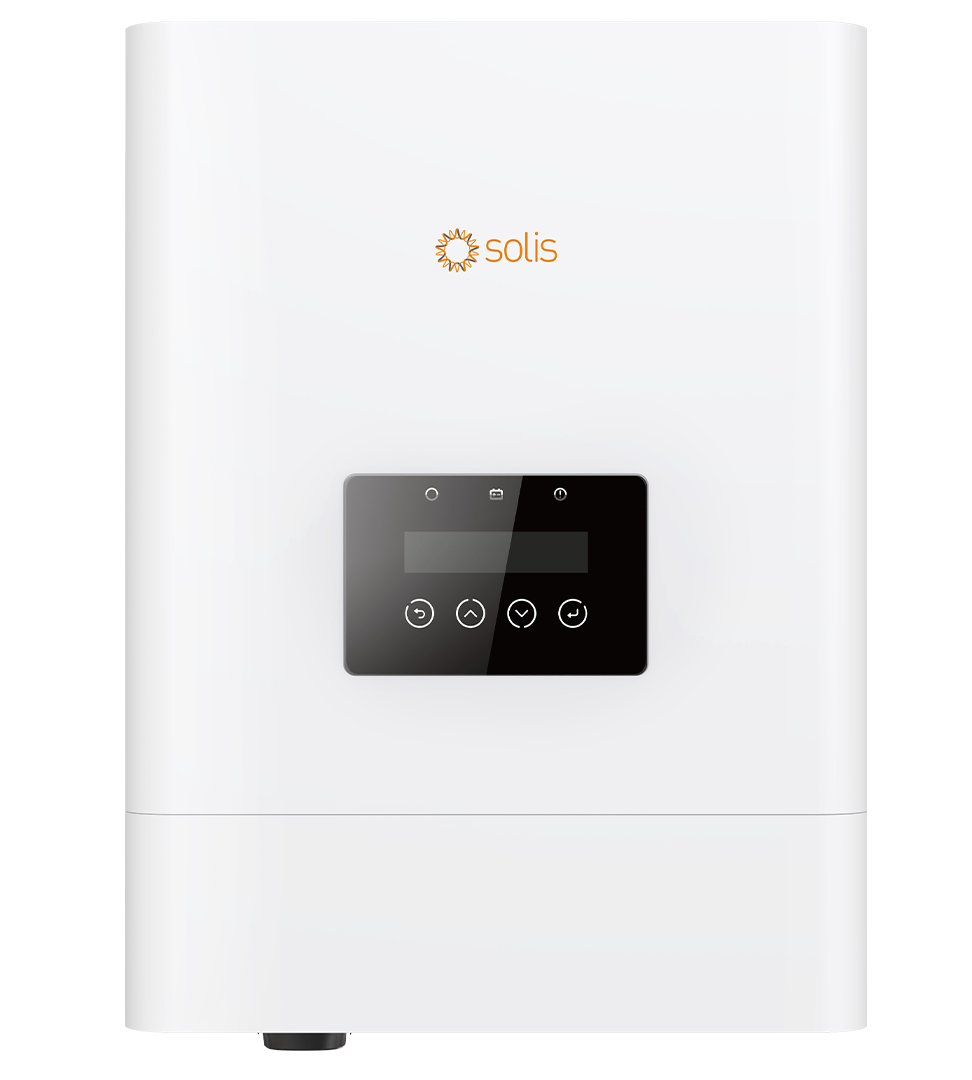
Alumo's current solar-plus-battery rent-to-own range uses a Solis 5kW inverter and Eenovance 5.32kWh battery: Watt-a-Deal has three 615W panels from R1,418/month, The Big Watt has four from R1,487/month, and The Power Bae has six from R1,626/month on a seven-year term. Three- and five-year prices, solar-only configurations and battery-only pricing are available on our current package comparison.
Section 12B: the tax break that changes the numbers
Many owners miss this entirely. Under Section 12B of the Income Tax Act, a business can deduct the cost of a renewable energy asset used in producing income. For a solar PV system, that means a profitable restaurant can write off the qualifying cost against taxable income, so a meaningful slice of the investment comes back through a lower tax bill.
A few honest caveats. The deduction only helps a business actually making taxable profit, the asset has to be used in producing income, and the specifics depend on your structure and your accountant's advice. Treat Section 12B as a strong reason to loop in your tax practitioner before you sign, not as automatic free money. For most trading restaurants, though, it shortens the payback noticeably.
Not sure which system you need?
Get a free, no-obligation quote sized to your home, usage and budget. It only takes a minute.
Few restaurateurs want to sink a large lump sum into a roof when that cash could be funding a refit or a second site. Alumo's commercial packages are structured as predictable monthly plans, turning a big capital outlay into a fixed operating cost that often sits at or below what you already pay Eskom. Unlike your tariff, it does not climb every year.
Alumo also backs its systems with a money-back savings guarantee. In plain terms, the system is designed to deliver a promised level of saving, and if it does not perform as promised, Alumo stands behind that commitment. It is not a blank cheque. The guarantee rests on a proper assessment of your actual load and the agreed terms. But it does mean the savings case is put in writing rather than hand-waved. Get a free Alumo quote → to see the exact monthly figure and the guaranteed saving for your premises.
Common mistakes to avoid
Undersizing the inverter. A system that cannot handle your simultaneous kitchen peak will trip during service. Size for real, measured demand, not an average.
Backing up everything. Trying to run every oven and hob off battery inflates the system needlessly. Separate critical loads from heavy cooking and design accordingly.
Forgetting SSEG registration. Grid-tied commercial systems must be registered as Small-Scale Embedded Generation with your municipality or Eskom. A reputable installer handles this — make sure it is on the plan.
Skipping the accountant. Section 12B is powerful but structure-dependent. Get advice before you commit, not after.
Is your restaurant a good fit?
If load-shedding costs you covers and stock, if your power bill keeps climbing, and if you pay tax on real profit, solar is close to a no-brainer for a food business. The combination of uninterrupted trading, a flat monthly cost and the Section 12B deduction is hard to beat. The right first move is a free assessment: hand over a year of bills, let the design be built around your actual kitchen load, and see the monthly number and the guaranteed saving in black and white.
It can run the loads that matter most — refrigeration, POS, card machines, lighting, Wi-Fi and extraction — through every stage of load-shedding, which is what keeps you trading. Very heavy electric cooking equipment is usually managed separately or kept on grid for rare deep outages, because backing up ovens and hobs at full tilt gets expensive. A gas kitchen is easier and cheaper to back up than an all-electric one, so your cooking setup shapes the design.
How much can a restaurant save with solar?
It depends on your tariff, your usage pattern and how much of your load runs in daylight. A café that trades hard during the day offsets a large share of its bill; an evening restaurant leans more on battery storage. The bigger, harder-to-quantify win is avoided downtime and spoiled stock during load-shedding. A free assessment against your actual bills gives you a real figure rather than a guess.
What is the Section 12B tax benefit?
Section 12B of the Income Tax Act lets a business deduct the cost of a qualifying renewable energy asset used in producing income. For a profitable restaurant, that lowers taxable income and reduces the true after-tax cost of the system. It only helps a business making taxable profit, and the details depend on your structure — always confirm with your accountant.
What is the money-back savings guarantee?
Alumo designs each system to deliver a promised level of saving and backs that with a money-back savings guarantee — if the system does not perform as promised, Alumo stands behind it. The guarantee is based on a proper assessment of your load and the agreed terms, so it is not unconditional, but it does put the savings case in writing. Confirm the exact terms as part of your quote.
Who installs and finances the system?
Alumo supplies, installs, finances and warrants the system, including the commercial packages suited to restaurants. SolarGuide is an independent referral partner — we help you compare options and get a free quote. All pricing is indicative and subject to a site assessment and credit approval.
SolarGuide is an independent referral partner. We help you compare options and arrange a free quote — Alumo supplies, installs, finances and warrants the systems. Pricing is indicative, sourced from Alumo’s published catalogue, and subject to a site assessment and credit approval.